







Introduction:The latest forecast from the United States Department of Agriculture (USDA) indicates that Indonesia’s total coffee production in the 2024/25 season is expected to rebound by approximately 2.4 million bags (60 kg per bag), but due to weather and market factors, the overall recovery remains weaker than anticipated. This article provides an in-depth analysis of production changes in Indonesia’s Robusta and Arabica-growing regions, shifts in domestic and international demand, as well as global price trends, helping readers stay informed on the latest key developments in Indonesia’s coffee supply chain.
According to the USDA’s recent report on Indonesia’s coffee industry, the country’s total coffee output for the 2024/25 season is projected to rise by about 2.4 million bags compared to the previous year (with each bag weighing 60 kg). However, due to persistent adverse weather conditions and other disruptions, the overall production recovery has fallen short of ideal levels, with a year-on-year decline of 8%.
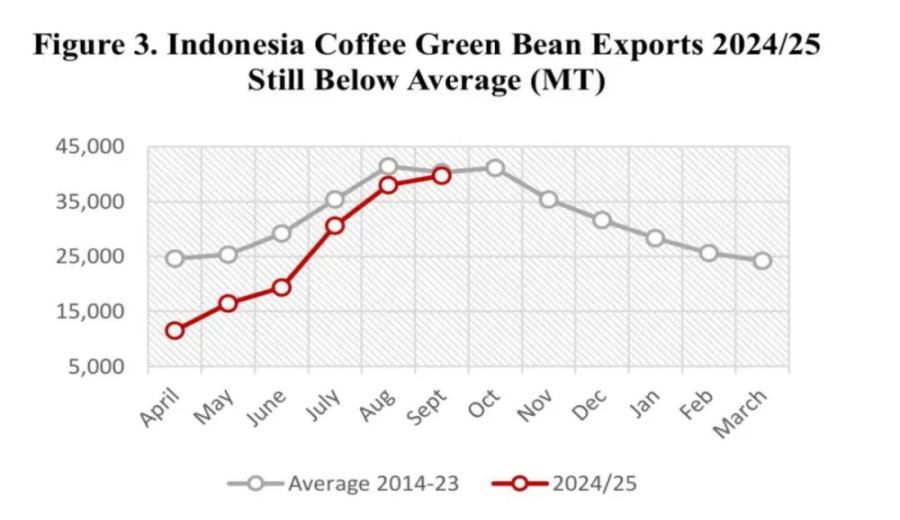
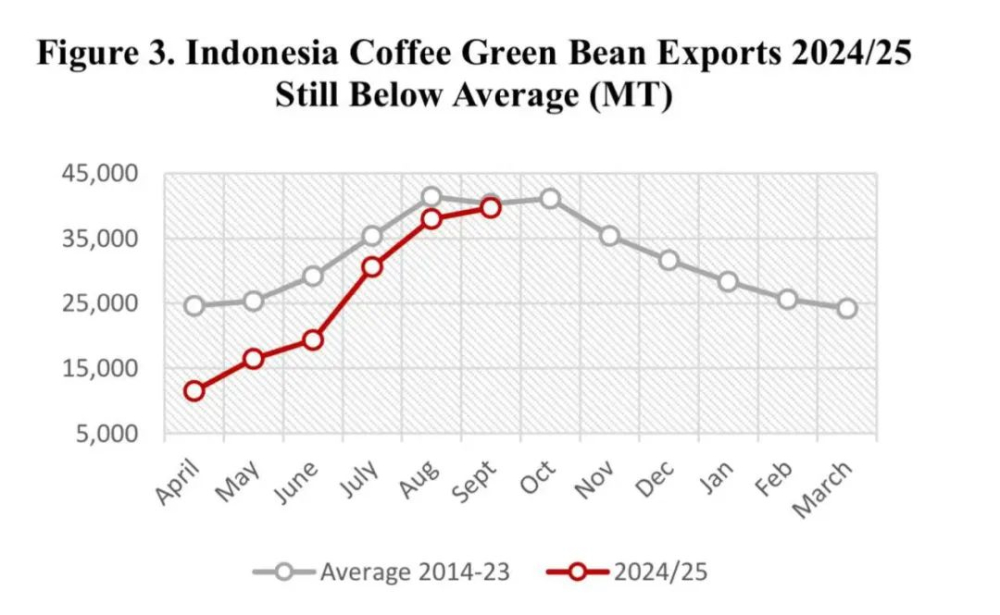
Owing to strong domestic coffee consumption, the volume of coffee available for export is expected to drop by 12%, falling to 5.2 million bags. Notably, this export figure is still 18% higher than that of the 2023/24 season, indicating that Indonesian coffee remains competitive in the global market.
Looking back at the 2023/24 season, Indonesia’s coffee industry was hit hard by the combined impact of La Niña and El Niño phenomena, which brought severe droughts, high temperatures, and water shortages, leading to a significant drop in production. The market had originally expected output to rebound to 10.9 million bags in the 2024/25 season, but actual performance remains uncertain.
Take Sumatra as an example — as Indonesia’s largest coffee-producing region, its exports of the Robusta variety reached 532,287 bags in October this year, marking a 100% increase compared to the same period last year. However, since the overall recovery of Robusta has been slower than expected, the total production forecast has been revised downward by 8%, to 10 million bags.
Although the southern Sumatra Robusta-growing area has seen some expansion in planting, the prolonged effects of earlier extreme weather have led to continued instability in yield, with production expected to fall by 9% to 8.6 million bags. In addition, due to the recent surge in Robusta coffee prices, incidents of coffee cherry theft have emerged in the region, further disrupting estate production order.
Meanwhile, the northern Sumatran Lintong Arabica-growing region faced heavy rainfall during the 2024/25 season, triggering secondary disasters such as flash floods and landslides, which caused certain disruptions to the harvest progress of the new season. Fortunately, the impact has been limited, and Arabica coffee production is still expected to remain around 1.6 million bags.
On the domestic front, Indonesia’s purchasing power in the 2024/25 season continues to weaken, with annual consumption growth of less than 1%. Overall demand is expected to remain at 4.8 million bags. Although the opening up of tourism has contributed to economic growth, deflationary pressures have dampened consumer purchasing power.
In terms of exports, despite the production decline, the volume available for export has also been reduced by 15% to 5.2 million bags. The European Union, as a major buyer of Indonesian coffee, previously accounted for around 30% of total exports. Between April and September 2024, the EU imported 664,000 bags of coffee from Indonesia, marking a 35% year-on-year increase, mainly because the EU’s earlier Deforestation Regulation (EUDR) prompted traders to stock up in advance.
However, the European Commission voted in November to postpone the enforcement of the EUDR regulation by one year, slightly easing market tensions. Nevertheless, the industry remains concerned about whether Indonesia’s coffee sector can meet EUDR standards within the next year. Currently, only a small number of third-party-certified coffee farmers are relatively confident of compliance, while the majority of farmers still need time to adjust.
On the global market front, although Indonesia is expected to see an increase in production by 2.4 million bags, output in major producing countries such as Vietnam and Brazil remains unstable. Vietnam, currently in its harvest season, has experienced delays in collection due to persistent heavy rains; while Brazil has shown good flowering performance, fruit-setting outcomes remain unpromising. Against this backdrop, international coffee prices are expected to remain at high levels.
The above content is compiled by CoffeeHunters, a coffee news website.


