







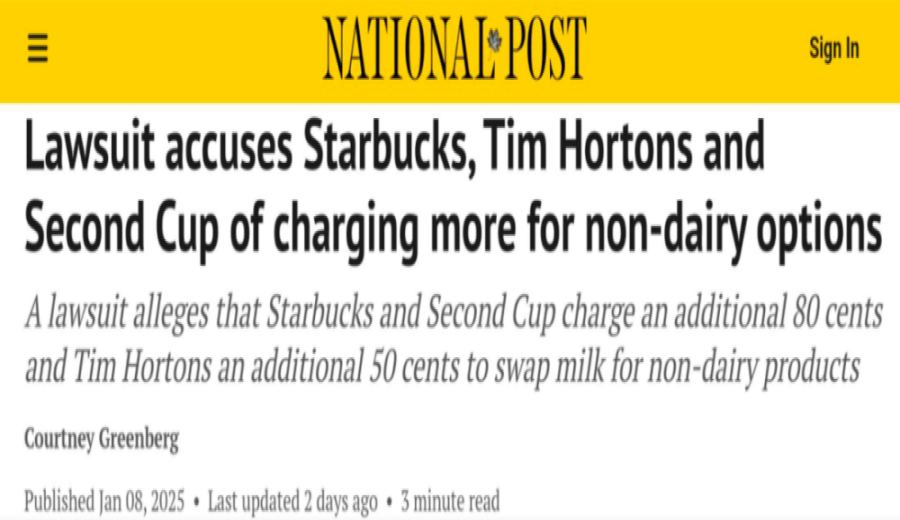
Introduction:A Canadian chain coffee brand is facing a class-action lawsuit for charging extra fees for plant-based milk. The plaintiffs accuse the company of profiting from consumers' health and environmental concerns. This article breaks down the core issues of the lawsuit, analyzes the actual cost differences of non-dairy alternatives, and provides purchasing advice to help readers avoid price traps in beverage choices.
Recently, a group of Canadian consumers filed a class-action lawsuit against Starbucks, Tims, and Second Cup, accusing these well-known coffee chains of long-term additional charges on non-dairy alternatives (such as soy milk and oat milk), alleging price fraud. The plaintiffs claim that these brands have taken advantage of customers' needs for lactose intolerance, healthy eating, or environmental consciousness to reap huge profits, while the actual cost of plant-based milk is not significantly higher than that of traditional cow's milk.
According to the lawsuit documents, starting from December 30, 2021, these three brands have added an extra fee of CAD 0.5 to 0.8 for beverages made with plant-based milk. Based on the massive consumption scale in the Canadian market, this fee has generated tens of millions of Canadian dollars in revenue for the brands over the past three years. Notably, data from Dalhousie University's Agriculture and Food Analytics Laboratory indicates that the retail price per 100 milliliters of soy milk, almond milk, and coconut milk is approximately CAD 0.21, oat milk is CAD 0.23, while regular cow's milk is also CAD 0.23, showing that non-dairy alternatives do not have a significant cost advantage.
The plaintiff in this lawsuit is an unnamed former student from Concordia University who, as a vegan, must choose plant-based milk when purchasing drinks like lattes. It is estimated that there are about 850,000 vegans in Canada, and this demographic has a stable and growing demand for non-dairy alternatives. The representing lawyer emphasized that coffee shops' practice of marking up plant-based milk constitutes "malicious fraud," as the cost structure does not justify the additional charge, and it has become a "cash cow" for the brands. For example, Tims' CAD 0.5 additional fee for plant-based milk alone can generate CAD 550,000 in daily revenue, with cumulative profits over three years reaching as high as CAD 602.25 million.
Under legal pressure, Tims has announced a policy adjustment, stating that starting from January 2, 2025, it will no longer charge an additional fee for plant-based milk on beverages other than regular or dark roast coffee. Prior to this, Starbucks also voluntarily eliminated the USD 0.8(approximately CAD 1.1) additional fee on November 7, 2024, noting that using non-dairy alternatives is the second most common customer request. However, Starbucks Canada stated that although it is aware of the lawsuit, it "cannot comment on pending cases." Second Cup has yet to respond to this matter.
The goal of this class-action lawsuit is not only to demand the cessation of additional fees but also to seek compensation for affected consumers and to impose punitive damages on the brands. If you purchased beverages containing plant-based milk at these three chains since December 30, 2021, and were charged extra, you may be eligible to join the lawsuit. In practice, consumers can pay attention to menu labels when ordering, prioritize drink combinations without additional fees, or directly ask staff whether plant-based milk incurs a charge. Additionally, some brands offer free plant-based milk during specific promotions, and being aware of such information can help reduce beverage expenses.
This incident has also sparked industry discussions on the fairness of plant-based milk pricing. While environmental and health considerations are valid, consumers should understand the underlying business logic to avoid unintentionally paying higher costs due to marketing strategies. When choosing coffee beverages in the future, it is recommended to compare the pricing policies of different brands and pay attention to the transparency of ingredients and pricing.
The above content is compiled by CoffeeHunters, a coffee news website.


