







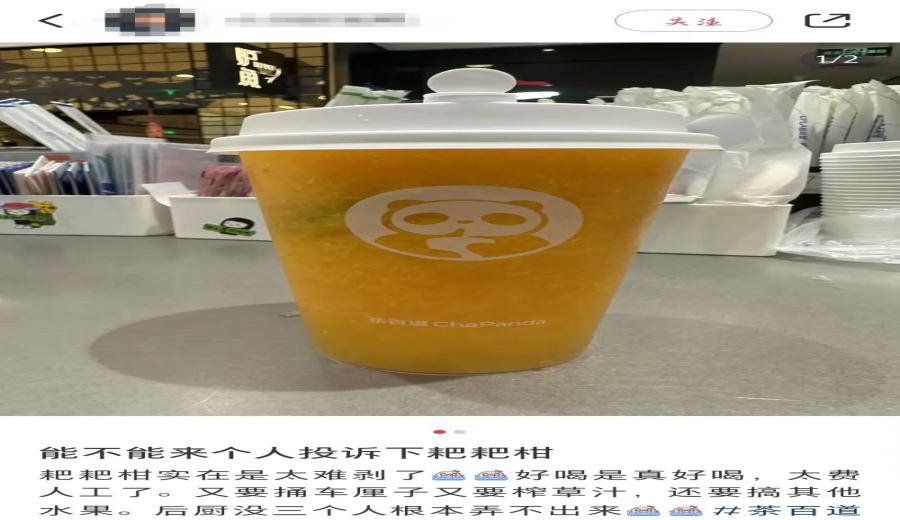
Introduction:Tea_bingdao recently relaunched its popular pa-pa citrus series drinks, including two new flavors: “Shu Shi Pa-Pa Citrus” and “Pa-Pa Clashes with Flowers.” The brand emphasizes that each cup uses freshly scooped fruit pulp, with real ingredients and no shortcuts, attracting many returning customers. However, for store employees, the complex preparation process—peeling the pa-pa citrus’s pith, albedo, and white core on-site—has become a major challenge. Especially during peak order hours, staffing shortages and time-consuming procedures become even more pronounced.
Tea_bingdao recently announced the return of its best-selling pa-pa citrus series from last year, along with the launch of two new flavors: “Shu Shi Pa-Pa Citrus” and “Pa-Pa Clashes with Flowers.” The brand stated that this comeback maintains last year’s production standards, with each drink made using freshly peeled pa-pa citrus pulp. They emphasize the use of genuine ingredients without cutting corners, delighting many fans of this flavor.
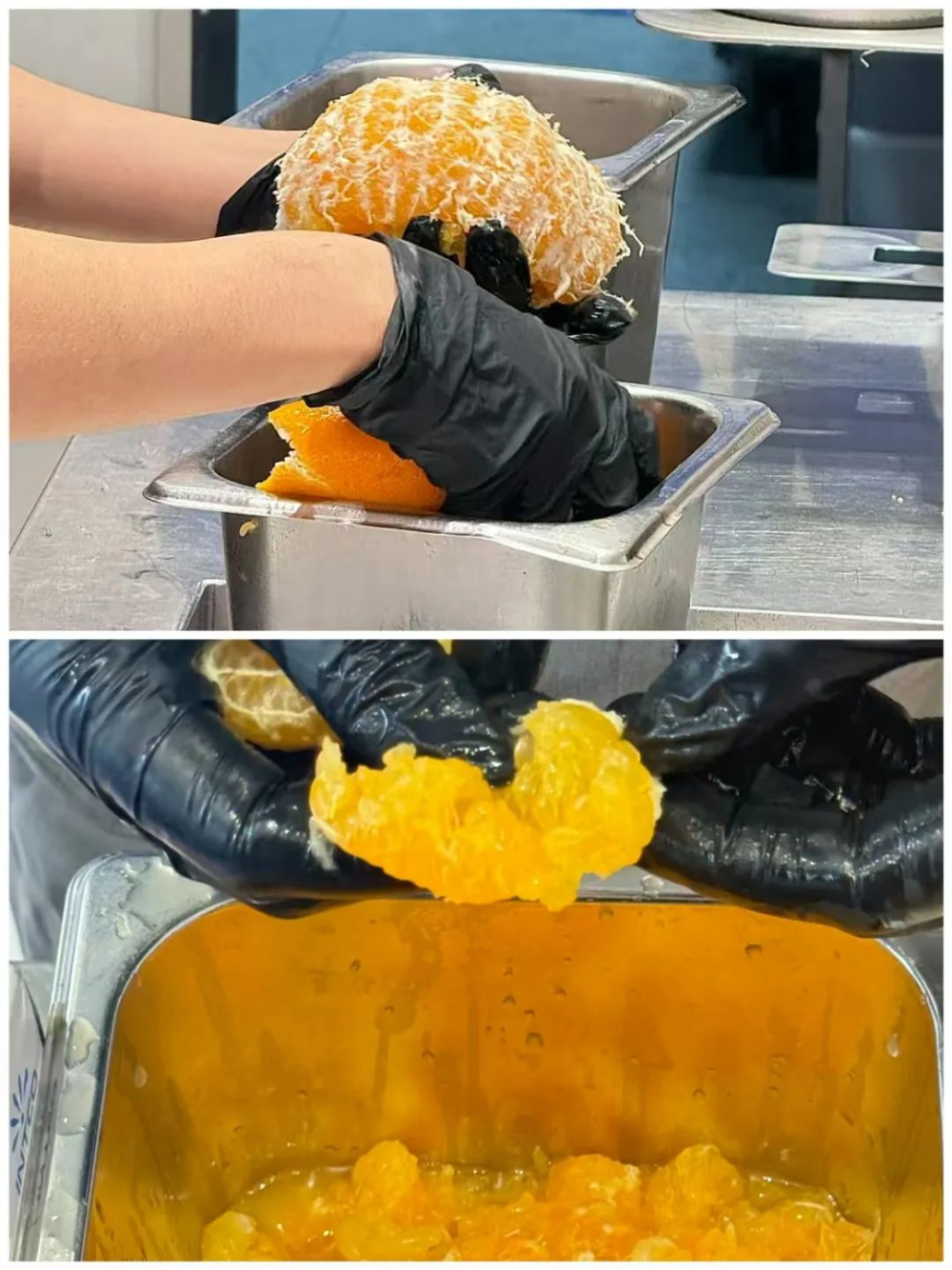
However, what seems like a popular product update has become a significant source of stress for store staff. Recalling the launch of this series last year, employees already faced cumbersome preparation challenges. According to the official recipe, each pa-pa citrus fruit must undergo rigorous processing—not only is the outer peel removed, but the attached albedo, pith, and white core must also be completely peeled away, leaving only the plump, clean juice portion.
This preparation process is extremely time-consuming and tedious for employees. A senior store employee noted that although pa-pa citrus has thinner skin than regular citrus and is relatively easy to peel, the subsequent removal of the albedo and white core still demands considerable patience and time. Some employees joked, “It takes an hour to peel, and five minutes to sell out,” highlighting the imbalance between work pace and demand.
Some employees also revealed that they tried soaking the peeled pulp in ice water to reduce albedo adhesion, but the effect was limited—especially during peak hours, when preparation speed still couldn’t keep up with consumer demand. Staffing shortages during busy periods only exacerbated the overall workload.
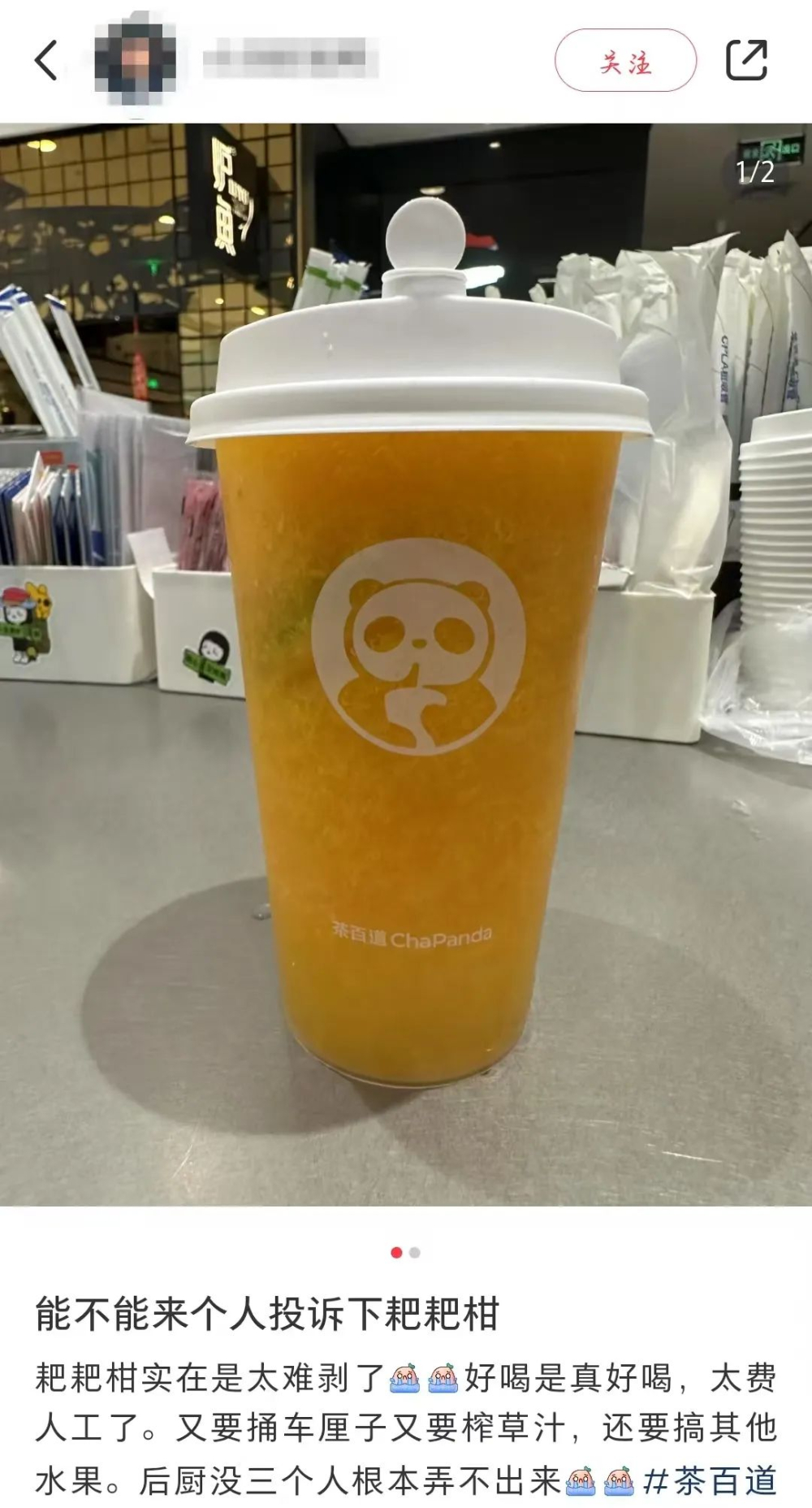
This year’s situation is even more complicated. In addition to the tedious handling of pa-pa citrus, employees are also tasked with brewing tea, cutting fruit, extracting herbal juices, and frying tapioca pearls, among other diverse duties. Some employees admitted that their current workload resembles that of a restaurant kitchen, with non-stop busyness from the start of their shift, leaving almost no room to catch their breath.
Due to generally low staffing levels at each store—some locations only schedule one employee for the morning shift, occasionally adding a helper—along with the continuous increase in drink varieties, the number of preparation items and material quantities required daily have also risen. Many employees say completing all preparatory tasks in a short time is nearly impossible.
To ensure smooth store operations, some employees have had to decide, on their own, to temporarily remove certain drinks with overly complex preparation processes, in order to free up more time for essential ingredients. While this provides short-term relief from pressure, it has also sparked discussions among consumers about limited product choices.
Regarding the detailed removal of the pa-pa citrus white core, some consumers argue that these white fibrous substances actually offer certain health benefits, such as helping to clear internal heat, and suggest that the brand doesn’t need to pursue visual perfection at the cost of increasing employee workload. But frontline staff counter that if not thoroughly cleaned, it not only affects the drink’s appearance and taste but may also raise consumer concerns about hygiene, potentially leading to negative reviews.
Faced with this dilemma, many employees believe that “only by removing these drinks can we truly alleviate the pressure.” Under current staffing and working hour constraints, simplifying the preparation process or adjusting product designs may be the long-term solution.
The above content is compiled by CoffeeHunters, a coffee news website.


