







Introduction:During the cold winter months, ice makers in beverage shops often experience ice blockages due to low ambient temperatures, which can affect operational efficiency. This article delves into the causes of ice bridging in ice machines, shares practical troubleshooting methods used in the industry, and provides suggestions for equipment parameter adjustments and maintenance to help professionals effectively prevent and address this common issue.
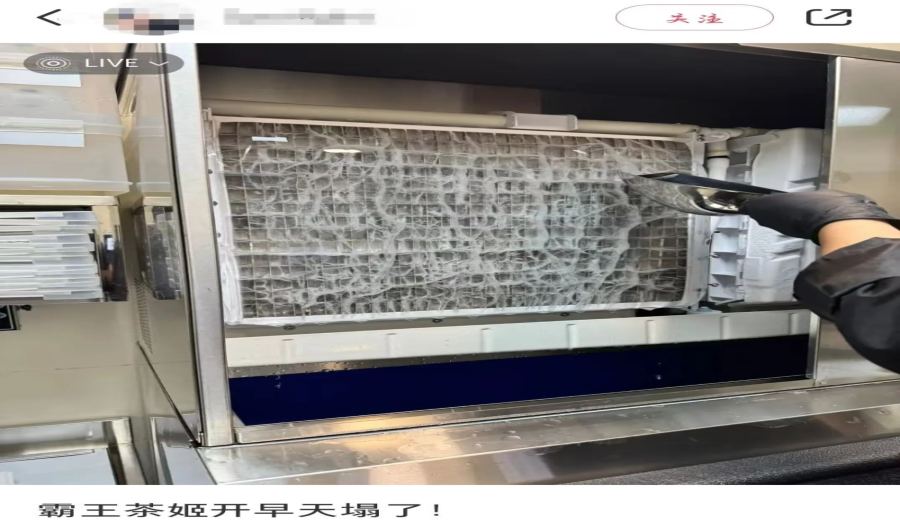
Entering mid-December, although temperatures across most regions of the country continue to drop, consumer demand for iced beverages remains stable. Especially in northern areas, tea beverage shops’ ice makers still need to operate around the clock to meet market needs. However, recently some shop staff reported that their ice machines were producing thick layers of ice overnight, forming what looked like a “spider web”-like substance, causing the ice to fail to detach properly and disrupting normal operations.
It was found that an early-shift employee of a tea beverage brand arrived at work to discover a thick layer of ice covering the surface of the ice grid, resembling a dirty web-like structure. In reality, this occurred because, after running overnight, the ice cubes had stuck together and failed to release, preventing new ice from separating normally. The situation caught the staff off guard—they not only had to quickly deal with the malfunction but also had to borrow ice from other shops temporarily to maintain normal supply.
Afterward, the employee shared photos of the scene on social media. Many netizens were baffled, leaving comments describing it as looking like “a ball of yarn,” “a dirty air conditioner filter,” or even jokingly calling it the “entrance to a spider web cave.” However, for industry insiders, this phenomenon is quite common in winter and is mainly related to ambient temperature and ice machine settings.
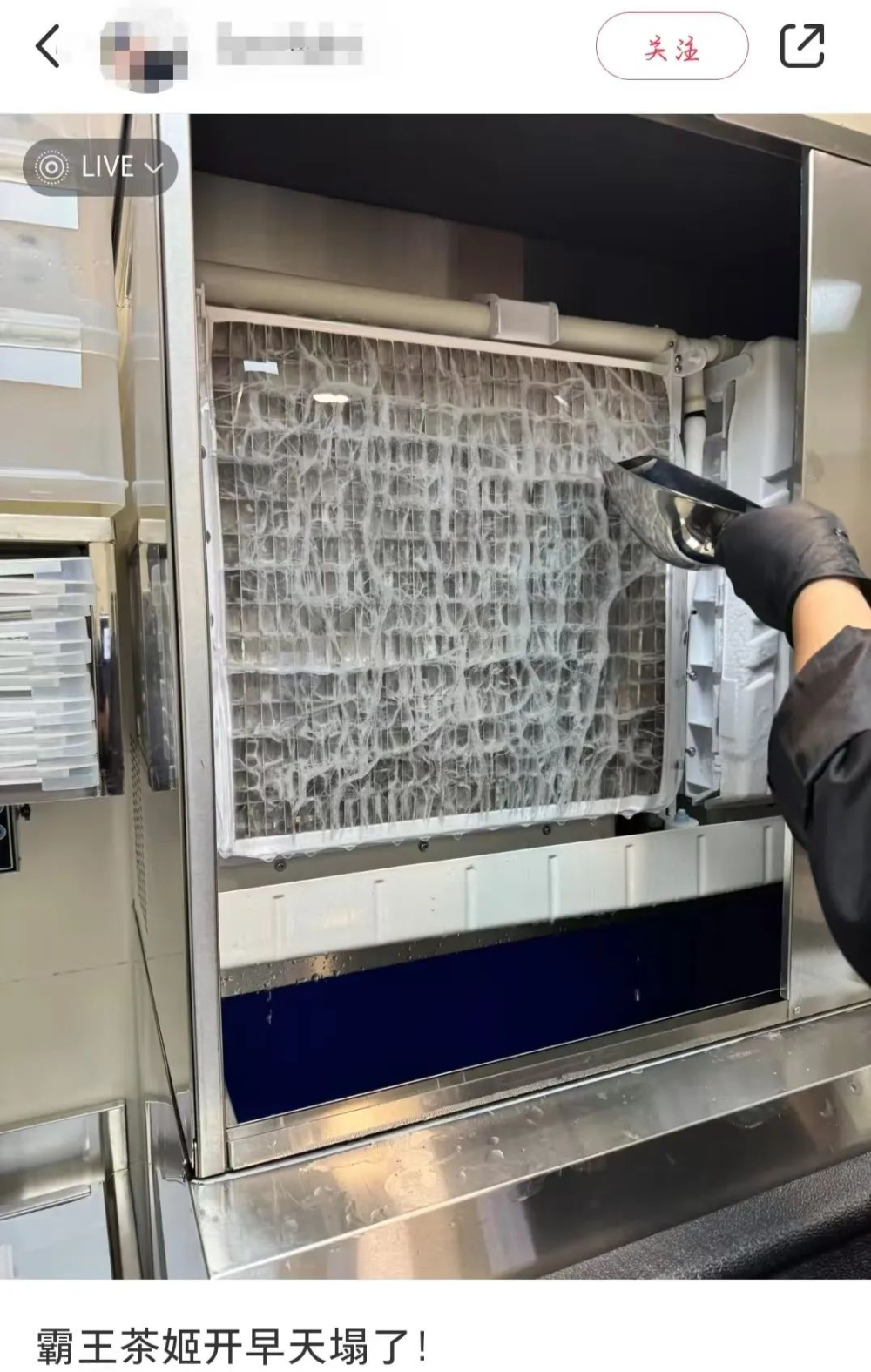
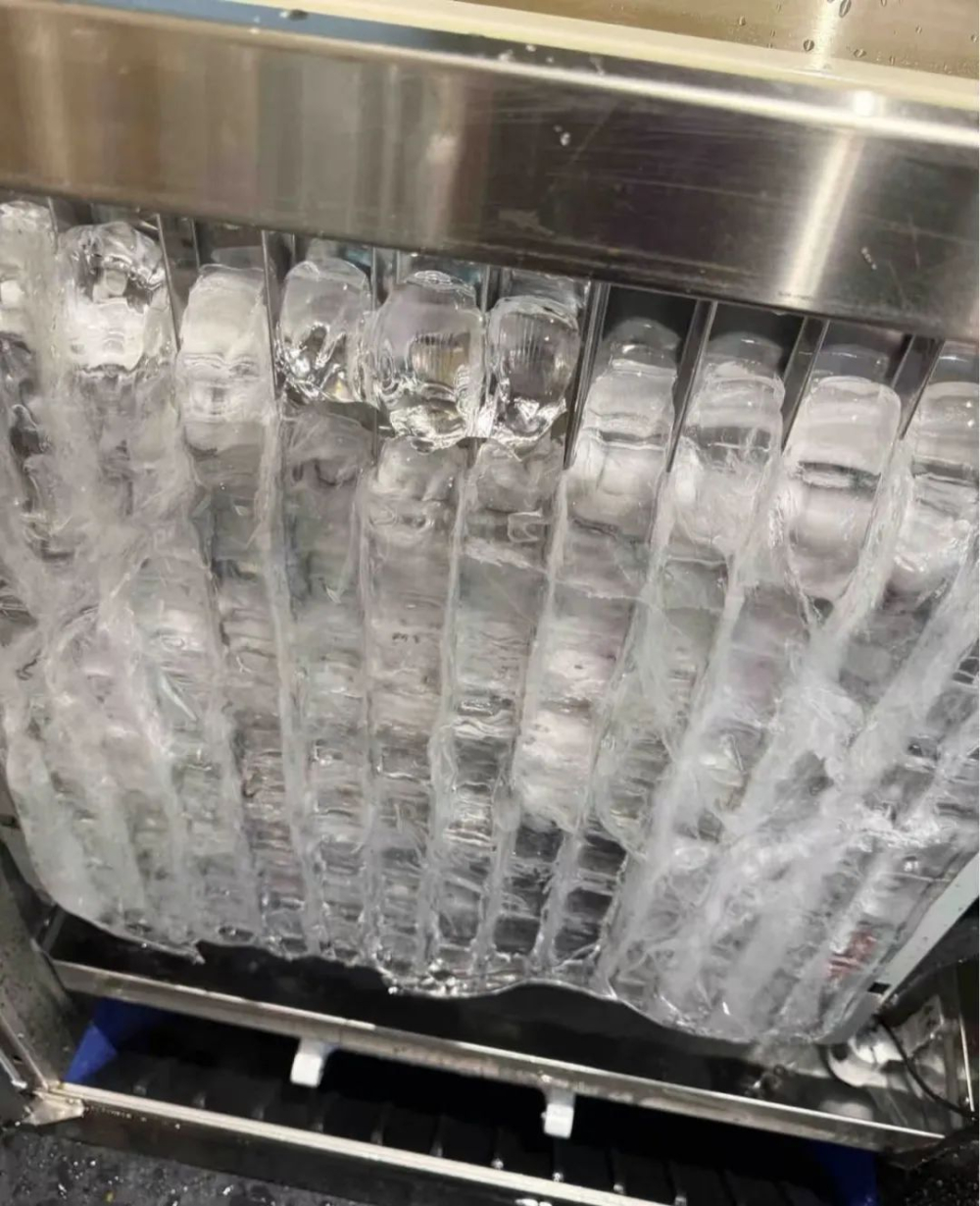
Industry experts point out that as temperatures fall, if ice machines continue to use summer parameters—such as ice-making duration and ice thickness—it can easily lead to ice cubes sticking together. Especially in low-temperature environments, if the ice grid becomes too cold or the cooling time is too long, the ice layer may become overly solidified, making demolding difficult. Staff are advised to adjust the ice-making time appropriately according to seasonal changes and monitor the thickness of the formed ice to reduce the likelihood of sticking.
For cases where sticking has already occurred, industry practitioners have shared various practical solutions. The simplest method is to gently pour hot water or warm salt water over the stuck ice layer, using the temperature difference to allow the ice to come off naturally. Another approach is to activate the internal circulation function of the ice machine, using the machine’s internal hot air circulation to help loosen the ice layer. When operating, care should be taken to avoid pouring overly hot liquids directly onto internal machine parts to prevent damage.
In addition, a seasoned professional reminds that if the problem persists after adjusting parameters, or if ice cubes continue to stick frequently, it may be due to aging or malfunctioning of internal components such as heaters, thermostats, or sensors. In such cases, it is recommended to contact professional technicians for inspection and repair to avoid letting minor issues affect overall operations.
At the same time, some practitioners have noted that there are differences in durability and cold resistance among ice machines from different brands. Some stores, due to insufficient equipment performance, have to invest more labor in maintaining their ice machines during winter, increasing the workload and pressure on staff. They call on brand owners and management to take staff feedback seriously and upgrade or replace equipment in a timely manner to improve operational efficiency and the working experience of employees.
In summary, while the issue of ice sticking in ice machines during winter is common, it can be effectively reduced through reasonable parameter adjustments, prompt troubleshooting, and regular equipment maintenance, ensuring smooth store operations. For professionals, mastering these practical tips not only helps solve immediate problems but also enhances overall service quality.
The above content is compiled by CoffeeHunters, a coffee news website.


