







Introduction:Delve into the evolution of Costa Rica’s honey processing, from an innovative technique derived from Brazil’s pulped natural method to the nuanced flavor profiles categorized into black, red, yellow, and white honey. This article explores how this water-efficient and flavor-rich processing method emerged from adversity, and through the example of a Geisha from La Labrador Estate in Tarrazú, analyzes the specific impact of honey processing on a coffee’s aroma and taste.
One of the most well-known characteristics of Costa Rican coffee is honey processing. Many people, upon hearing the term, often mistakenly assume that honey is added during processing. In reality, it refers to a method that retains the mucilage layer of the coffee fruit. Rich in natural sugars and sticky in texture, the mucilage imparts a honey-like sweetness to the dried beans, hence the name.
The origins of honey processing can be traced back to Brazil’s pulped natural method. At the time, Brazil sought to address water scarcity and improve coffee quality by reducing the washing steps—removing only the outer skin and pulp while retaining the sugar-rich mucilage for sun drying. Costa Rica later adopted this technique, refining and optimizing it to develop its own distinctive honey processing style, which has since become one of the premier methods in global specialty coffee.
In its early days, Costa Rica’s coffee industry was primarily known for the washed processing method, even being regarded as a pioneer in the modernization of washed techniques. While washed processing highlights foundational coffee flavors such as citrus and nuts, it requires significant amounts of water. Between 1997 and 2000, as international coffee prices remained low, many coffee farmers began seeking ways to increase earnings by improving quality. They gradually separated from large processing mills to develop their own methods, including adopting the pulped natural technique from Brazil.
To more precisely control the degree of mucilage retention, Costa Rican farmers also developed specialized mucilage removal machines (demucilagers). Compared to traditional depulpers, these devices allow for the adjustment of pressure and scraping aperture, enabling the retention of varying levels of mucilage based on desired outcomes, which in turn influences subsequent flavor development. This technology became a key factor in the refinement of Costa Rica’s honey processing.
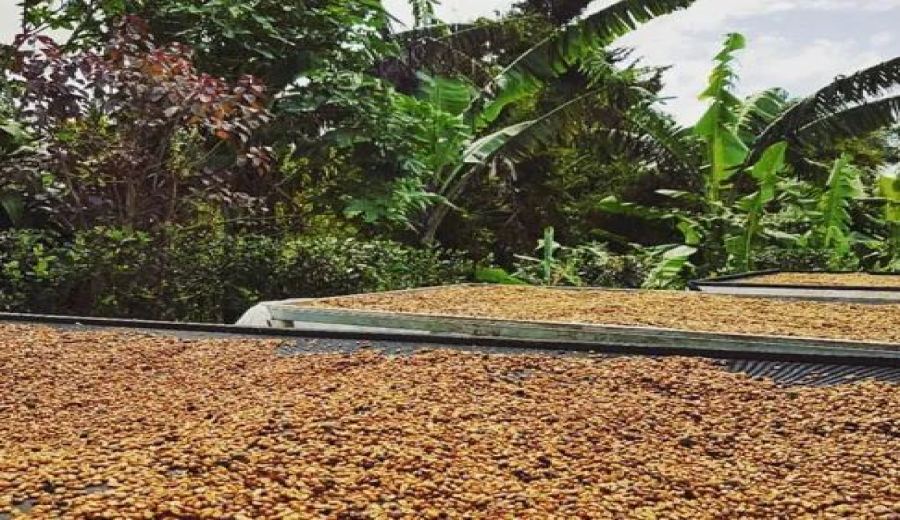
After mucilage retention, the beans undergo sun drying. During this process, the mucilage undergoes slight fermentation, releasing additional acids and sugars that penetrate the bean, resulting in a richer, sweeter cup with greater complexity. However, this stage requires careful attention to turning frequency and weather conditions to prevent mold or over-fermentation. Compared to traditional washed processing, honey processing is more complex in drying but yields a more intense and rounded flavor profile.
In 2008, a major earthquake struck Costa Rica, causing water and power outages in many areas. The government also actively promoted water conservation policies. Against this backdrop, more farmers turned to honey processing due to its significantly lower water consumption compared to washed. Although some initially worried about the difficulty of controlling the fermentation process in honey processing, practical experience and successful cases led to wider adoption, along with the development of various flavor styles.
Based on the thickness of mucilage retention and drying conditions, honey processing is generally divided into four types: black honey, red honey, yellow honey, and white honey. Black honey retains the most mucilage, involves the longest drying time—often shaded—and delivers the most intense flavors, with the highest sweetness and body. Red honey retains about 50% of the mucilage, offering a balanced sweetness and fruity aroma. Yellow honey retains only a small amount of mucilage, resulting in flavors closer to washed coffee but still with notable sweetness. White honey removes most of the mucilage, yielding a lighter profile while retaining some characteristics of honey processing. However, in practice, the exact mucilage retention ratio is hard to control, and the final color is more influenced by oxidation, weather, and drying environment.

For example, a recent Geisha lot from La Labrador Estate in the Tarrazú region of Costa Rica was processed using the honey method. The Geisha variety naturally boasts delicate floral notes and bright acidity, which are further accentuated by honey processing, with sweetness becoming more pronounced. Roasted to a medium-light level, the brewed cup reveals distinct orange blossom, peach, and cherry flavors, paired with juicy sweetness and a tea-like aftertaste. The overall mouthfeel is smooth and layered, making it a classic representation of the honey processing style.
In summary, Costa Rica’s honey processing is not only a water-efficient and high-flavor technique but also a chapter in the industry’s evolution shaped by technological innovation and natural conditions. From the inspiration of Brazil’s pulped natural method, to the development of the mucilage scraper, to the transformation brought by the earthquake, each step has contributed to the unique character of Costa Rican coffee today.
The above content is compiled by CoffeeHunters, a coffee news website.


