







Introduction:Vietnam's coffee exports performed strongly in 2024, with the annual export value expected to exceed $5.5 billion for the first time. Despite a more than 20% drop in export volume, a nearly 90% surge in prices drove the total value to grow against the trend. This article provides an in-depth analysis of the latest developments in Vietnam's coffee industry, including price trends, major export markets, and the potential impact of weather and changes in planting structure on supply, helping readers grasp key turning points in the global coffee supply chain.
In 2024, Vietnam's coffee industry has reached a rare peak in recent years. According to the latest statistics, the total export value in the first 11 months reached $4.84 billion, and the full year is expected to surpass $5.5 billion, setting a new historical record. This achievement was made despite a more than 25% decline in export volume, primarily thanks to a significant rise in average prices, which nearly doubled, successfully supporting the overall export value to rise against the trend.
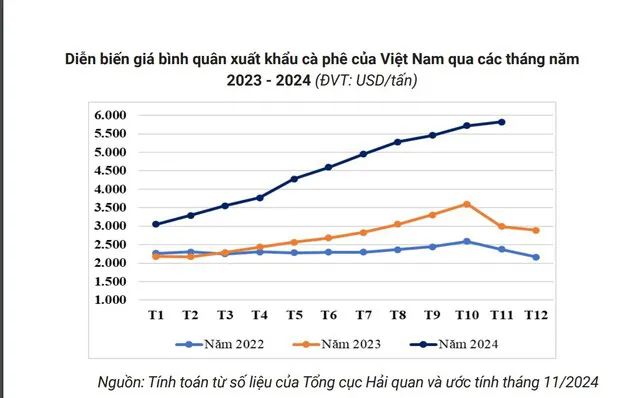
Meanwhile, the domestic green coffee bean prices in Vietnam have also been climbing steadily, currently at around 125,000 Vietnamese dong per kilogram, almost double the export price at the beginning of the year. Compared to the same period last year, the price has more than doubled. This price trend has also directly pushed up export quotations, rising from about $3,000 per ton at the beginning of the year to nearly $6,000 per ton recently, indicating that market demand remains strong.
According to the Vietnam Coffee - Cocoa Association (VICOFA), 2024 is an extremely special year for the country's coffee industry. From the beginning of the year, coffee prices have shown a clear upward trend, completing nearly 90% of the increase in just ten months. From January to November this year, Vietnam's total coffee export volume was close to 1.2 million tons, a year-on-year decrease of 25.4%, but the export value rose by 32.8% to $4.84 billion. With the start of the new crop season and the gradual recovery of supply, it is predicted that the annual export value could reach a new high of $5.5 billion.
In terms of export markets, the EU remains Vietnam's largest buyer, accounting for 39% of import share, firmly holding the top position. Japan and the United States follow closely behind. It is worth noting that demand in the Asian market has also increased significantly, with China's market share growing from 2.5% last year to 3.8% (from January to October this year compared to the same period last year). In the 2023/24 crop year, China imported nearly 54,000 tons of coffee from Vietnam. In addition, imports from Malaysia, Indonesia, and the Philippines have also increased, reflecting the continuously improving competitiveness of Vietnamese coffee in regional markets.
However, Vietnam's coffee industry is facing multiple challenges. First is the weather factor. Recent continuous rainfall in the central region has delayed harvesting work in coffee-growing areas. Many coffee cherries have already ripened or even started to crack, not only affecting quality but also limiting the amount that can be harvested, making it difficult to increase supply even during the traditional harvest season.
Secondly, the sharp volatility in the futures market has had an adverse impact on some traders. Due to the dramatic fluctuations in the futures prices of Arabica and Robusta coffee, some traders, failing to correctly predict the trend, signed sales contracts with buyers when prices were falling. Subsequently, when prices rebounded, they were unable to purchase enough coffee beans from farmers at low prices. To honor the contracts, they had to buy at higher prices, creating operational pressure, and even leading to losses and business closures.
Despite this, many analysis agencies remain cautiously optimistic about Vietnam's coffee production in 2024. Although Vietnam experienced severe drought from March to May, with cracked soil and water shortages negatively impacting the growth of coffee trees, the continuously rising coffee prices have increased farmers' incomes, leading to greater investment in land and plantations, which has helped coffee crops recover from the drought and reduced production losses.
However, in addition to weather and price factors, changes in planting structure are also an issue worth noting. Due to the strong performance of Vietnam's fruit exports, especially the surging demand for durians, many farmers have chosen to cut down coffee trees and switch to planting more profitable durians or other popular fruits, leading to a gradual reduction in coffee planting areas. This means that Vietnam's coffee production growth potential in the coming years will be limited, and even with a slight rebound this year, the overall increase is not expected to be significant.
Looking at the global market, major Robusta coffee-producing countries such as Brazil and Indonesia have also not seen significant increases in production, but international demand for Robusta continues to rise, further supporting the high-level operation of coffee prices. If supply cannot be effectively increased in the future, the price trend is likely to remain strong.
The above content is compiled by CoffeeHunters, a coffee news website.


