







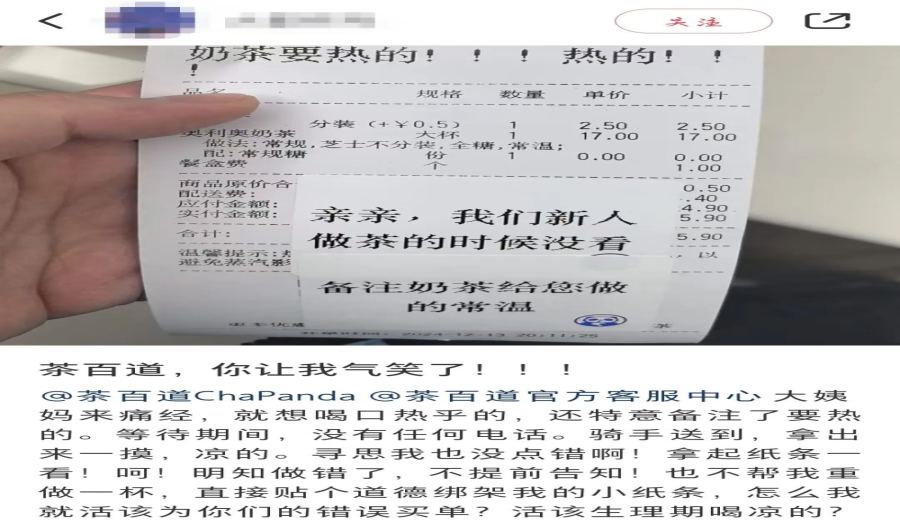
Introduction:As the weather turns cooler, many customers specifically request hot drinks when ordering milk tea, yet there are still numerous cases where shops overlook the instruction and deliver drinks at room temperature. Recently, one customer reported that she clearly asked for her drink to be heated when ordering from Tea Boulevard, but received a room-temperature version instead. What angered her even more was that the staff, having noticed the mistake, did not remake the drink but instead attached a note explaining the error and served it as is. This situation not only sparked customer dissatisfaction but also raised the question: Why do shop mistakes always end up being the customer’s burden?
As temperatures drop, more and more people specify that they want hot drinks when ordering milk tea or coffee, hoping to enjoy a warm and comforting beverage. However, even when customers clearly note their preference in the order, there are still many instances where shop oversights lead to the delivered drink not matching the request. Recently, one customer encountered such an issue while ordering from Tea Boulevard.
This customer explicitly wrote in the order notes that she wanted her milk tea to be served hot. Yet, when the delivery person arrived with her drink, she discovered it was at room temperature. At first, she thought it might just be a small oversight due to the busy staff and could understand it—but her mood quickly soured when she noticed the note attached to the order.
The note read: “Our new staff member didn’t see the note about making your milk tea hot, so we made it at room temperature.” This explanation left her both amused and exasperated. It’s understood that the Oreo Milk Tea she ordered did not originally offer a hot option in the ordering system, but she had previously confirmed with this particular branch that as long as it was noted in the order, the shop could specially heat it for her—so she had been adding the relevant note with every order.
However, this time, her customary note was not properly handled. Even more unacceptable to her was that, judging by the note’s content, the staff had already realized the drink was wrong when packing it, yet did not take the initiative to contact her or remake it. Instead, they chose to go ahead and serve her the room-temperature milk tea.
This approach left her very dissatisfied, feeling as though she was paying the price for the staff’s mistake. She questioned: “If you realized it was wrong, why not just make a new hot drink? Why serve me the room-temperature one?”
Netizens also expressed widespread dissatisfaction, arguing that even if making a wrong drink might lead to internal penalties for the staff or concerns about food waste, it is unacceptable to forcibly deliver a product that doesn’t meet the customer’s request without informing them first.Comments such as “If you have time to write a note, why not take the time to remake the drink?” and “Knowing it’s wrong and still not remaking it—this shop is really disappointing” reflect consumers’ expectations for service quality.The comments reflect consumers' expectations for service quality.
Industry insiders pointed out that if staff notice an order mistake before serving, the correct approach should be to take responsibility proactively and remake the drink according to the customer’s note, rather than avoiding internal penalties or saving costs by letting the mistake slide. Rather than offering explanations after the fact, it’s better to ensure proper communication and confirmation beforehand.
Some food and beverage professionals also suggest that when customers have specific temperature requirements for their drinks, in addition to noting it in the order comments, they can also call the shop directly to confirm—especially when the system does not offer a hot drink option. Clarifying in advance helps avoid mistakes caused by system limitations or human error.
Additionally, if a customer does receive a drink that doesn’t meet their request, they can raise the issue on the spot with the staff, requesting a remake or reasonable compensation to protect their own rights.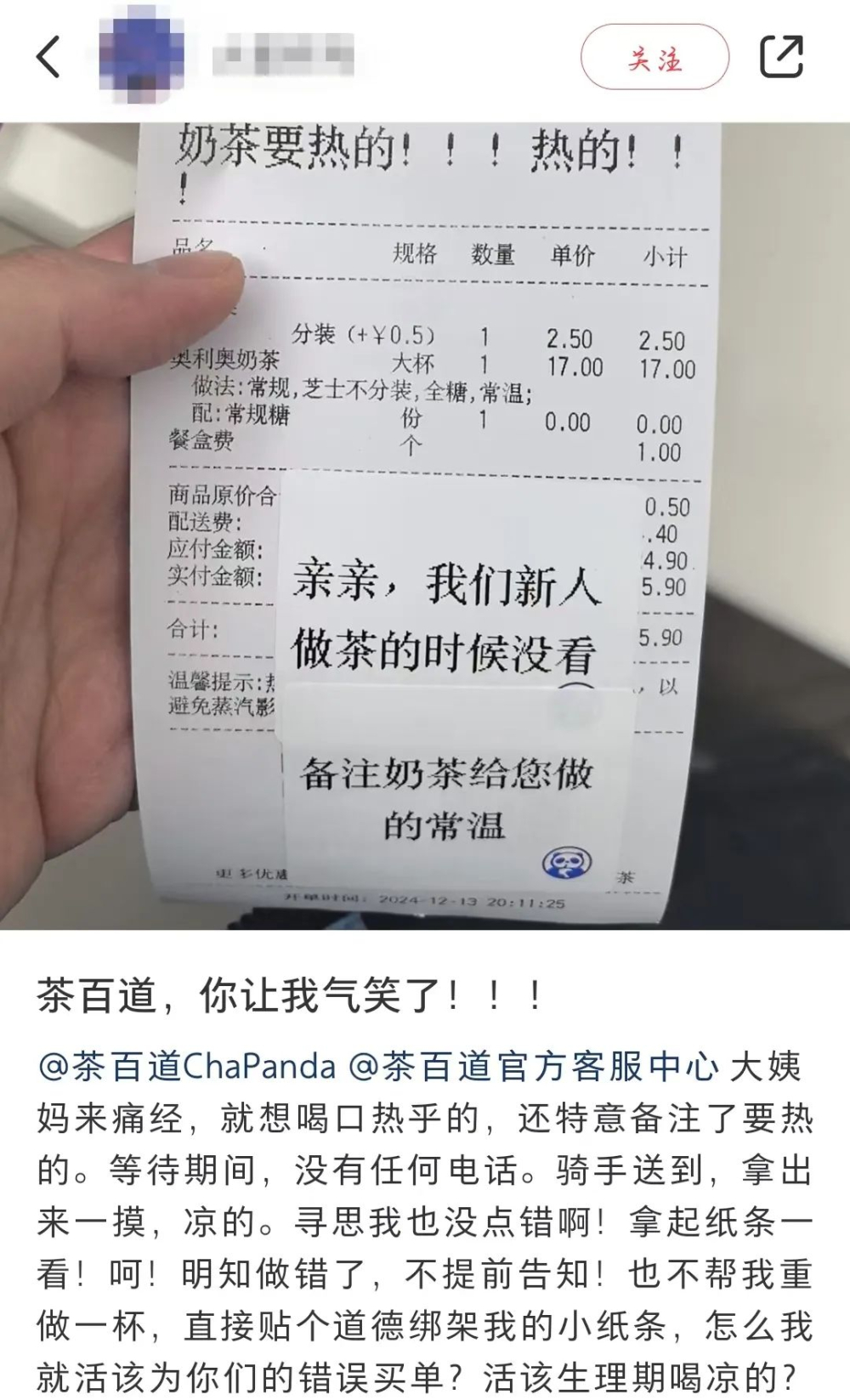
In summary, the service quality of a shop involves not just the product itself, but also the importance placed on customer needs and the attitude taken when dealing with mistakes. When errors occur, proactive communication and responsible handling are key to earning customer trust and repeat business.
The above content is compiled by CoffeeHunters, a coffee news website.


