








Introduction:Kenyan coffee is widely loved for its bright acidity and rich layers of flavor. Common grade labels such as AA, AB, and AA TOP often spark curiosity among consumers about their differences. This article delves into Kenya’s official coffee grading system, analyzing the criteria behind AA, AB, PB, and E grades, and explaining the meanings of exporter-defined grades like TOP and Plus. It also introduces the K72 washed beans from the Assalia Factory in the Thika region, produced using the SL28 and SL34 varieties and classified as AA grade. These beans exhibit flavors reminiscent of cherry tomatoes and black plums, making them an ideal entry-level choice for pour over brewing.
When it comes to coffee with vibrant acidity and delicate complexity, the Kenyan region is undoubtedly a top choice for many coffee enthusiasts. Known for its fresh fruity aroma, juice-like bright acidity, and rich aftertaste, Kenyan coffee is highly favored in the global specialty coffee market. When purchasing Kenyan coffee, we often see labels on the packaging indicating grades such as AA, AB, or even AA TOP. What do these grades mean? What is the real difference between AA and AA TOP? This article will take you on an in-depth exploration of Kenya’s official grading system and decode the commonly used secondary grading terms in the market.
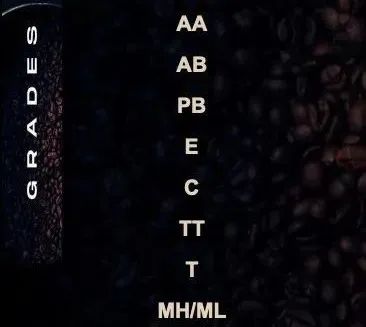
First, to understand coffee grading, it’s essential to recognize that coffee is fundamentally an agricultural product. Each harvest can naturally vary in bean size, appearance, and flavor. Therefore, major producing regions classify coffee beans into different grades based on specific standards to ensure relative consistency within each batch and to help establish fair trading prices. Kenya is no exception—its grading is primarily based on physical characteristics such as bean size, shape, color, and density. The national grading system currently includes eight main categories: AA, AB, PB, C, E, TT, T, and MH/ML.

Among these grades, AA and AB are the most common and also the two grades with the highest export volumes. AA-grade coffee beans have a screen size of 17 to 18, representing higher-quality beans that are fuller in size and better in density, usually offering more complex flavors and brighter acidity. AB-grade beans, sized 16 to 17, are slightly smaller but are more affordable in both overall quality and price. They account for about 40% of Kenya’s total coffee exports, making them highly suitable for everyday drinking and entry-level tasting.
In addition to AA and AB, Kenya also has two special grades based on unique bean shapes: PB (Peaberry, or round beans) and E (elephant beans). PB refers to cases where only one round bean forms inside the coffee cherry, instead of the usual two flat beans, typically making up only about 5% of the yield. Due to the concentrated flavor compounds in a single bean, PB beans are often considered to have a more intense taste. The E grade, also known as elephant beans, are unusually large beans formed when two coffee beans fuse during development, with a screen size exceeding 21. They are extremely rare and relatively expensive. Both PB and E are categorized as special grades due to their distinctive appearance and developmental traits.
Other grades such as C, TT, T, and MH/ML are mostly excluded from the specialty coffee category due to their smaller size, higher defect rates, or poorer density. C-grade beans usually range from 12 to 14 in screen size. TT beans are lightweight beans sorted from E, AA, or AB through air classification. T-grade beans are defective beans from the C grade, while MH/ML often contain underripe or overripe beans and are generally sold only in the local Kenyan market, not for export.
It’s worth noting that although bean size is commonly used as a grading criterion, size is not the sole determinant of flavor. As a result, some exporters or traders may establish additional secondary grading systems based on cupping results, such as TOP, Plus (+), and FAQ. These grades are not part of Kenya’s official standards, and their implementation varies by vendor, serving only as a reference when making purchasing decisions. Ultimately, a coffee’s actual performance still depends on real-world cupping and the flavor profile after roasting.
Looking back at history, Kenya’s coffee industry dates back to the British colonial period, when the British actively promoted coffee cultivation and technological development. This enabled the country to lead many other regions in variety cultivation, grading systems, and processing methods. Even today, Kenya maintains relatively strict control over AA and AB grades. Generally speaking, as long as a coffee meets either of these two grades, its flavor performance and overall quality are already quite high, making it worthy of a try by coffee enthusiasts.
Taking a real product as an example, there is currently only one Kenyan coffee from the Assalia Factory in the Thika region that uses the K72 washed process, featuring the classic local SL28 and SL34 varieties, and is classified as AA grade. These beans are round and plump. To highlight the typical bright acidity and clear layers of Kenyan coffee, a light roast is applied. After brewing, the flavor profile features distinct notes of cherry tomato and black plum, with a juice-like, refreshing acidity, smooth mouthfeel, and a long-lasting aftertaste. It’s an excellent choice for pour over coffee and can also help newcomers more intuitively experience the unique charm of Kenyan coffee.
The above content is compiled by CoffeeHunters, a coffee news website.


