








Introduction:Ethiopia plans to boost its coffee export revenue to $2 billion in the 2024/25 fiscal year by expanding cultivation areas and introducing mechanized production. Export volumes have already seen significant growth. However, exchange rate fluctuations, a new pricing mechanism, and geopolitical factors bring uncertainties to the industry. Meanwhile, the signing of the Ankara Declaration with Somalia is expected to improve export logistics. This article provides an in-depth analysis of the latest developments, challenges, and potential opportunities in Ethiopia’s coffee sector to help you stay on top of market trends.
Ethiopia is actively expanding its coffee cultivation and export trade, aiming to achieve coffee export earnings exceeding $2 billion in the 2024/25 fiscal year. In recent years, the country has been modernizing its coffee industry, including planting billions of coffee trees and gradually introducing mechanized operations to enhance productivity and address the challenges of climate change.
According to data from the Ethiopian Coffee and Tea Authority (ECTA), coffee exports in October 2024 reached approximately 35,000 metric tons, an increase of over 15,000 tons compared to the same period last year, generating foreign exchange earnings of more than $150 million — a year-on-year growth of $62.08 million. The monthly export volume and revenue achieved 176% and 144% of their respective targets, demonstrating strong momentum in the country’s coffee exports.
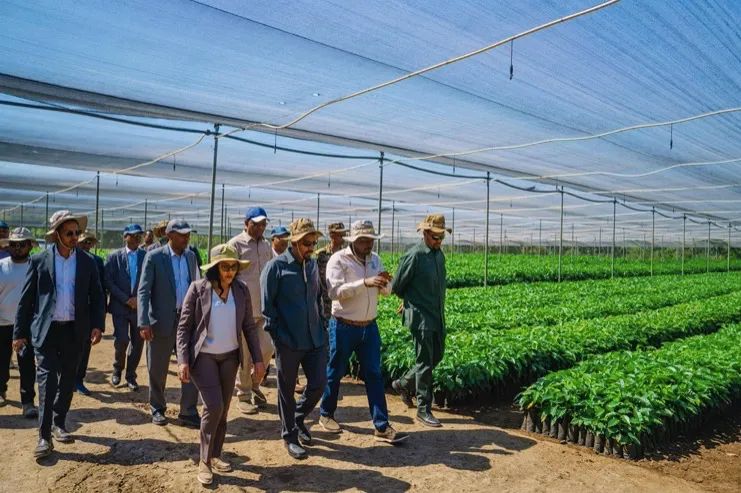
Since the start of the 2024/25 fiscal year in July, Ethiopia’s coffee supply to global markets has increased significantly. Compared to the previous fiscal year’s total export earnings of $1.43 billion, this fiscal year is expected to reach a historic high. The Minister of Agriculture further noted that the country is not only focusing on increasing output but also on improving coffee quality to strengthen its competitiveness in the global market and drive overall economic growth through coffee exports.
To achieve the $2 billion export target, the Ethiopian government is actively optimizing production techniques, enhancing market access, and collaborating with other countries to address challenges facing the African coffee industry, including price instability and logistical constraints.
Notably, Ethiopia and Somalia recently signed the Ankara Declaration under the mediation of Turkey. Both parties pledged to respect each other’s sovereignty and territorial integrity, and Somalia agreed to provide Ethiopia with stable maritime transport routes. This move is expected to significantly improve Ethiopia’s export logistics environment, particularly the efficiency of exporting goods such as coffee.
In the past, due to dissatisfaction from Somalia over a port lease agreement between Ethiopia and the Somaliland regional government, Ethiopia was unable to use the Port of Berbera smoothly and had long relied on the Port of Djibouti for international trade. However, the Port of Djibouti has been affected by the Red Sea crisis, resulting in reduced shipping frequency and many coffee containers being stranded, severely impacting export schedules. The establishment of new channels in the future will help alleviate this dilemma.

Despite the promising outlook, Ethiopia’s coffee industry still faces multiple challenges. First, currency exchange rates have been highly volatile. Although the new fiscal policy introduced in July this year has helped enhance export competitiveness, it has also led to domestic price increases, further driving up cultivation and production costs, thereby affecting the overall price structure of coffee.
Additionally, the country is planning to introduce a new pricing mechanism for green coffee bean exports, which intends to set export prices based on the Arabica coffee futures prices on the New York ICE Intercontinental Exchange and real-time exchange rates. However, the international coffee futures market is extremely volatile, with price fluctuations exceeding 80% so far this year, leading to unstable export earnings and potentially weakening the competitiveness of Ethiopian coffee in the international market.
For specialty coffee enthusiasts, Ethiopia, as a major origin of Arabica coffee, offers beans with diverse flavor profiles ranging from fruity to floral notes, making them a popular choice for pour over or filter coffee. It is recommended to monitor climate changes and harvest conditions in key producing regions such as Yirgacheffe, Sidamo, and Harar, as well as international market price trends, to help identify the right time to purchase high-quality Ethiopian beans.
In summary, Ethiopia’s coffee industry stands at a crossroads of expansion and transformation. While it has clear growth targets and policy support, it must still overcome multiple variables such as exchange rates, pricing mechanisms, and geopolitical factors. The performance in the coming quarters will be key to observing whether it can steadily move toward the $2 billion export milestone.
The above content is compiled by CoffeeHunters, a coffee news website.


