








Introduction:Recently, multiple regions in Brazil have been hit by heavy rain and strong winds. Meteorological agencies have issued high-risk warnings for seven major coffee-growing areas, raising concerns about the performance of the new crop season, which is currently in a critical growth period. The market is closely watching the ongoing adverse weather’s impact on coffee trees, and with currency fluctuations and emerging trade credit risks, international coffee futures prices have once again risen. This article provides an in-depth analysis of weather changes, regional conditions, price trends, and industry challenges to help you stay updated on the latest market developments.
Brazil’s National Institute of Meteorology has recently issued high-risk storm and heavy rainfall warnings for seven key coffee-producing regions, including Minas Gerais, São Paulo, and Paraná. It is predicted that daily rainfall in these areas could reach 50 to 100 millimeters, accompanied by strong gusts of 60 to 100 kilometers per hour, potentially causing power outages, damage to planted areas, tree collapses, and flooding.
Currently, the situation is particularly severe in northern São Paulo, where cumulative rainfall has already reached 90 millimeters, with some localized areas seeing up to 100 millimeters. Due to the threat of landslides and floods, Brazil’s National Center for Natural Disaster Monitoring and Alerts has issued a yellow alert for this region. Meteorologists point out that this round of heavy rainfall is related to the interaction of hot, humid weather and sea breezes, and predict that rainy weather will continue until March 2025, with high temperatures also persisting—posing significant pressure on coffee crop growth.

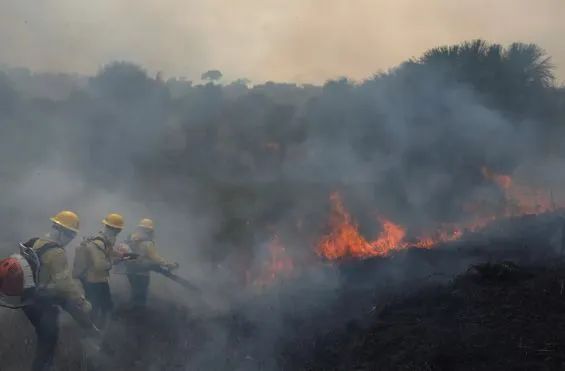
Looking back at the period from April to September this year, Brazil just experienced persistent drought and extreme forest fires, with some coffee-growing regions even recording nearly 160 days with almost no rainfall. With reservoirs dried up and river levels sharply dropping, coffee trees suffered damage during the flowering stage, leading various domestic and international institutions to revise down their estimates of Brazil’s coffee production and driving international coffee prices sharply upward.
Although rainfall gradually returned in early October, slightly alleviating the previous drought pressure, the growth of coffee trees has been difficult to fully recover to optimal condition. Moreover, the weather between October and November has been highly unstable, with frequent extreme storms further deepening market concerns about the production capacity of Brazil’s new coffee crop.
Previously, due to factors such as algorithmic trading and the continued weakness of the Brazilian real, coffee futures prices had seen a decline. However, recently, futures prices for both Arabica and Robusta have reversed and climbed upward again. The U.S. C-market Arabica coffee futures price has surged to 332.5 cents per pound, while Robusta futures have also risen to $5,121 per ton. Experts analyze that this round of price increases is mainly driven by market expectations that the incoming U.S. President Trump may implement high tariffs, prompting active buying for hedging purposes.
In addition to climate factors, Brazil’s coffee industry is also currently heavily impacted by rising prices and currency fluctuations. Recently, the Brazilian real has depreciated by 1% against the U.S. dollar, with the exchange rate reaching 1 USD to 6.089 BRL, primarily driven by domestic fiscal policy uncertainty and global dollar strength.
The depreciation of the currency has directly increased the cost of imported agricultural inputs such as fertilizers and pesticides, adding to the operational burden on coffee growers. In addition, the sharp fluctuations in the real’s exchange rate have also put exporters at a disadvantage in international market negotiations, further squeezing profit margins and potentially reducing Brazil’s competitiveness in the global coffee market.
Notably, due to unstable production, exchange rate challenges, and persistently high futures prices, well-known Brazilian coffee traders such as Atlantica and Cafebras are facing delays in the supply of a combined 30,000 tons of coffee and $118 million in credit risk. The market is concerned that this may trigger debt restructuring, which could affect the supply stability of other traders and intensify concerns about future supply chain disruptions. With multiple adverse factors intertwining, international coffee prices are expected to remain high and volatile in the short term.
The above content is compiled by CoffeeHunters, a coffee news website.


