







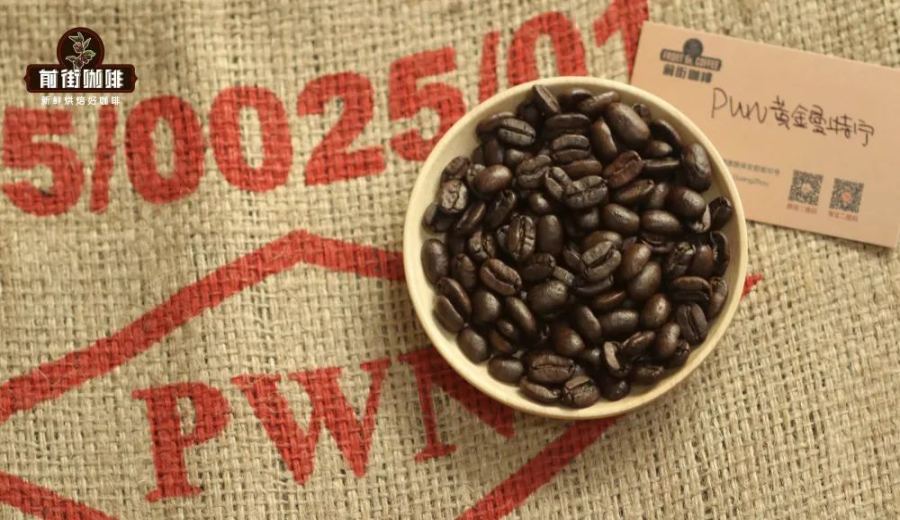
Introduction:Ever wondered why Indonesian Mandheling pour over coffee always carries a unique herbal and spicy aroma? The key lies in the region’s distinctive wet-hulling processing method. This article dives deep into how Sumatra’s high-humidity environment—through steps like pulping, short fermentation, hulling with the parchment on, scraping the parchment, and redrying—imbues the beans with regional characteristics such as aged wood, grass jelly, and spices. It also explains the impact of this method on defect rates and quality control points, offering pour over enthusiasts a more comprehensive understanding of Indonesian beans.
The Sumatra region of Indonesia, with its high temperatures, heavy rainfall, and air humidity often between 70% and 90%, coupled with annual rainfall exceeding 2000 mm, makes traditional sun-drying or washed processing methods difficult to manage stably in terms of bean drying quality. To accelerate the green bean processing workflow, local farmers developed the unique "wet-hulling" method (known locally as Giling Basah). This semi-washed processing technique not only shortens the drying time but also indirectly contributes to the distinctive herbal, spicy, and aged wood notes of Mandheling series coffee beans.
Wet-hulling full process Step 1: Removing the fruit skin and brief fermentation
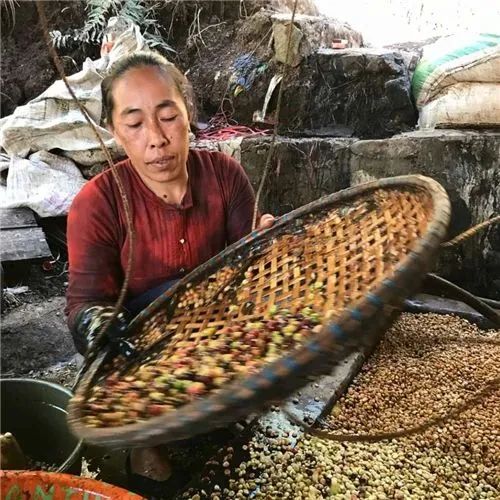
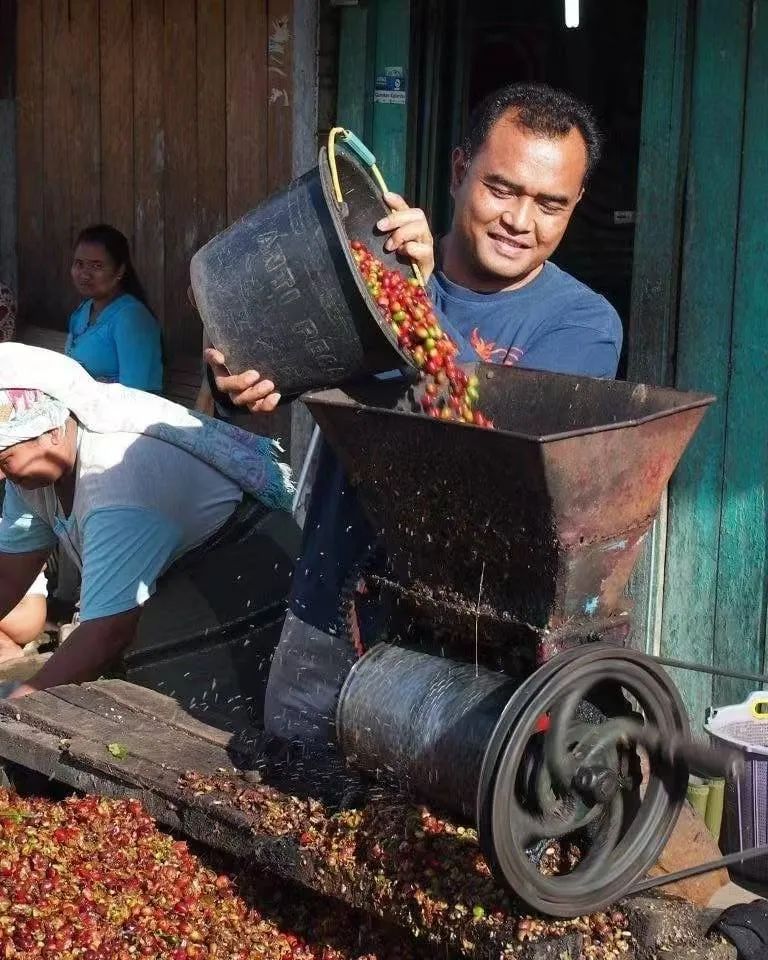
After coffee cherries are harvested, machines are first used to remove the outer skin, and the parchment-covered beans with mucilage are then placed in water tanks. Defective beans that float are skimmed off, leaving only the higher-quality beans that sink. These beans are then placed in buckets for a short period of fermentation, usually lasting just a few hours, to break down residual mucilage. After fermentation, small amounts of mucilage may still remain on the bean surface, which need to be thoroughly rinsed with clean water. The parchment-covered beans are then moved outdoors for initial sun drying.
Challenge: Sumatra’s weather is unsuitable for traditional drying methods
Unlike dry regions such as Brazil, Sumatra’s high humidity and changeable weather make it difficult to sun dry parchment-covered beans stably over multiple days. Even after removing the fruit skin and mucilage, prolonged exposure of the parchment-covered beans to high-humidity air can easily lead to mold and spoilage. Therefore, farmers can only perform an initial drying for 1 to 2 days to slightly reduce the moisture content before moving on to the next stage of processing.
Key step: Scraping the seed husk at 30–50% moisture content
When the moisture content of the parchment-covered beans drops to the range of 30% to 50%, the beans are still in a semi-hard, semi-soft state. Middlemen will quickly send them to processing facilities, where specialized machines are used to scrape off the seed husk (i.e., the parchment layer). This step is extremely challenging, requiring significant friction to peel the tightly adhered parchment from the green bean, so the machine often squeezes the bean, causing damage at both ends resembling deer hoof shapes—one of the reasons Sumatra beans are commonly referred to as "hoof beans."
During this stage, white or greenish viscous liquid is released. Due to prolonged soaking and the humid environment, the beans’ exterior turns gray-green and their texture becomes soft and swollen. This process not only alters the appearance but also lays the foundation for the final flavor profile.
Redrying to target moisture content: 12%–15%
After the parchment is scraped off, the green beans undergo another round of sun drying until their moisture content is reduced to the safe storage range of 12% to 15%. The drying speed at this stage increases significantly because the beans are now “exposed” without the parchment layer. Compared to traditional washed or sun-dried methods, the overall processing time is noticeably shortened, while labor costs are also greatly reduced.
The final dried green beans are then packed into 40 kg or 80 kg woven sacks and sent to mechanical sorting facilities to remove impurities. They are graded by particle size to ensure consistent quality before entering the market.
Why does Mandheling have a unique herbal aroma? The influence of wet-hulling
The core of wet-hulling lies in skipping the traditional step of allowing the parchment layer to dry naturally, instead exposing the inner green bean to the external environment while still incompletely protected. While this greatly improves efficiency, it also increases the risk of defects, including natural damage during harvesting, mechanical compression during hulling, potential moisture exposure during transport, and uneven drying caused by unstable weather.
In addition, because the beans are exposed to a humid environment for extended periods, they are prone to bacterial and mold growth. Although these microorganisms may reduce cup cleanliness, they are also considered key contributors to shaping Sumatra coffee’s unique "regional taste"—complex aromas such as woody, grass jelly, spice, and even earthy notes often stem from this.
Pour over recommendations and flavor evaluation
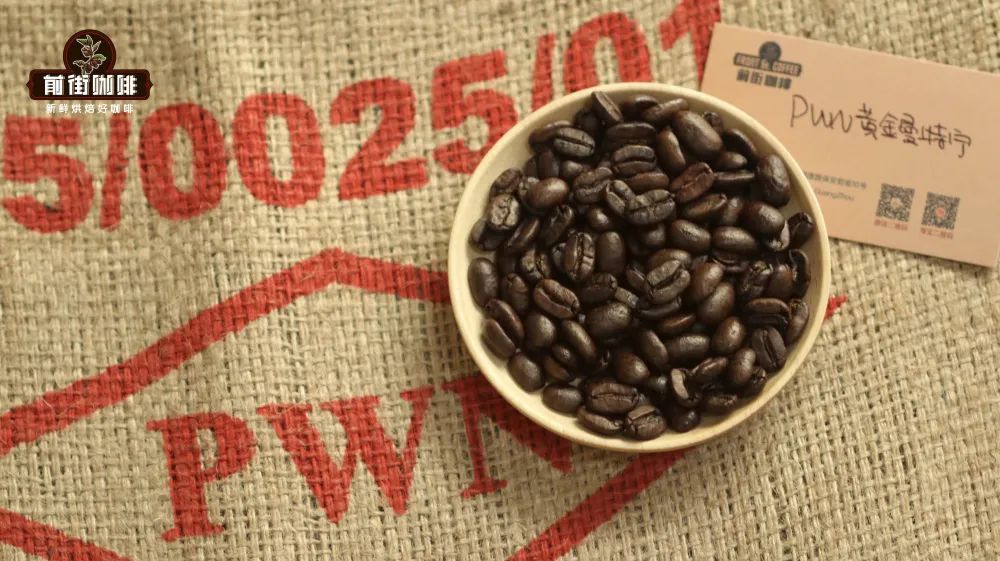
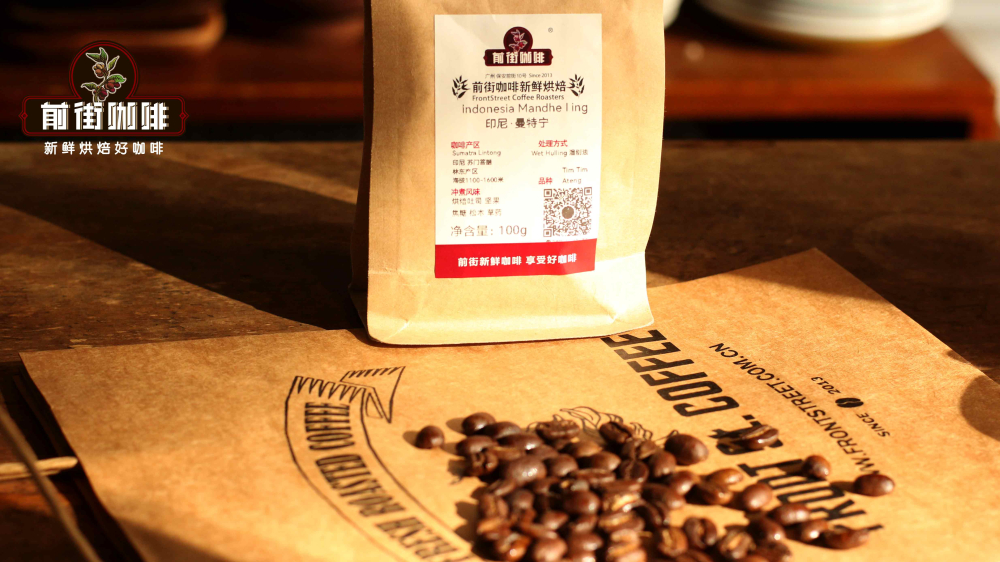
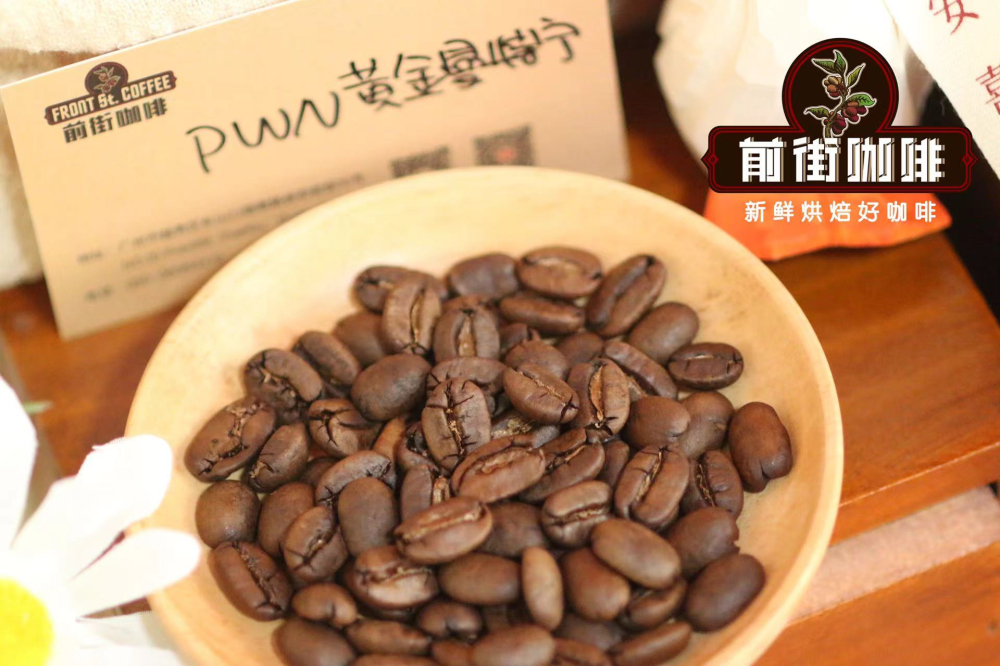
Indonesian Mandheling coffee, due to its wet-hulling processing, generally features low acidity and a rich, full-bodied mouthfeel, showcasing intense herbal, spicy, and mellow aftertastes when deeply roasted. For coffee enthusiasts new to pour over, it is recommended to try medium-to-dark roasted Indonesian Mandheling to experience its unique herbal aroma and woody character. For those who prefer higher quality and more consistent flavor profiles, premium bean varieties that have undergone multiple hand sorting—such as PWN Golden Mandheling—offer lower defect rates and can more purely express the regional characteristics imparted by wet-hulling.
The above content is compiled by CoffeeHunters, a coffee news website.


