







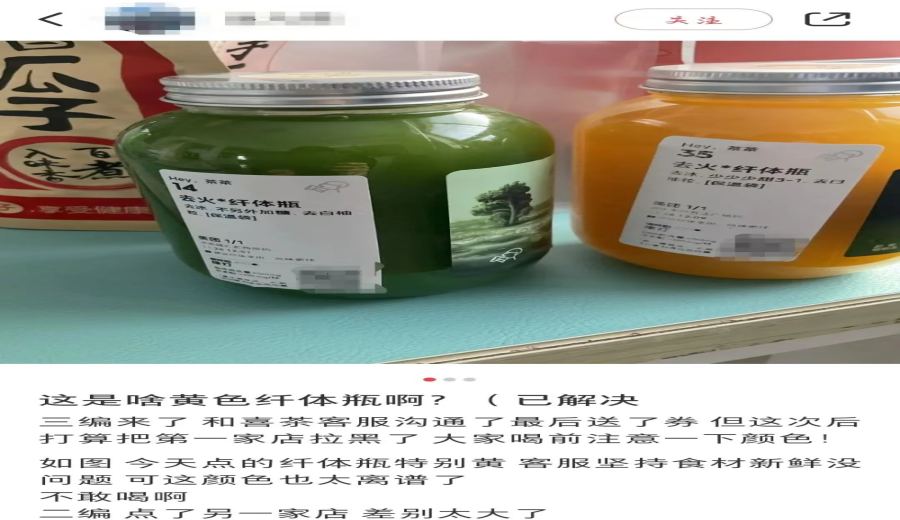
Introduction:Heytea’s “Detox & Slimming Bottle” is marketed with fresh-pressed fruits and vegetables as its highlight. Official images mostly showcase a refreshing green color, but many consumers have reported receiving drinks that are orange-yellow or yellowish-green, raising concerns about spoilage or poor quality control. This article delves into responses from store employees, explores possible reasons such as the condition of kale leaves and apple juice oxidation, and adds notes on the storage of freshly pressed beverages to help readers understand the causes of color variations and assess drink safety.
Heytea’s “Detox & Slimming Bottle,” with its fresh green appearance and concept of using freshly pressed produce, has been popular among health-conscious consumers. However, recently, many customers have noticed that the actual color of the drinks they receive differs significantly from the official promotions or the common green—appearing orange-yellow or yellowish-green—which has led to doubts about whether the products have gone bad.
One consumer shared on a social platform that the slimming bottle she purchased was not the expected refreshing green but an unusual orange-yellow. Although Heytea’s plant-based tea series emphasizes fresh fruit and vegetable juicing, and customer service insists the ingredients are fresh and safe, this color anomaly still made the consumer uneasy. When she got a normally colored drink from another outlet, she became even more hesitant about the yellowish one she originally received.
More than one consumer has encountered similar situations. Photos circulating online show that some “Detox & Slimming Bottles” have a darker, yellowish-green hue, in stark contrast to the bright green in official promotional images. Some users who tried them outright said these off-color drinks were “unpleasant” or “had a strange taste,” further suspecting that stores used stale produce or leftover juice, leading to quality control issues.
In response to consumer concerns, Heytea store employees explained that the color differences may stem from the state of the kale leaves. The staff revealed that while the kale delivered each day is fresh, if it sits for too long, the leaves may start to turn yellow. If the staff use these slightly yellowed kale leaves to make the juice, the resulting drink will have a yellowish tint, and the taste may also be slightly compromised.But this does not mean the drink has gone bad and it is still safe to consume..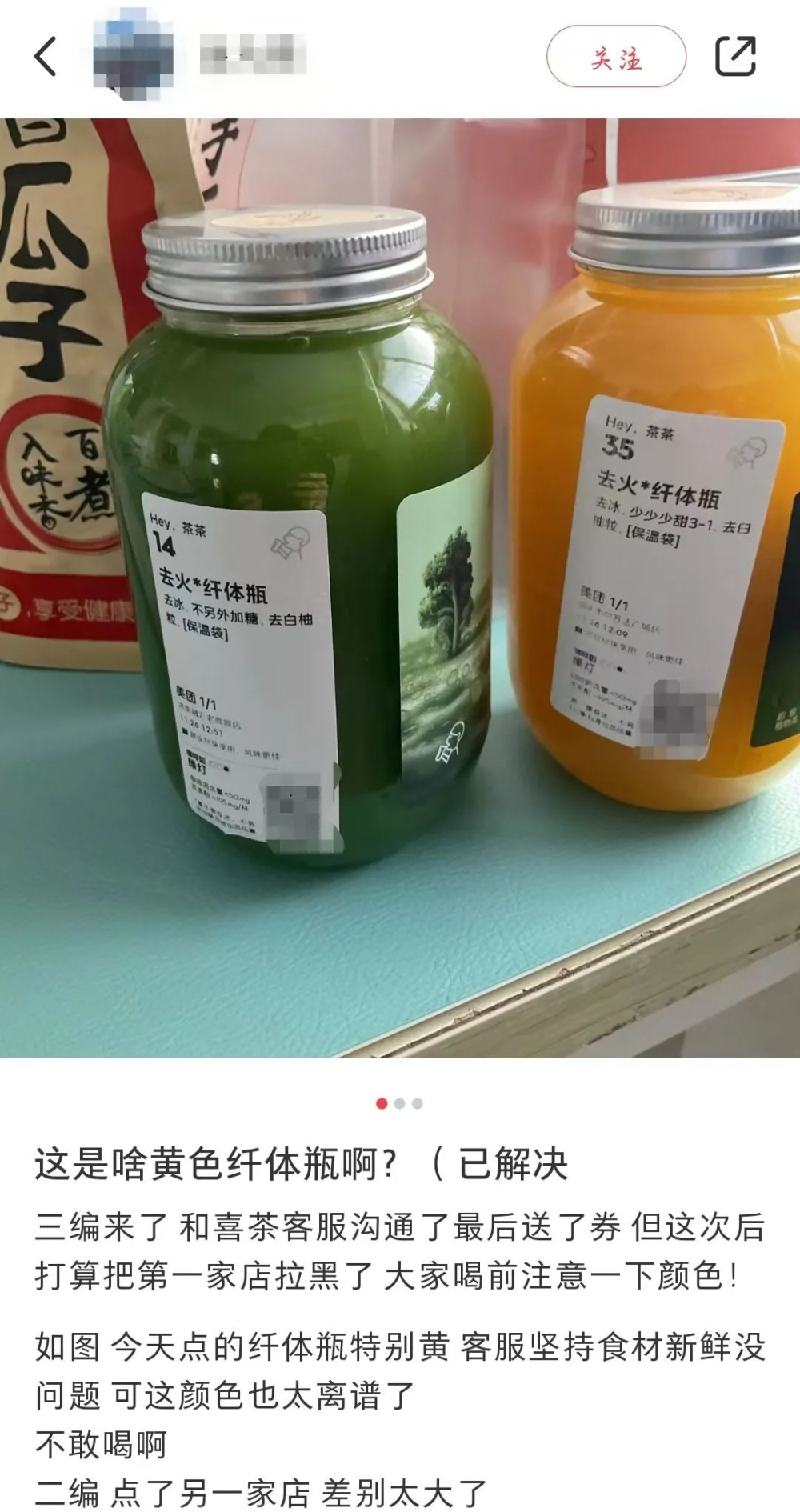
In addition, to maintain efficiency in serving the plant-based tea series, some stores pre-mix and juice ingredients like kale and apples, then refrigerate the mixture. Employees pointed out that according to regulations, such pre-made juice can only be kept for about two hours, after which it must be discarded and remade. Some staff speculated that the off-color slimming bottles might have used apple juice close to its shelf life or that the juice oxidized due to longer transit times, resulting in a color different from the usual green.
While some consumers remain concerned about quality control, employees emphasized that Heytea strictly regulates ingredient usage—whether at company-owned or franchised stores, expired materials are not allowed in drink preparation. Perishable ingredients like fruit and vegetable juices are all made and used on the same day, never kept until the next day. Violators face fines and store rectifications, so staff would not risk using spoiled materials.
In summary, the yellowish-green variations in Heytea’s slimming bottles are mainly related to the natural yellowing of kale leaves and the oxidation of apple juice,and do not indicate that the drinks have spoiled, so consumers can still drink them with peace of mind. However, to ensure the best flavor and visual consistency, it is recommended that consumers pay attention to drinking time and storage conditions. If there are concerns about the color, they can ask the store about the preparation details. Understanding these variables in the production process can help consumers view beverage color differences more rationally.
Image source: Xiaohongshu
The above content is compiled by CoffeeHunters, a coffee news website.


