








Introduction:The Ethiopian Commodity Exchange (ECX) has recently introduced a new floating pricing system for green coffee bean exports. Future prices will be calculated based on the ICE Arabica futures on the New York ICE exchange and real-time exchange rates. This move aims to increase earnings for coffee farmers, but it also makes the price of green beans more susceptible to international market fluctuations and the impact of the EU’s EUDR regulations. This article delves into the mechanisms behind the new pricing, its scope of application, and potential challenges, helping readers grasp future market trends.
The Ethiopian Commodity Exchange (ECX) has launched a brand-new pricing system for green coffee bean exports. Moving forward, the export price of commercial-grade green coffee beans from the country will be dynamically adjusted weekly according to the Arabica coffee futures prices on the New York ICE Intercontinental Exchange and the real-time exchange rates from the Commercial Bank of Ethiopia. This marks a shift from Ethiopia’s previous fixed pricing model toward a more market-driven, supply-and-demand-responsive floating mechanism.
The birth of this new mechanism is closely tied to the foreign exchange liberalization policy introduced by the National Bank of Ethiopia at the end of July this year. With increased exchange rate flexibility, the coffee export pricing mechanism has been adjusted accordingly, making prices no longer static but more responsive to the market. However, this change currently applies only to standard commercial-grade coffee beans; high-quality specialty coffee continues to use the original pricing method and has not been included in the new system.
According to plans by the Ethiopian Coffee and Tea Authority (ECTA) and the ECX, the new system will maintain the minimum export price policy set in 2020, ensuring that coffee prices do not fall below a certain level. However, the price ceiling will fluctuate along with the trends in international Arabica futures and exchange rates, resulting in greater overall price elasticity and making it more vulnerable to global market sentiment.
One of the goals of this pricing reform is to address the long-standing issue where export prices have been consistently lower than domestic first-sale prices—an unreasonable situation. It allows coffee farmers to gain more reasonable returns from international market increases. With floating pricing, when Arabica futures prices rise, farmers can expect to share more of the profits; but conversely, if futures prices drop significantly, their actual income may also be affected.
It is worth noting that coffee exports from Ethiopia primarily occur through three channels: the largest being auctions via the ECX platform, followed by exports directly by cooperatives, and a small number of single-farm direct exports. Among these, cooperatives and individual farms often utilize so-called “vertically integrated” supply chains to bypass the ECX platform and deal directly with international buyers. Official data shows that the ECX platform has long served over 2.4 million small-scale coffee farmers, serving as the main entry point for most farmers into the market.
In July of this year, the Ethiopian government further advanced reforms in its foreign exchange system, aiming to alleviate foreign exchange shortages, enhance export competitiveness, and attract more foreign direct investment. The reform measures include easing exchange rate controls, leading to a significant depreciation of the Ethiopian birr. While currency depreciation helps improve the export competitiveness of agricultural products such as coffee, it has also caused rapid increases in local prices, with some commodities rising by as much as 50% to 100%, further increasing the cost pressures on coffee farming.
For this reason, the impact of the new floating pricing mechanism on the coffee industry is a double-edged sword. When international Arabica futures prices rise, the floating mechanism helps farmers earn higher returns; but if prices become too high, it could instead reduce the willingness of international buyers to purchase, driving them toward other regions with more stable supply and more controllable prices—such as Central and South America or Southeast Asia.
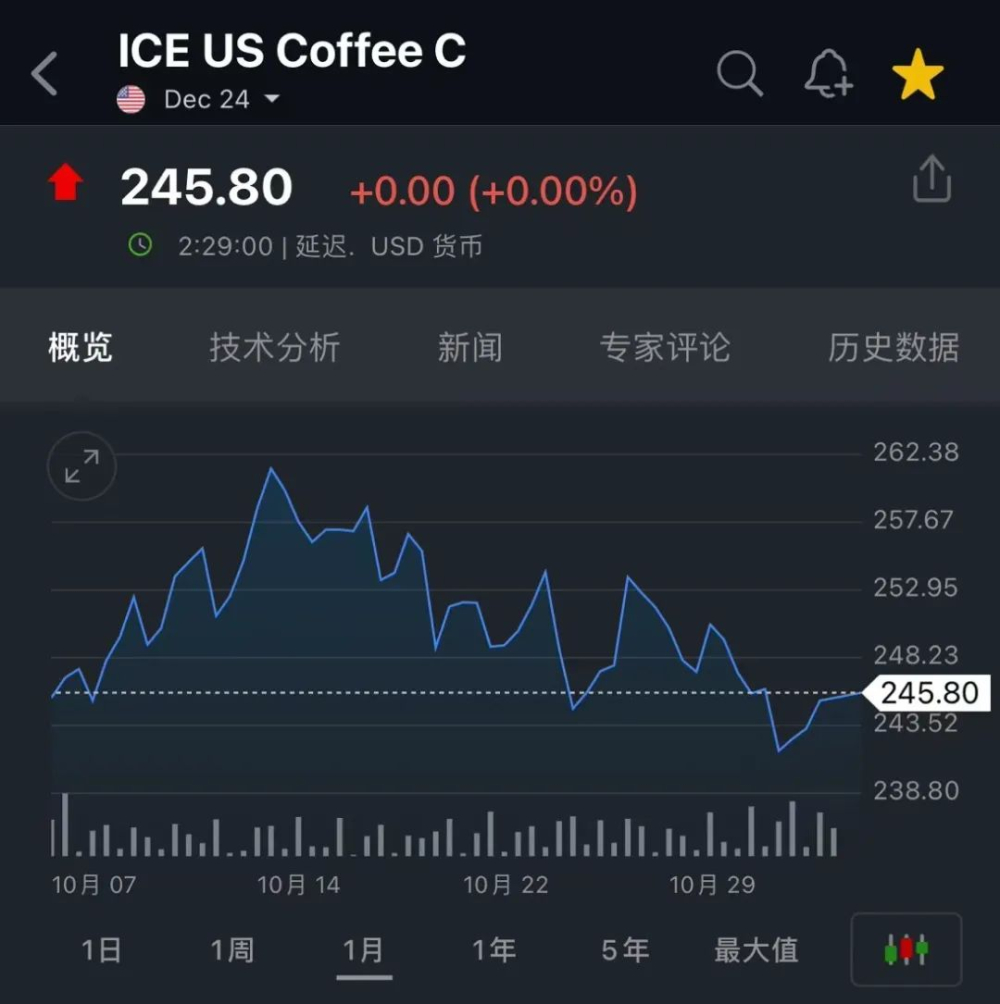
Moreover, international coffee futures prices themselves are highly volatile and easily influenced by various factors. For example, recent stabilization of rainfall in Brazil’s major coffee-growing regions has alleviated earlier threats to production posed by drought, and the market expects future supply to rebound. Coupled with Colombia’s steadily growing coffee production and the EU’s EUDR (Deforestation-free Regulation) implementation deadline being postponed by one year, recent international coffee futures prices have shown a downward trend. Against this backdrop, Ethiopia, facing rising domestic production costs, may instead encounter a decline in export competitiveness.
More notably, the EU, as Ethiopia’s largest coffee export market, accounts for over 30% of its total exports. However, most of Ethiopia’s coffee production still struggles to meet the EU EUDR’s stringent standards, including requirements for traceability and assurance of no illegal deforestation. As of now, the Ethiopian government has yet to introduce comprehensive countermeasures. If the EUDR is fully implemented in the future, it could pose further challenges to the country’s coffee exports.
The above content is compiled by CoffeeHunters, a coffee news website.


