







Introduction:Employee beverage benefits in the coffee and tea industry were once a major draw for young workers. But recently, many employees of Heytea and Luckin have reported that due to poor store performance, some franchise outlets have begun reducing or even eliminating this perk. Is this a result of brand policy adjustments, or cost-saving measures by franchisees? This article delves into the reasons behind the shrinking employee beverage benefits and explores the protection of workers’ rights.
In the coffee and tea beverage sector, “employee drinks” have long been a key attraction for job seekers—especially for young people passionate about drinks. The ability to enjoy free or discounted coffee and tea while working can even be a reason for them to join the industry.
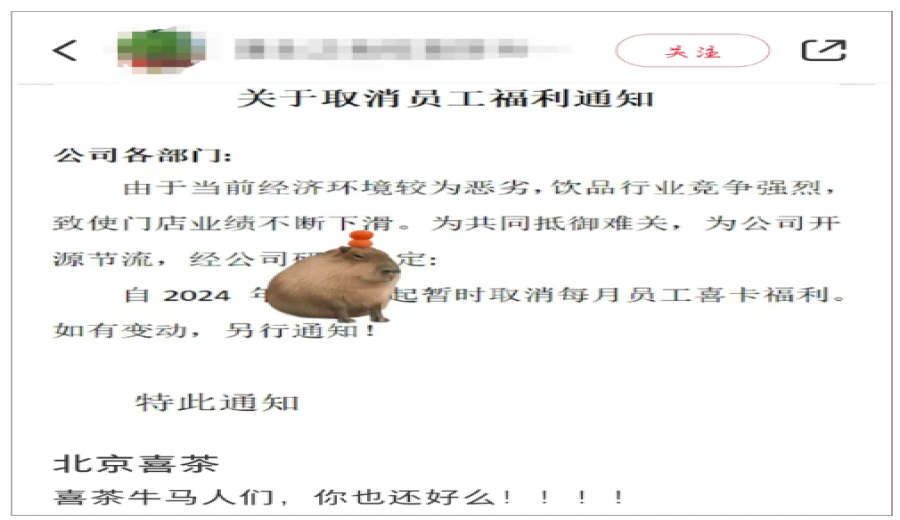
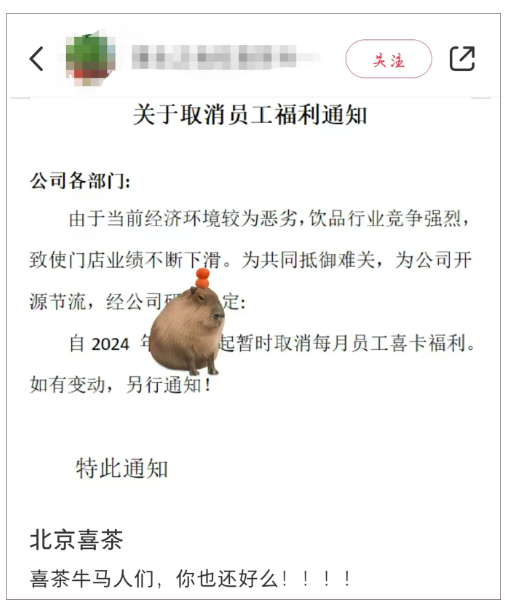
However, recently, many employees of Heytea and Luckin have shared on social platforms that their stores, facing declining sales, have started adjusting or outright canceling the employee beverage benefit. One Heytea employee revealed that the store issued a notice stating that due to consistently poor performance, it had decided to temporarily suspend the monthly issuance of Heytea benefit cards to save costs.
A similar situation has occurred at Luckin, where an employee shared chat records from an internal group showing that the store manager decided to reduce both the quantity and variety of drinks each employee could enjoy, and even hinted that the benefit might be revoked if an employee made mistakes at work.
It’s worth noting that currently, most employees at directly operated stores still enjoy the original employee beverage benefits, with the issue mainly concentrated in franchise and joint-operation stores. Employees at these outlets report that they either never had such benefits or had extremely limited access—for example, comments like “our franchise has never offered employee drinks or benefit cards” or “our boss is even stingier, allowing only one drink per month” are not uncommon.
Although most chain brands still list employee beverages as a standard benefit during recruitment, and some job seekers are told during interviews that they can enjoy the perk during downtime as long as they follow the rules, whether they can actually access it often depends on the management style and attitude of the store manager.
In stores with more relaxed management, employees can not only drink multiple beverages during work hours but also use ingredients available at the counter to create their own custom drinks. Some employees even mentioned that they could take leftover employee drinks home at the end of the shift to share with family and friends. However, many employees also revealed that once store performance falls short of targets, or when managers feel cost pressure, the benefits are quickly reduced or even banned, including restrictions on using store ingredients to take drinks home—situations like theseare more common in franchise and joint-operation stores.
The crux of the matter is that the employee beverage benefits promised by the brand are actually borne by the franchisees. As a result, some franchisees who are focused on controlling costs may flexibly adjust or even cancel the benefit based on the actual operating conditions of the outlet, rather than adhering to a uniform policy set by headquarters.
Some franchisees also believe that certain employees may take advantage of their position to overly indulge in the perk, so they choose to cancel the employee beverage benefit altogether—both to cut expenses and avoid waste. Many industry professionals note that although employee drinks aren’t a daily necessity, when stores cancel this benefit due to cost concerns, it can still leave employees feeling disappointed and even affect their willingness to stay.
In summary, the reduction of employee beverage benefits not only reflects issues in the division of responsibilities between brands and franchisees, but also highlights how, under chain operation models, grassroots employees’ benefits often become the first sacrifice under cost pressures. For job seekers aiming to enter the coffee and tea beverage industry, understanding the actual benefit policies of each store, as well as the differences between franchise and directly operated models, will help make more pragmatic employment choices.
The above content is compiled by CoffeeHunters, a coffee news website.


