







Introduction:To master the refined flavors of pour over coffee, relying solely on a fixed brewing temperature is far from enough. Learn how variable temperature techniques, through segmented water temperature adjustments, can effectively control the release rhythm of acidity, sweetness, and bitterness. This article delves into the principles and practical applications of three-tier variable temperature extraction, from championship-level applications to everyday brewing tips, guiding you to find the optimal flavor balance point.
During the pour over process, if you find that the brewing parameters are too high, you can usually adjust factors such as grind size, coffee-to-water ratio, or brew time to correct the issue. However, when the problem stems from the grinder producing too much fine powder, leading to over-extraction, simply tweaking these basic parameters often yields limited results.
To address this kind of situation, one coffee team conducted multiple experiments and observations and found that in addition to sifting out fine particles,using variable temperature brewingis also an effective improvement method. However, the variable temperature referred to here is not a minor adjustment of 2–3°C, but rather a multi-stage extraction using noticeable temperature differences—utilizing high temperatures to quickly dissolve acidic and sweet substances, followed by lower temperatures to delay the release of bitterness, achieving controlled flavor balance.
As the name suggests, variable temperature brewing involves using hot water at different temperatures to perform segmented extractions for the same brew. Although most brewing parameters such as coffee-to-water ratio and grind size can remain unchanged, the key lies in the significant difference in water temperature—not just a slight adjustment of a few degrees, but rather a more substantial temperature gap that affects the extraction outcome at each stage.
The person who first brought this technique into the public eye was Mr. Wu Zelin from Taiwan, China. In the 2016 World Barista Championship (WBC), he won the championship using the variable temperature brewing method, bringing this approach gradually into industry focus and discussion.
The principle is actually quite simple: the higher the water temperature, the stronger the extraction efficiency, which can quickly release the acidic and sweet components in the coffee; whereas the lower the water temperature, the slower the extraction rate, delaying or even reducing the release of bitter compounds. Variable temperature brewing utilizes this characteristic by dividing the hot water used during the brewing process into multiple temperature zones, thereby precisely controlling the timing of the release of different flavor compounds.
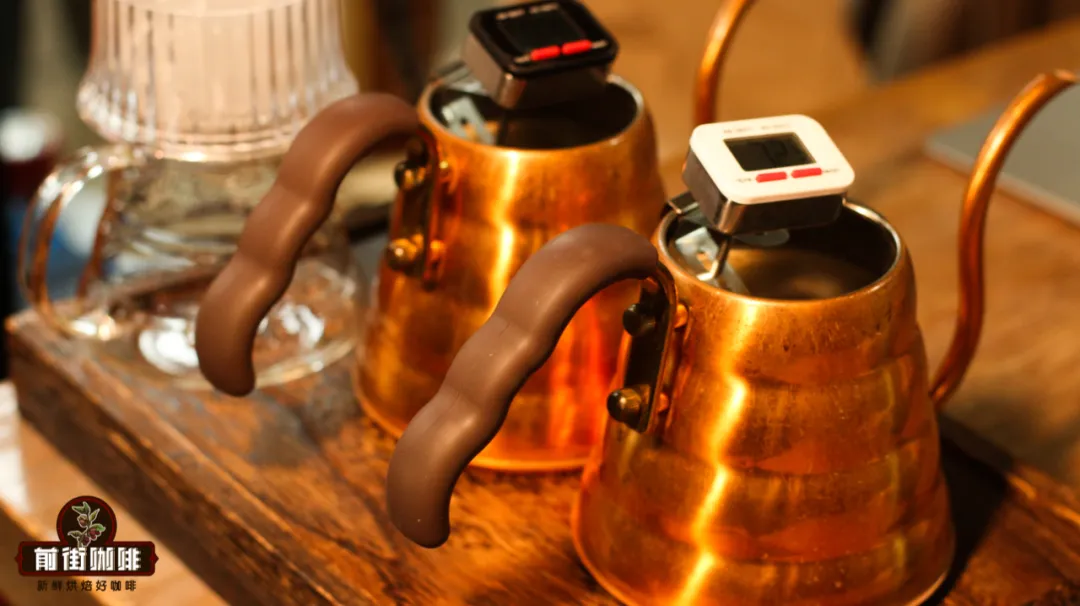
For example, Wu Zelin’s variable temperature brewing approach at the time involved using 16 grams of coffee grounds with a 1:15 coffee-to-water ratio for four pours, consisting of 40 ml, 80 ml, 80 ml, and 40 ml respectively. The first two pours used 94°C hot water, while the latter two gradually decreased to 90°C and 80°C. Through thisstepwise temperature reductionmethod, the coffee's front end highlights bright acidity and fruity notes, while the latter part effectively suppresses excessive bitterness, resulting in an overall cleaner and more layered flavor profile.
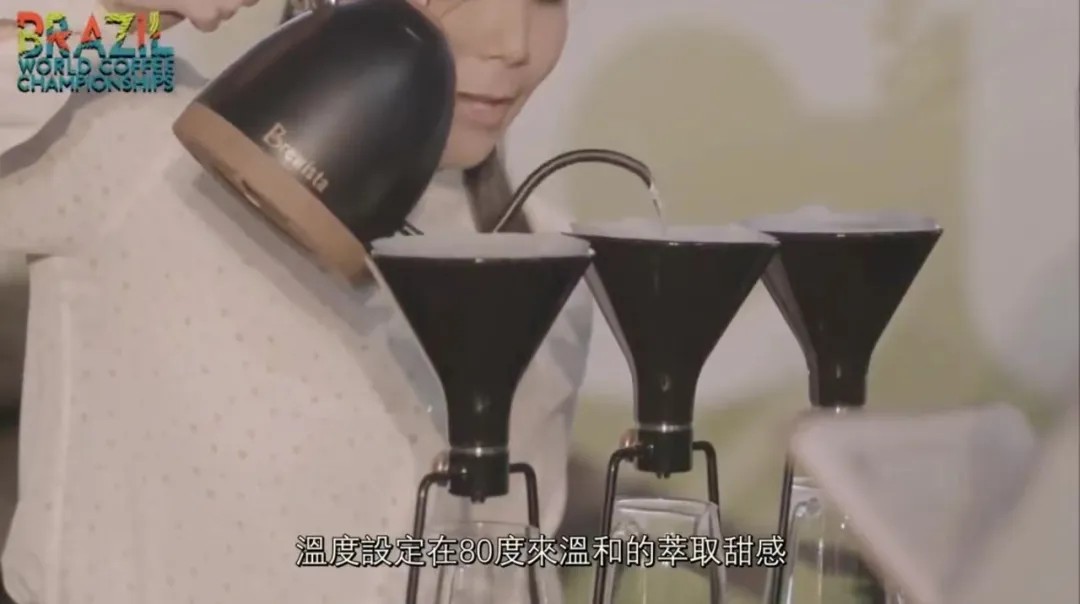
Another classic case comes from Emi, the 2018 World Brewers Cup (WBrC) champion. She employed a three-stage variable temperature brewing method combined with a smart filter design: the first stage used 80°C low temperature for pre-infusion, the second stage switched to 95°C high temperature for drip extraction, and the final stage returned to 80°C low temperature to finish extraction by opening the valve. This approach effectively reduced excessive acidity, making the coffee taste smoother and sweeter, ideal for those who prefer milder flavors.
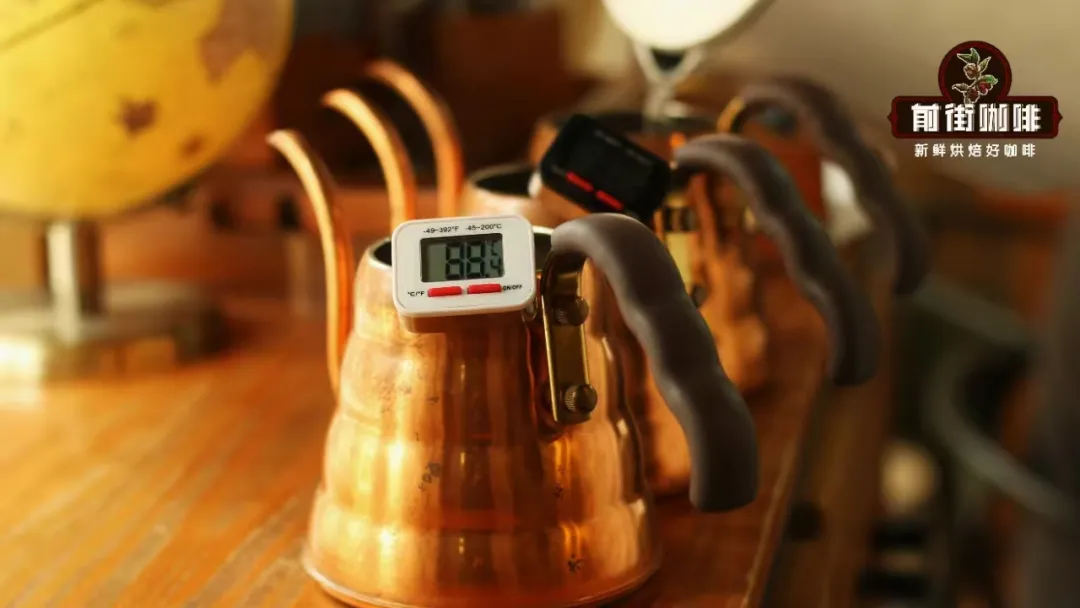
So, is variable temperature brewing difficult for the average coffee enthusiast? The answer is no. While professional players might use multiple temperature-controlled kettles to prepare water at different temperatures, the equipment barrier is too high for most people. Therefore,some professionals suggest using the cold water tempering methodto naturally reduce the water temperature during the brewing process, allowing for a high-to-low variable temperature extraction effect with just a single brewing kettle.
Of course, this method is only suitable for high-to-low temperature transitions. If you want to achieve multi-stage heating or repeated temperature fluctuations, you’ll still need to rely on multiple temperature-controlled kettles or pre-temperature-controlled preparation.
Among the many variable temperature brewing strategies, experts particularly recommend an advanced version of the 4-6 method proposed by Mr. Tetsu Kasuya—widely discussed as the“Devil’s Brewing Method.”This technique divides the brewing process into three stages: the first two stages use 92°C hot water for drip extraction, fully extracting the coffee’s bright acidity and aroma; the final stage switches to 70°C low temperature, using immersion to slow down extraction and effectively suppress the release of excessive bitter compounds. This method not only has a high margin for error, but is also extremely beginner-friendly for those seeking high sweetness and a rich mouthfeel.
For this practical demonstration, we selected the newly launched sun-dried ALO coffee beans. Under standard brewing conditions, these beans exhibit rich tropical flavors such as magnolia, citrus, and pineapple. Brewing parameters are as follows: 15 grams of coffee, 1:15 coffee-to-water ratio, grind size at the 9th setting on the Ek43 grinder (approximately 85% through a #20 sieve), using the Devil’s Brewing Method for a three-stage extraction paired with the Hero variable flow filter, with hot water temperatures of 92°C and 70°C.
First, pour 30 ml of 92°C hot water for blooming, for 30 seconds, keeping the filter valve open to facilitate even warming and initiate the initial flavor release.
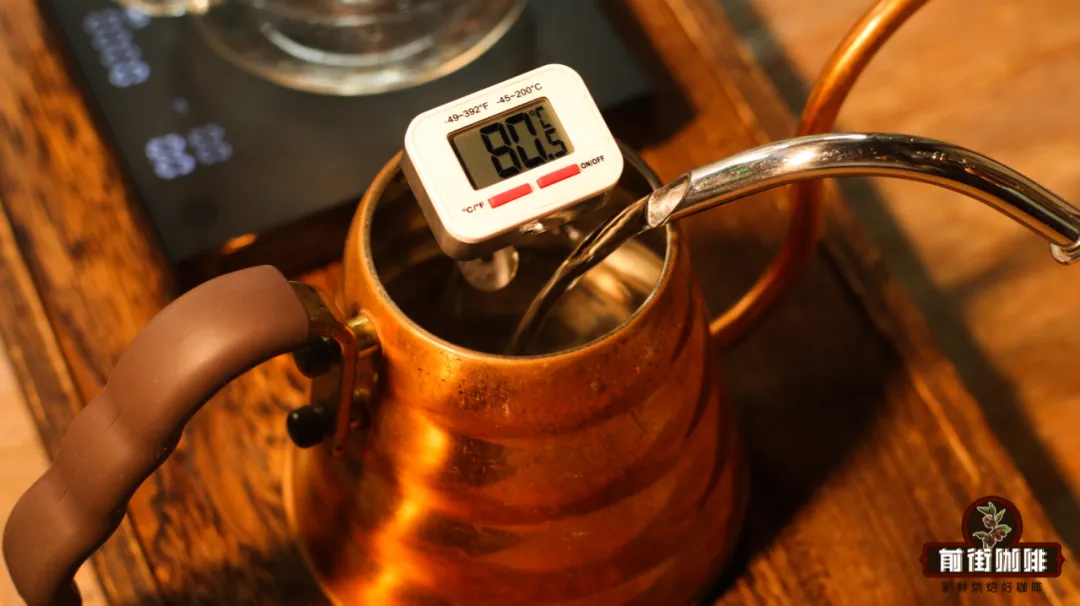
Next, proceed to the first high-temperature drip stage, using 92°C hot water to bring out the coffee’s bright acidity and fruity layers. Then, continue the second stage at the same temperature for stable extraction, ensuring the flavor continues to develop. Finally, switch to the third stage with 70°C low temperature for immersion, where the release rate of bitter compounds from the coffee grounds significantly slows down, helping to enhance overall sweetness and smoothness.
Through such variable temperature manipulation, not only can each flavor compound be captured at its optimal release timing, but the final cup of coffee also achieves a more balanced and layered mouthfeel. For coffee enthusiasts who love challenges and details, variable temperature brewing is undoubtedly an excellent way to elevate pour over skills and flavor experience.

The above content is compiled by CoffeeHunters, a coffee news website.


