







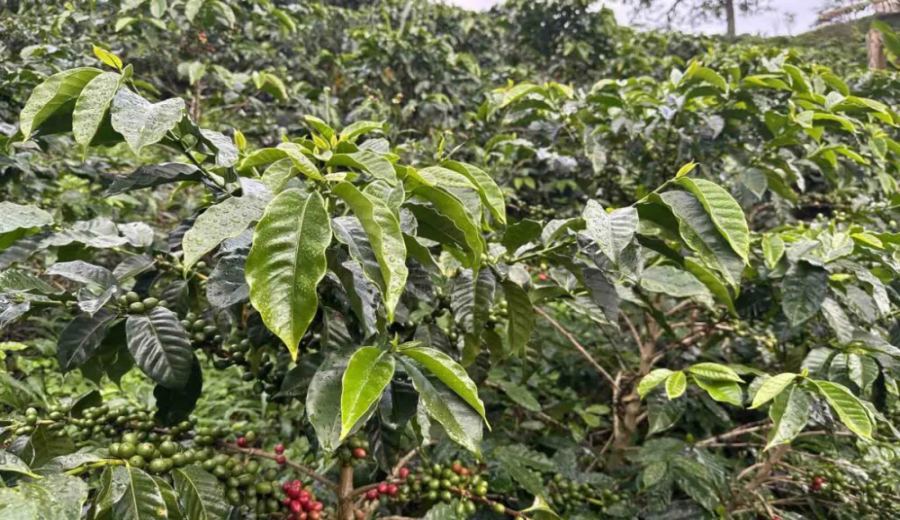
Introduction:The Ombligon (Big Belly Button) coffee variety, an emerging cultivar from Colombia’s Huila region in recent years, has garnered attention for its distinctive fruit shape and complex flavor profile. This article delves into this rare variety, which originates from an Ethiopian landrace but mutated uniquely in Colombia, exploring its physical characteristics, genetic background, and ideal altitude range for cultivation. It also details how Finca El Diviso employs a double anaerobic fermentation process to highlight layered tasting notes of blackcurrant, berries, and citrus—offering practical insights for selecting pour over or competition-grade beans.
Within Colombia’s diverse coffee variety landscape, Ombligon (nicknamed “Big Belly Button” in Chinese) is a relatively new variety that has only recently begun to attract notice. Its name derives from the prominent bulge at the bottom of the fruit, resembling a human navel, with the Spanish name vividly capturing this visual trait. Currently, this variety is primarily cultivated in Colombia’s southwestern Huila region and has not yet entered large-scale international circulation. However, its unique flavor profile and competitive performance have started to draw interest from coffee professionals and enthusiasts alike.
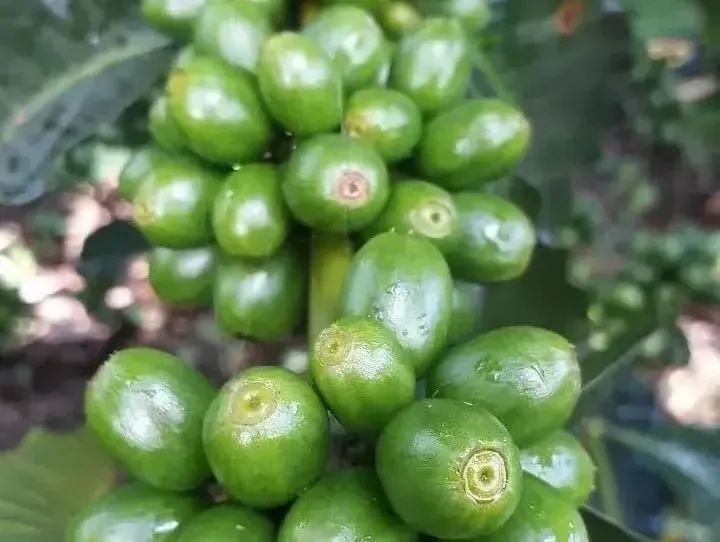
Ombligon’s appearance is highly distinctive: its cherries are noticeably larger than typical coffee cherries, shaped similarly to papayas, with a pronounced round protrusion at the stem end, akin to a belly button. This unique physiological feature not only inspired its name but also serves as a key identifier during field selection. According to local growers, this variety shares several traits with the widely cultivated Caturra, including broad leaves, dense fruit clusters, upright branch structures, and strong resistance to leaf rust. Additionally, its high yield makes it an attractive option for farmers seeking stable harvests.
Regarding Ombligon’s genetic origins, analysis by the World Coffee Research institute suggests a genetic link to Ethiopia’s native landraces. It is speculated that seeds of the landrace were introduced to Colombia through trade and then naturally mutated under the region’s unique climate and soil conditions. While the exact path of introduction remains unclear, the variety exhibits its most balanced flavor profile at altitudes between 1,600 and 1,800 meters—precisely the core of Huila’s prime growing zone.
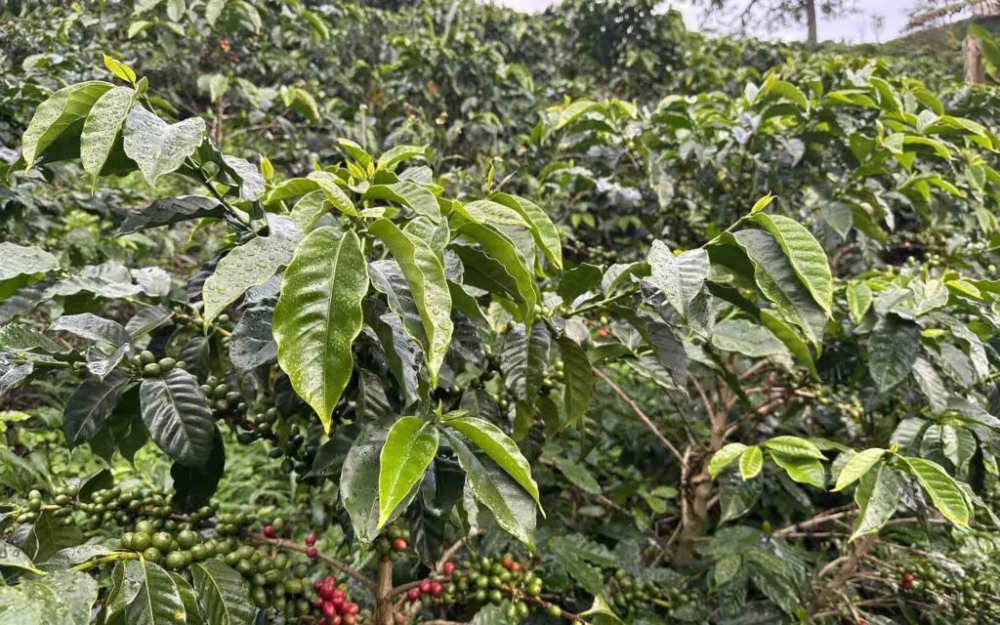
Currently, most high-quality Ombligon beans available on the market come from specialized farms in the heart of Huila. Among them, those produced by Finca El Diviso are particularly renowned. Established in 1996 as a family-run farm, it is now managed by the third-generation owners, Nestor Lasson and his brothers. Since taking over, Nestor has been dedicated to introducing and cultivating various rare varieties. In addition to Ombligon, the farm grows a diverse selection, including Pink Bourbon, Papayú, Chiroso, and Pepper Bourbon, showcasing a deep commitment to exploring coffee genetic diversity.
Finca El Diviso is located in the town of Pitalito at the foot of the Huila volcanic mountains, surrounded by slopes exceeding 1,500 meters in altitude. The soil is rich in minerals deposited by volcanic activity, and the proximity to the Magdalena River provides a stable water supply—creating ideal microclimatic conditions for coffee cultivation. This environment not only allows the Ombligon variety to fully express its flavor potential but also ensures the farm’s consistent output and high quality.
In terms of processing, Finca El Diviso employs a double anaerobic fermentation method for this Ombligon. This technique involves meticulously controlling microbial activity in an oxygen-deprived environment to gradually break down the mucilage layer and convert sugars, thereby influencing the final flavor complexity. When brewed, the cup often reveals pronounced acidity reminiscent of blackcurrant and grapefruit, paired with the vibrant notes of berries and the gentle aroma of oranges. The overall flavor profile resembles freshly squeezed pineapple juice—smooth on the palate with a lingering tea-like finish, striking a delicate balance between tropical fruits and light fermentation.
For pour over enthusiasts eager to try this emerging variety, it is recommended to use a medium-light roasted Ombligon with a grind size similar to fine sugar crystals, extracted at 90–93°C. Common brewing parameters can be set to a 1:15 to 1:16 coffee-to-water ratio, using a three-stage pouring method (e.g., first stage: 30g bloom for 30 seconds, second stage: incremental pours to 125g, final stage: total water weight of 225g). This helps highlight its bright acidity and layered fruit aromas. Be cautious not to overextend extraction time to avoid excessive tannin release, which can hinder flavor smoothness.
In summary, as a representative rare variety from Colombia’s Huila region, Ombligon not only carries the genetic legacy of Ethiopia’s native landraces but also integrates the area’s unique growing environment and processing techniques, resulting in highly distinctive flavor characteristics. From its unique fruit shape in the field to its layered expression in the cup, this variety offers coffee lovers an exceptional opportunity to explore emerging genetic resources while adding diversity to the world of specialty coffee.
The above content is compiled by CoffeeHunters, a coffee news website.


