







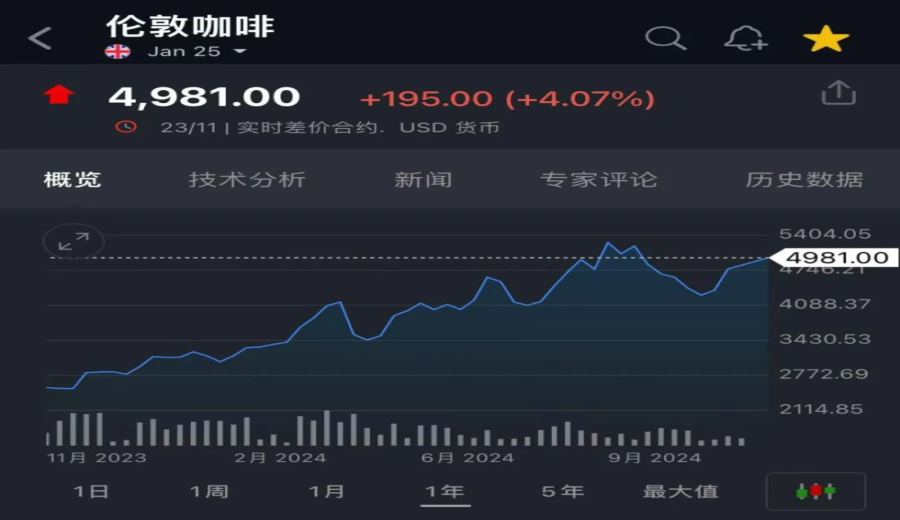
Introduction:As the world’s largest producer of Robusta coffee, Vietnam has in recent years been repeatedly hit hard by extreme weather and policy regulations. The current futures price of Robusta is surging close to the $5,000 per tonne mark, reflecting not only Vietnam’s reduced coffee output but also exposing the profound impact of the European Union’s deforestation-free regulation and climate change on the industry. This article analyzes the main drivers behind the price fluctuations and alerts traders and consumers to the challenges ahead in the upcoming harvest season.
The global coffee market has recently experienced significant volatility, with Arabica futures prices climbing to a thirteen-year high and Robusta futures also rising sharply, now approaching the $5,000 per tonne threshold. Behind this upward trend is an unexpected decline in Vietnam’s coffee production. Notably, although Vietnam’s total coffee exports for the 2023/24 season dropped by 12.7% compared to the previous year, higher unit prices helped push overall export revenue to a record high of $5.32 billion.
A deeper analysis of export data reveals that the price of Vietnam’s primary Robusta coffee has breached the $5,000 per tonne level, even surpassing the traditionally higher-priced Arabica varieties — a phenomenon rarely seen in the industry’s history.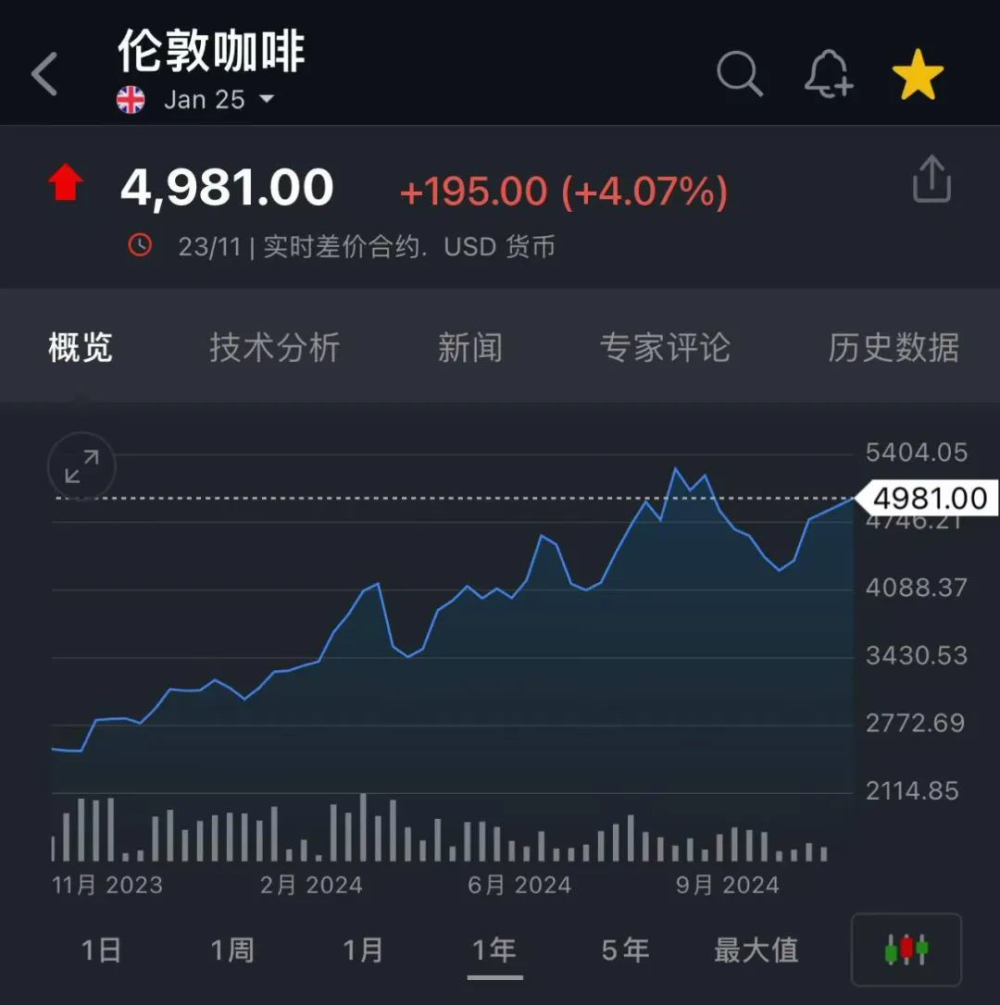
Experts point out that the severe drought that ravaged Vietnam between March and May this year led to the withering and death of some coffee trees, with estimated production losses reaching double-digit percentages. This was the first major shock driving up Robusta prices. At the same time, the European Union’s upcoming Deforestation-Free Regulation (EUDR), set to take effect in December, prompted European buyers to stock up massively in advance, further intensifying the market scramble and pushing futures prices to a staggering $5,572 per tonne at one point.
The market had initially expected that the EU’s announcement to postpone the EUDR implementation by one year, along with news that Indonesia’s Sumatra Robusta exports had surged by 76.36% year-on-year, would help alleviate the supply tightness. However, Vietnam was subsequently hit by two typhoons, “Trami” and “Yinxing,” between October and November. Though less powerful than the super typhoon “Khanun” in September — which caused $3.31 billion in economic losses and 226 fatalities — the accumulated heavy rainfall (with some areas receiving over 400 mm) severely disrupted coffee harvesting operations.
Industry insiders currently predict that substantial supplies from the new season will not be available until late November to December at the earliest. But potential risks remain unresolved: the World Meteorological Organization warns of a relatively high probability of La Niña occurring by the end of the year, which, if materialized, could lead to abnormal rainfall patterns in Vietnam and may once again affect harvesting efficiency. In addition, the compliance threshold of the EU’s EUDR regulation poses a major challenge for Vietnam’s small and medium-sized coffee farmers — most of the country’s coffee farms are only around 0.5 hectares in size, making it not only technically difficult but also costly to trace the full supply chain and prove no deforestation has occurred.
These compounding factors make the outlook for Vietnam’s coffee industry highly uncertain, and global manufacturers of instant coffee, ready-to-drink beverages, and soluble products that rely on Robusta supplies will need to closely monitor subsequent market developments.
The above content is compiled by CoffeeHunters, a coffee news website.


