







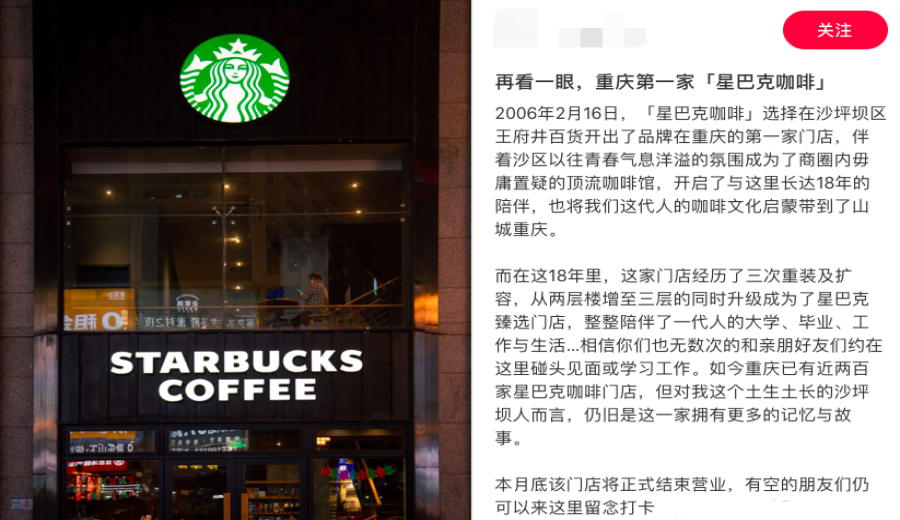
Introduction:The first Starbucks store in Shapingba, which has accompanied Chongqing residents for 18 years, will cease operations at the end of this month. This premium store, which has witnessed the city’s growth, is coming to an end due to the overall withdrawal of the landlord. Beyond nostalgia, this article delves into practical factors such as commercial district decline, rental costs, and brand strategy adjustments to help you understand the real background behind the closure of chain coffee shops, and provides information on alternative stores nearby.
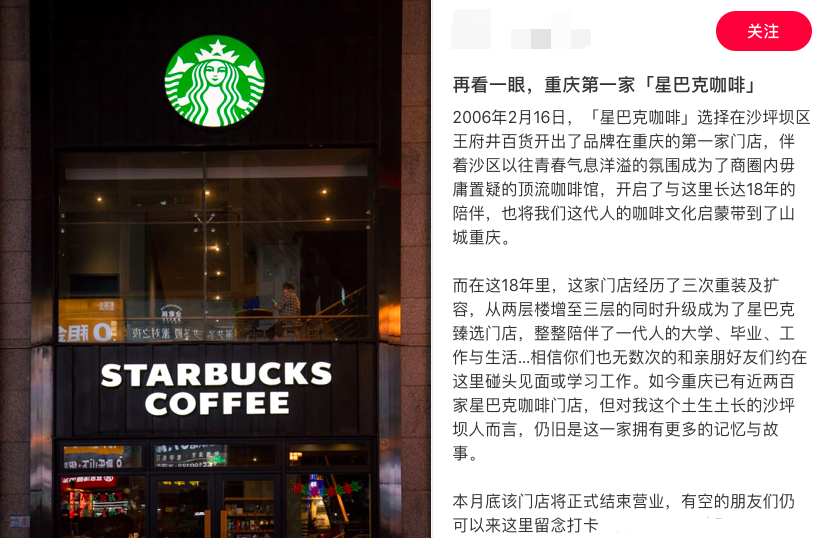
Recently, coffee enthusiasts in Chongqing have been paying attention to a piece of news: the first Starbucks store located in Sanxia Plaza, Shapingba District, is about to close its doors at the end of this month. Opened in February 2006, this store was Starbucks’ first location in Chongqing and has now entered its 18th year. Originally just a two-story shop, it gradually expanded to three floors and was upgraded to a Starbucks Reserve store as its popularity grew, holding countless important moments and memories for customers.
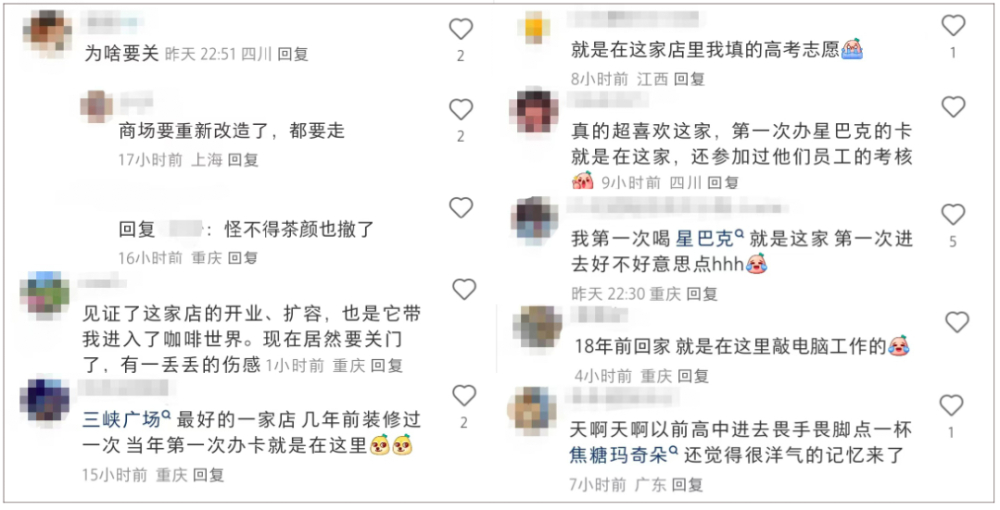
This store is not only one of the earliest international chain coffee brands in the area but also a witness to the trajectory of Chongqing’s urban development. From trying coffee for the first time in their student days, to filling out college applications before important exams, or even going on first dates—this place has been a shared memory spot for many. Netizens have shared on social media: “As a kid, I thought drinking coffee here was super stylish,” “I filled out my college applications right here,” “The first time I ordered a caramel macchiato, I felt so trendy,” with the words full of nostalgic emotion.
However, with changes in urban planning and the flow of people in the commercial district, this long-standing store is facing the end of its operations. It is understood that due to the landlord’s decision to withdraw entirely, the Starbucks Shapingba store will not be able to renew its lease and is forced to close.In response, the brand stated that a new store has been opened at Huayuzhou Plaza, about 100 meters from the original location, continuing to serve customers in the area and forming a new service network with three other nearby stores.
Many citizens have expressed reluctance, but have also begun to explore the reasons behind the store’s closure. Sanxia Plaza, as one of the core commercial districts in Shapingba District, used to be densely packed with malls, restaurants, and entertainment facilities, and featured sculptures and landscapes showcasing the culture of the Three Gorges. It was once an important gathering place for locals and tourists. However, in recent years, influenced by shifts in urban development priorities and changing consumer habits, the foot traffic in the commercial district has significantly declined.
In June of this year, Wangfujing Department Store, also located in Sanxia Plaza and in operation for nearly 19 years, announced its closure, further impacting the vitality of the commercial district. Many merchants in the mall are facing reduced foot traffic and declining business, which also leads people to associate Starbucks’ closure decision with the overall decline of the commercial district. A netizen pointed out: “The mall is about to be redeveloped, and many shops have received notices to vacate.” This claim was later confirmed to be true, as it was indeed due to the landlord’s overall planning adjustments that the Starbucks store had to cease operations.
In addition to changes in the commercial district, industry insiders also analyze that traditional department stores are experiencing a wave of closures, with many large shopping malls and department stores in various cities shutting down one after another, leading to a sharp overall decline in foot traffic. In such an environment, even if a store is located in a prime location, if the rent is too high and revenue cannot support it, the brand may still choose to close underperforming locations in order to adjust market layout and resource allocation.
In fact, not only Starbucks but also chain brands like Manner face similar challenges. Under the pressure of high rents and intensified competition, many brands reassess the economic benefits of their stores after lease renewals, prioritizing the retention of high-traffic, high-profit locations. Therefore, although the brand officially emphasizes that the main reason for the closure is the landlord’s withdrawal, it is widely believed that factors such as reduced foot traffic in the commercial district and high rental costs are also important considerations that prompted Starbucks to make this decision.
For customers familiar with this store, its closure represents not only the loss of a place to buy coffee but also the fading of a piece of urban memory. However, Starbucks has already opened a new location nearby to continue serving Chongqing residents. In the future, whether for nostalgia or seeking new coffee experiences, consumers still have a variety of options to explore.
The above content is compiled by CoffeeHunters, a coffee news website.


