








Introduction:Sidra, as a standout variety in international coffee competitions in recent years, has won the favor of many roasters with its unique fruity aroma and honey-like sweetness. But did you know that it actually originated from an Ecuadorian breeding program, not Colombia? This article delves into Sidra’s plant characteristics, genetic origins, cultivation challenges, and how it has emerged in Colombia, along with the flavor profile you can expect when tasting it.
The name Sidra comes from Spanish, meaning "apple juice" or "cider," which cleverly echoes the fruity notes often found in its flavor profile. In terms of plant appearance, Sidra has a sturdy trunk and can grow up to four meters tall, making it one of the taller Arabica varieties. Its leaves are dark green with naturally wavy edges, and when it blooms, it produces slender five-petaled coffee flowers. As for the fruit, its cherries are noticeably larger than those of typical Arabica varieties, and the beans inside are relatively long, all of which make it visually distinct.
Sidra is not only unique in appearance; it also produces a relatively dense yield, generally performing well in terms of overall output. However, it’s important to note that it has weaker resistance to leaf rust. While it can withstand some common pests and diseases, it still requires additional cultivation management. For optimal growth, it is recommended to plant Sidra at altitudes between 1600 and 1800 meters, preferably with some shade, to fully bring out its potential and flavor characteristics.
Sidra truly gained international attention during the 2019 World Barista Championship (WBC), when South Korean competitor Jooyeon Jeon used a Sidra coffee from Colombia’s Tucan Estate to win the championship. At the time, he introduced this bean as “Bourbon Sidra,” leading many to mistakenly believe it was a hybrid of Red Bourbon and Typica. Subsequently, in the 2022 and 2023 international coffee competitions, Sidra frequently became the top choice for champion baristas, further boosting its visibility.
However, many people have a common misconception when first encountering Sidra — assuming it is a variety natively cultivated in Colombia. In fact, multiple research sources indicate that Sidra’s origins can be traced back to Pichincha Province in Ecuador. A Nestlé coffee breeding center once operated there, focusing on crossbreeding Ethiopian landraces with varieties like Bourbon. When the center closed, the leftover seeds gradually spread locally and were eventually rediscovered and cultivated by local farmers.
In Ecuador, Sidra was redeveloped alongside another improved variety, “Improved Typica (Typica Mejorado),” and became one of the important cultivated varieties in the region. In 2021, during the inaugural Cup of Excellence (COE) competition in Ecuador, these two varieties frequently appeared in the competition, showcasing extraordinary potential. Later, through seed exchanges among farmers, Sidra was introduced to Colombia, where it found a suitable growing environment and gradually became one of the representative varieties.
To better understand Sidra’s genetic background, the World Coffee Research (WCR) conducted genetic testing on it, and the results showed that its genome shares a high degree of similarity with Ethiopian local landraces. This finding not only confirms Sidra’s connection to the Nestlé breeding center but also explains why it often exhibits rich floral and fruity notes — traits often inseparable from the genetics of landrace varieties.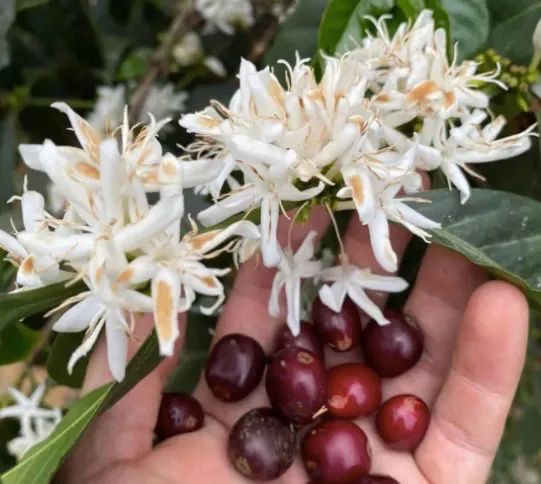
However, due to its poor resistance to leaf rust and the need for specific conditions such as altitudes above 1600 meters and shaded environments to perform at its best, Sidra’s cultivation remains relatively limited, mainly concentrated in Colombia and Ecuador. Even so, with its outstanding cupping performance, it still holds a solid place in the specialty coffee market.
If you’d like to personally experience the unique flavors of Sidra, look out for the renowned Finca El Diviso estate in Colombia’s Huila region. The Sidra coffee produced by this estate often presents bright notes of grape and passion fruit acidity, paired with a soft honey-like sweetness, resulting in a round and layered mouthfeel. It’s highly recommended for coffee enthusiasts who enjoy a balanced profile of fruitiness and sweetness.
The above content is compiled by CoffeeHunters, a coffee news website.


