







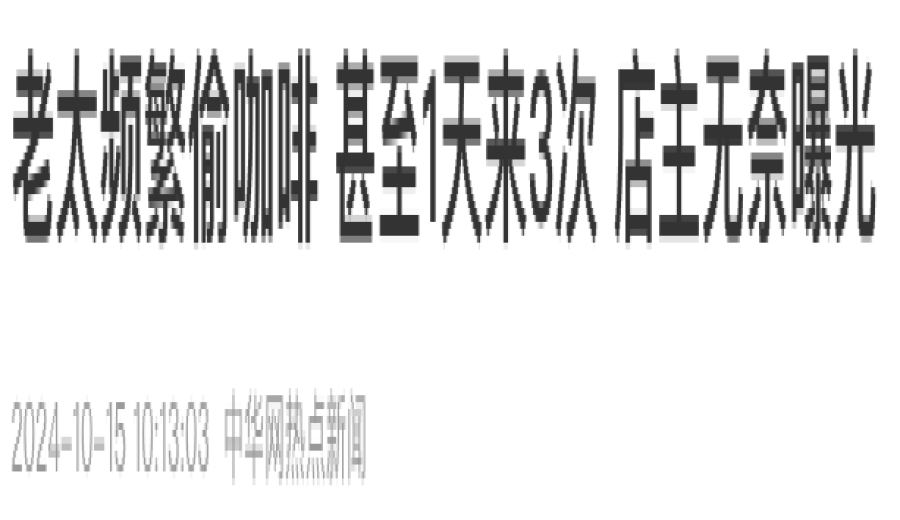
Introduction:A coffee shop in Beijing recently exposed an elderly person who repeatedly took beverages without paying, sparking discussions about petty theft in the food and beverage industry. Beyond the individual customer’s moral issue, business owners also face challenges such as high thresholds for filing cases and difficulties in obtaining surveillance evidence. This article delves into the details of the incident, common preventative measures in the industry, and offers practical advice to help coffee shops reduce losses.
Recently, the owner of a coffee shop in Beijing shared a video showing an elderly woman attempting multiple times to take pre-packaged coffee drinks from the store. The incident sparked heated discussion on social media platforms. According to the shop owner, the elderly woman not only frequented the shop but also repeatedly took takeaway coffees from the counter when staff weren’t looking, even brazenly claiming ownership when confronted.
The behavior of this elderly woman was not an isolated incident. The shop owner noted that she initially took items covertly when no one was looking, but gradually became more blatant, even attempting to take drinks multiple times in a single day just by passing by the store. Records indicate her most recent theft occurred on October 3rd. More concerning is the belief that the woman has exhibited similar behavior at other coffee or beverage shops, though it's unclear if she succeeded. Some staff have already become more vigilant upon seeing her.

After the video was made public, some netizens pointed out that the elderly woman had gained a certain level of “notoriety” within the local coffee shop circle, with other shop owners even warning each other to be on the lookout for her. Many suggested that shop owners should proactively gather evidence such as surveillance footage and report the incidents to the police, contacting family members if necessary. Some observers also expressed concern about the woman’s mental state, speculating that specific psychological or physical conditions might be driving her unusual behavior.
Currently, there has been no public update on how the case was handled, but such situations are not uncommon in the food and beverage industry. Business owners generally report that due to the low value of individual cups of coffee, even with surveillance evidence, police often only issue verbal warnings, resulting in limited actual punitive effects. This has led some unscrupulous customers to believe they can get away with it.
Notably, similar petty thefts are not limited to any particular age group. A surveillance clip from a coffee shop once circulated on social media, showing a passerby quickly taking a packaged drink while a staff member had their back turned washing something. According to the shop manager, this customer had committed the act twice. Faced with such situations, some shops choose to post warning signs in their stores in hopes of deterring potential theft, though the actual effectiveness remains uncertain.
Industry insiders suggest that in addition to strengthening on-site surveillance and staff vigilance, coffee shops could also consider posting warm reminders or warning signs in visible areas. While these may not completely eliminate the problem, they can at least serve as a psychological deterrent to some customers. At the same time, shops should establish a systematic process for gathering evidence. Once suspicious behavior is detected, they should immediately record the time, video footage, and relevant details for follow-up actions.
In summary, the incident of the elderly woman in Beijing taking coffee without paying highlights the difficulties small food and beverage businesses face when dealing with petty theft. Beyond relying on legal means, business owners need to take a multi-faceted approach — including preventative measures, on-site management, and community cooperation — to effectively reduce losses and maintain operational order.

The above content is compiled by CoffeeHunters, a coffee news website.


