







Introduction:Facing two consecutive quarters of declining sales, Starbucks' new CEO Laxman Narasimhan has adopted a new business direction—reducing discount promotions and instead using membership points and weekly special offers to attract customers, while strengthening the brand positioning of a "community coffee shop." This article analyzes the background of the strategic shift, specific measures, and explores the potential impact on customer behavior and the brand’s long-term development.
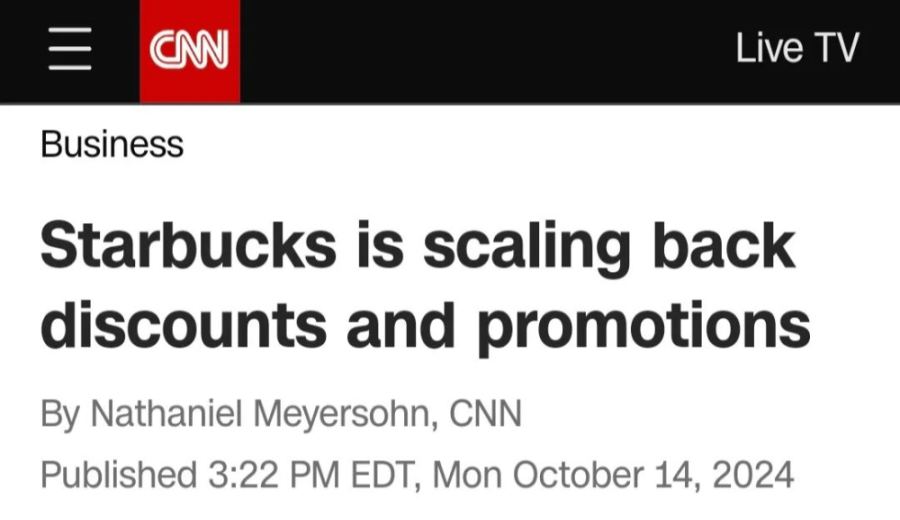
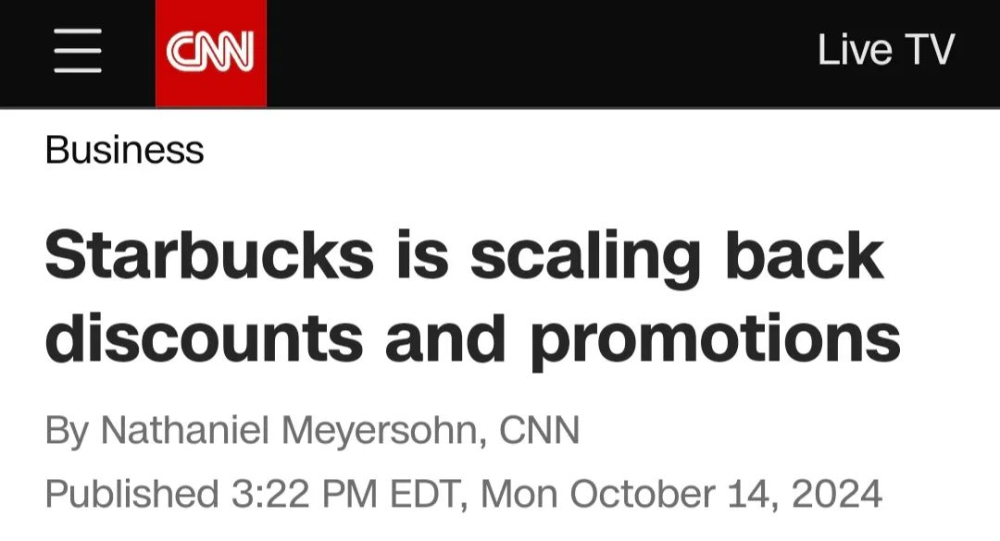
Starbucks has recently adjusted its brand strategy due to two consecutive quarters of underwhelming sales performance. The newly appointed CEO, Laxman Narasimhan, has significantly reduced the frequent discount promotions of the past and is now focusing on member reward points and limited-time weekend deals to maintain customer loyalty. This shift is not only aimed at rescuing sales figures but also at re-establishing Starbucks’ brand image as a "community coffee shop."
In the past, Starbucks has always positioned itself as a premium, non-discount-driven specialty coffee brand. Its founder, Howard Schultz, had publicly stated that promotional tactics should be used cautiously. However, former CEO Brian Niccol, in response to declining foot traffic, introduced promotions such as "buy one get one free" or "half-price drinks." While these measures briefly boosted sales, they failed to reverse the overall trend of declining performance year over year, with particularly worrying results in the U.S. market.
Since officially taking over as CEO in August this year, Narasimhan has gradually reduced various price reduction activities. In September, new initiatives were launched—such as offering extra reward points for member purchases every Tuesday and providing limited-time discounts on selected drinks every Saturday—to replace the previous large-scale discount campaigns. It is understood that Starbucks also does not plan to launch traditional large-scale holiday promotions this year, but will instead focus marketing resources on promoting seasonal specialty drinks, enhancing brand appeal through advertising.
This strategic direction contrasts sharply with the current market trend where chains like McDonald’s are rolling out price-cutting strategies. Some market analysts believe that although Starbucks’ shift may seem counter to the trend, it is more in line with its long-term brand values. Research from Bank of America shows that customers who used to visit Starbucks frequently in the afternoon have noticeably decreased, especially among the 18–29 age group, which is gradually being lost. Experts suggest this may stem from Starbucks’ increasing focus on quick takeout and delivery services, creating a disconnect with consumers’ perception of it as a cozy place to sit and enjoy coffee—a core aspect of the community coffee shop image.
In his public letters to employees and customers after taking office, Narasimhan emphasized his desire for Starbucks to return to its roots and become a space with genuine “community feel”—not just offering comfortable seating and thoughtfully designed environments, but also clearly differentiating between in-store dining and takeaway services to meet customers’ expectations for quality and experience.
Additionally, CNN reports that reducing promotional activities also helps alleviate the workload on store staff. Frequent discounts in the past often made it difficult for employees to predict daily customer traffic, affecting scheduling and service efficiency and adding operational pressure. A more stable and structured approach to promotions can improve the smoothness of store operations and the quality of customer service.
The implementation of the new strategy aims, on the one hand, to reverse Starbucks’ current sales slump and, on the other, to reshape its core identity as a "community coffee shop." However, for some consumers, the reduction in discounts may lower their willingness to pay full price, potentially driving them toward more cost-effective competing brands.
Currently, these adjustments are mainly implemented in the U.S. market, and it remains to be seen whether they will be extended to other global locations. Since Starbucks adopts a franchise model in some regions worldwide, whether local operators will follow this strategy remains uncertain.
The above content is compiled by CoffeeHunters, a coffee news website.


