







Introduction:A mobile phone launch event took an unexpected turn when the CEO’s comment led to an AI placing 2,000 orders of Luckin’s Light Jasmine tea, resulting in a sudden surge of late-night orders at nearby stores. This incident not only highlights the practicality of AI-powered interaction but also accidentally showcases Luckin’s efficient order fulfillment capabilities. This article details the full sequence of events, including the logic behind the AI ordering, how stores responded, and the implications for the industry.
Can you imagine a mobile phone launch event causing a sudden flood of group orders at nearby Luckin Coffee stores late at night? Staff who were about to close up found themselves swamped with work, while delivery riders zipped back and forth nonstop. In fact, it all started when the CEO of Honor, during the launch event, used an AI feature to casually place an order for 2,000 cups of Luckin’s Light Jasmine tea.
Due to Luckin’s limits on the number of items per order—typically, a single delivery order can contain only about 15 drinks—and varying levels of ingredient stock and staffing across stores, the AI didn’t place all 2,000 orders at one store. Instead, it intelligently distributed the orders across multiple nearby Luckin outlets. As a result, Luckin stores near the Shenzhen Bao’an International Convention and Exhibition Center were suddenly inundated with orders at almost the same time, catching many staff and riders off guard.
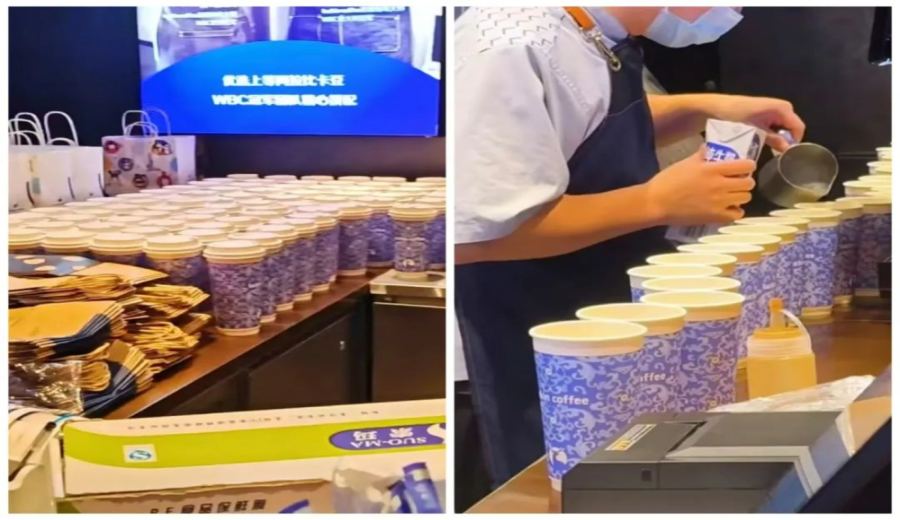
Shortly after 7 PM that evening, Luckin stores within several kilometers of the exhibition center received a large volume of group meal orders in a short span of time. According to on-site staff, the receipt printers continuously churned out dozens or even hundreds of order labels, and employees who were getting ready to close suddenly found themselves extremely busy. Many customers, looking at the rows of paper cups with neatly attached labels behind the counter, couldn’t help but wonder: “Why are there still so many Light Jasmine orders at night?”
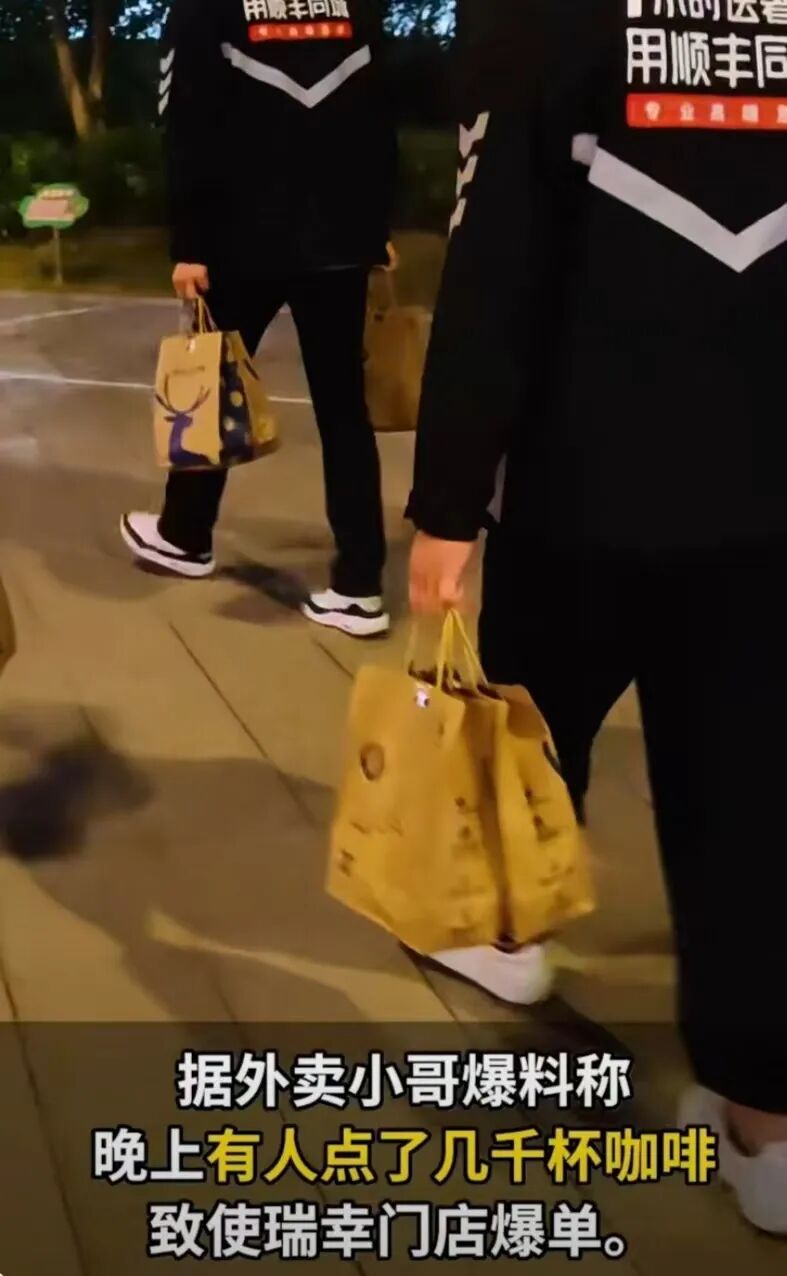
Some netizens captured footage of the store overflow and shared it on social media. In the videos, delivery riders could be heard saying that nearly all riders in the area had received related orders—some were on their way to Luckin stores, while others were waiting outside to pick up the drinks. This scene quickly sparked heated discussions online, with users speculating about the cause, eventually tracing it back to the “culprit”—Zhao Ming, CEO of Honor Terminal Co., Ltd.
It turns out that Honor was holding a new product launch event at the Shenzhen Bao’an International Convention and Exhibition Center that evening. To demonstrate the AI capabilities of their new product, Zhao Ming personally showed how it worked. He picked up his phone, said to the AI, “Help me order 2,000 drinks—something suitable to drink right now.” The AI understood the command and automatically placed an order with Luckin for 2,000 cups of Light Jasmine tea.
However, due to Luckin’s system limitations on the number of items per order, the AI didn’t place all 2,000 orders at a single store. Instead, it split the orders based on each store’s inventory, staffing, and delivery capacity, then distributed them across multiple locations. This explains why several Luckin stores near the exhibition center simultaneously received a large volume of orders, creating a rare “late-night collective order surge.”
Audience members present recalled that when they heard the CEO give such a large order to the AI, they thought it was just a joke. But after the event ended, 2,000 drinks actually appeared in the exhibition area, leaving many astonished: “So the AI really can place orders!”
Besides showcasing the intelligent performance of Honor’s AI in voice interaction and task execution, this incident also unexpectedly gave Luckin’s efficient order processing and supply chain capabilities some exposure.Particularly noteworthy is the fact that Luckin was able to handle a high volume of concentrated orders from multiple stores in a short time while ensuring beverage quality and service speed, reflecting its mature operational system.
After learning the truth, netizens not only marveled at technological progress but also engaged in lighthearted discussions. Some worried: “What if one day I accidentally tell the AI to buy 10,000 cups, and it actually places the order?” Others joked: “Did the phone secretly order two thousand cups of coffee by itself?”
This 2,000-cup Light Jasmine order controversy, triggered by a single AI command, may have kept many staff and delivery riders working late into the night, but it also became a vivid case study of cross-sector collaboration between technology and retail.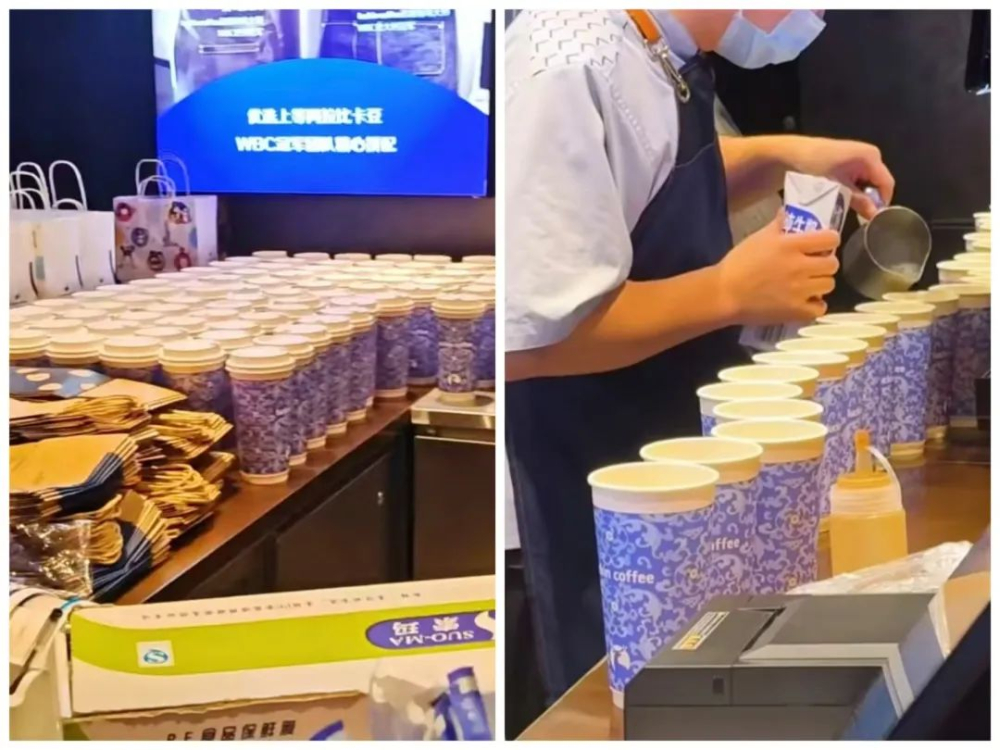
For consumers, this is not just an interesting tech news story, but also a glimpse into the possible future of smart living—where everything from voice ordering to intelligent distribution reflects how technology quietly reshapes our daily routines. For the industry, this incident also provides a real-world example to consider how systems can be optimized to handle sudden large orders and improve overall operational flexibility.
In summary, this “experimental” move by the CEO of Honor, though initially intended to showcase product functionality, unexpectedly became an engaging intersection of technology, retail, and the coffee beverage industry. Meanwhile, the staff and riders who worked overtime that night, despite being extremely busy, also became important participants in this tech-driven spectacle.
Next time you walk past a Luckin store and see the staff hard at work, you might just recall this story of the Light Jasmine order that was set off by a single AI command.
The above content is compiled by CoffeeHunters, a coffee news website.


