







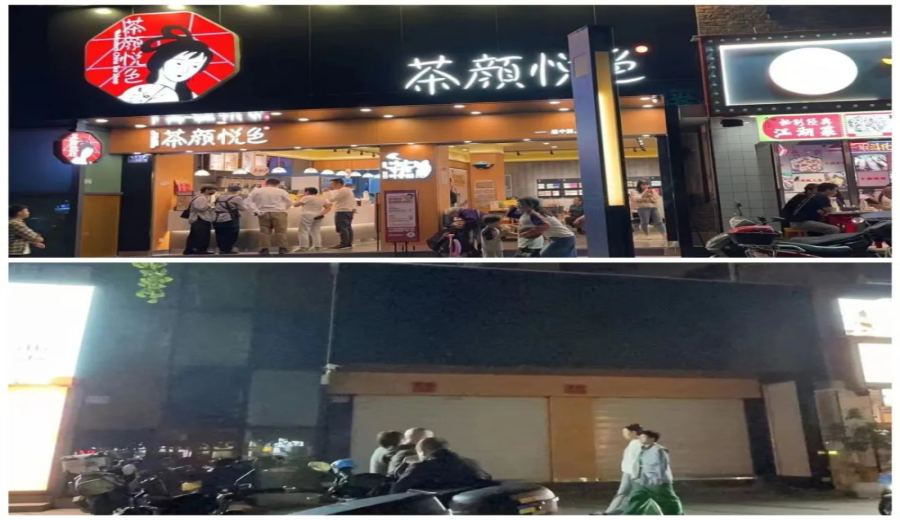
Introduction:The first store of Chayanyuese in Yubei, Chongqing quietly closed after the National Day holiday, drawing attention from consumers and industry insiders. The brand responded that it would not renew the lease upon expiration, and this move was also seen as part of its regular store optimization strategy. Meanwhile, its newly opened store in Suzhou has been criticized by consumers again due to issues with production efficiency and redemption verification. This article will analyze in depth the logic behind Chayanyuese’s store layout adjustments, as well as the current competitive landscape and user experience challenges in the new tea beverage market.
Shortly after the consumption boom of the National Day holiday subsided, the movements of new tea beverage brand stores quickly became the focus of the market. A Chayanyuese store located in the Yuanyang business district in Chongqing, after ending its nighttime operations, quietly dismantled its signage and closed the next day, and the store could no longer be found on the official mini-program. This store was not only the first in Yubei District but also held many daily consumption memories for long-time customers.
According to informed netizens, the store was still taking orders normally the day before, but the next day, passersby found that all the light boxes at the storefront had been removed, as if the world had changed overnight. Such an unannounced closure surprised the surrounding regular customers. The official explanation stated that the reason for the closure was the expiration of the lease, and the brand decided not to renew it, thus choosing to withdraw from the location.
For fans familiar with Chayanyuese’s operational strategy, such adjustments are not surprising. The brand has long optimized its market layout based on the actual performance of each store, regularly closing those with average performance or overlapping locations, forming an internal elimination mechanism. One long-time customer mentioned, “This is quite common in Changsha; the brand often changes locations, possibly to optimize resource allocation overall.”
Data from Jihai Brand Monitoring shows that currently, Chayanyuese has 973 stores in operation nationwide, nearly two-thirds of which are concentrated in Changsha, Hunan, while other cities have relatively few and scattered outlets. This high reliance on a single market also presents more challenges for the brand as it expands into new regions.
It is worth mentioning that, just before the National Day holiday, Chayanyuese entered the Suzhou market and opened three new stores at once. On the opening day, long queues formed outside the stores, even attracting many consumers who live-streamed the event, creating quite a lively scene. However, what followed were complaints from consumers about the redemption system, production efficiency, and overall experience. Some customers reported that the stores had slow drink preparation times, inconsistent beverage quality, and disappointing service processes, which discouraged many who had come specifically because of the brand’s reputation.
Currently, leading brands including ChaBaTea Ji, HEYTEA, and Nayuki’s Tea not only excel in production speed and consistency but also focus on shaping user experience and emotional value. In comparison, Chayanyuese’s restrictions on queuing rules, takeout policies, and service flexibility have caused inconvenience for many consumers. One netizen bluntly said, “I just wanted to buy a bubble tea, but I had to deal with all kinds of ‘exclusive rules’—the experience was really not great.”
It is precisely for this reason that the consumer reputation of Chayanyuese has shown a gradual decline in recent years.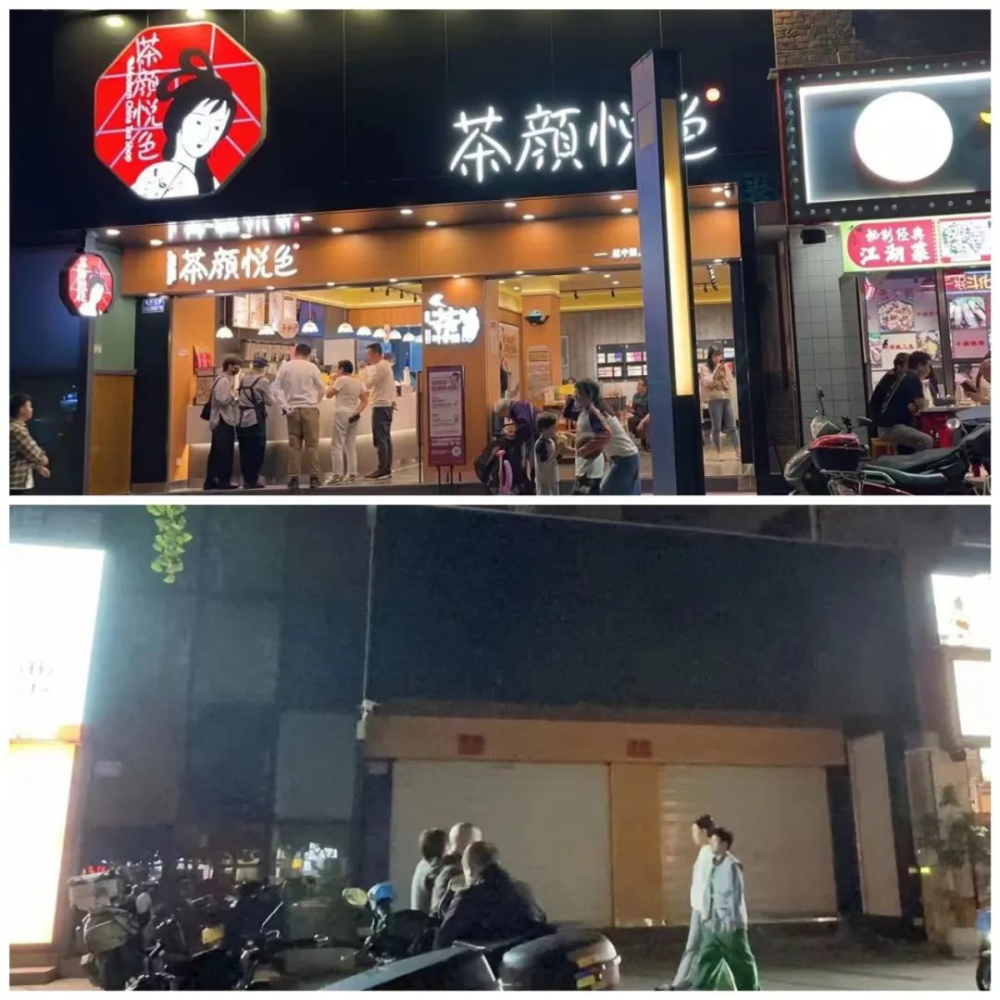 Observations indicate that, except during holidays or limited-time promotional periods, it is no longer common to see long lines of people waiting for food in front of the brand’s stores, reflecting changes in actual foot traffic. From a business perspective, the brand’s decision to close stores that no longer have lines and have poor performance is actually a routine market adjustment measure.
Overall, the closure of Chayanyuese’s first Chongqing store reflects both the brand’s internal store optimization strategy and the intense competition in the new tea beverage market and the ever-evolving demands of consumers. How to balance store quality, user experience, and brand reputation during expansion will be a key challenge for the brand’s future development.
The above content is compiled by CoffeeHunters, a coffee news website.


