







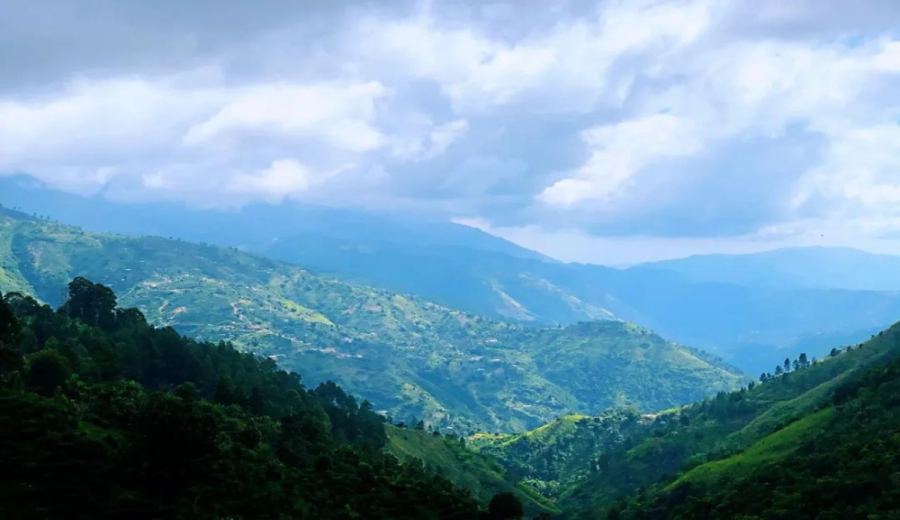
Introduction:Jamaican Blue Mountain coffee is hailed as the "King of Coffee," long renowned for its high price and rarity. What exactly enables this coffee to maintain its position in the top-tier market? From the growing environment and historical background to grading standards, this article delves into the truth behind the price of Blue Mountain coffee and analyzes its delicate flavors, giving you a comprehensive understanding of the uniqueness and charm of this world-class coffee.
Jamaican Blue Mountain coffee has always been considered the finest in the coffee world. Its high price is not only due to its exceptional geographical environment but also inseparable from its complex historical background and stringent quality control. This Typica variety coffee, grown in the Blue Mountains of eastern Jamaica, thrives year-round in an environment shrouded in clouds, with fertile volcanic soil and abundant rainfall, resulting in its refined and balanced flavor profile.
The Blue Mountain range is the highest peak in the Caribbean, with its main peak reaching an elevation of 2,256 meters, and many other peaks exceeding 1,500 meters. This land, situated within the Pacific Ring of Fire, boasts mineral-rich soil, coupled with an average annual temperature of about 27°C and a humid, foggy climate, providing nearly perfect growing conditions for coffee trees.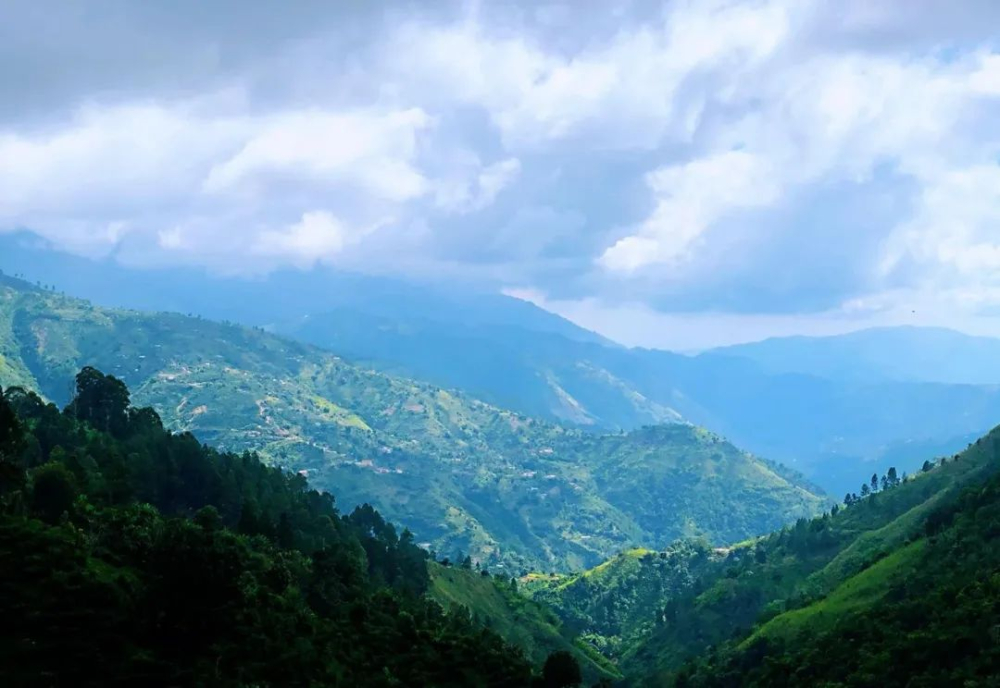
As for the origin of the name "Blue Mountain," one theory suggests that it was named by a British officer in the early days who observed the mountains appearing light blue under the refraction of sunlight and sea mist. However, a more scientific explanation is that the surrounding seas cause sunlight to reflect, giving the mountains a bluish halo on clear days.
The history of coffee in Jamaica dates back to the 18th century. It is recorded that a colonial governor introduced the first Arabica seeds from Martinique, planting them in the Saint Andrew area. Subsequently, coffee cultivation gradually expanded into the Blue Mountain region, once developing over 600 coffee plantations. Thanks to the superior local environment, the coffee produced quickly gained high acclaim in the international market.
However, by the late 1960s, a fierce hurricane severely damaged Jamaica, not only destroying a large amount of crops but also plunging the coffee industry into a downturn. At this time, Japan’s economy was rapidly growing, with a strong demand for high-quality Blue Mountain coffee. Several Japanese trading companies then provided financial support to local estates in exchange for future priority purchasing rights and equity stakes.
In gratitude for the support from Japanese enterprises after the disaster, the Jamaican government signed a 30-year agreement with Japan in 1972, stipulating that 90% of the annual Blue Mountain coffee production would be supplied to the Japanese market, with the remainder allocated to other countries. This agreement significantly limited the global circulation of Blue Mountain coffee, and with active promotion by Japan, it created its extremely high rarity and price level, solidifying its status as the "King of Coffee." The agreement has now expired, and Blue Mountain coffee has gradually been sold to more markets.
To ensure the quality of Blue Mountain coffee, the Jamaican government established the dedicated agency JACRA (Jamaica Agricultural Commodities Regulatory Authority), which rigorously inspects every batch of coffee beans. Early on, the "Coffee Industry Regulation Act" was enacted, clearly defining the sole legal cultivation area for Blue Mountain coffee, including the four administrative regions of Saint Andrew, Saint Thomas, Portland, and Saint Mary, and limiting it to Typica variety coffee planted at altitudes between 915 and 1,700 meters, which can be labeled as "Jamaican Blue Mountain Coffee."
Blue Mountain coffee is also one of the very few coffees in the world that insists on using wooden barrels for export. Only Blue Mountain No. 1, No. 2, No. 3, PB grade, and the top and PB grades of the Jamaican High Mountain series can be packaged in 70 kg, 30 kg, or 15 kg wooden barrels. Among them, the highest-grade Blue Mountain No. 1 requires bean size of 17 mesh or above, with no more than 2% defective beans, and moisture content controlled at around 10% to 12.5%. The barrel lid is also stamped with the official certified Blue Mountain trademark. Other grades are exported in 60 kg jute sacks.
The primary Typica variety planted for Blue Mountain coffee is one of the oldest Arabica varieties alongside Bourbon, originating from Ethiopia. Typica is suited for high-altitude cultivation and, under the unique climate and soil conditions of Blue Mountain, not only delivers a refined flavor but has also gradually developed a certain level of disease resistance. However, Typica naturally has low yield and is susceptible to threats such as leaf rust, nematodes, and berry diseases, thus requiring particularly meticulous management.
Currently, there are several well-known estates in the Blue Mountain region that produce Blue Mountain coffee, among which the most representative is the Clifton Estate, established in the mid-18th century. This estate is not only one of the oldest coffee-growing areas in Jamaica but also holds "Rainforest Alliance Certification," signifying that its farming practices meet high standards of sustainable agriculture. Located in the Saint Andrew district at an altitude of up to 1,642 meters, the estate was originally a coffee experimental field of the British government and later taken over by Mr. Clair. After government reforms and modern investments, it has now developed into a model farm equipped with state-of-the-art planting and roasting facilities, capable of stably producing high-quality Blue Mountain coffee.
Represented by the Clifton Estate, Blue Mountain No. 1 coffee delivers outstanding flavor performance: the cup entry offers a light citrus acidity, the mid-palate reveals nutty and cocoa aromas, and the finish is smooth and layered. The overall profile is balanced and refined, making it a favorite among many coffee enthusiasts. If you’re a drinker pursuing high-quality pour over coffee, Blue Mountain No. 1 is definitely worth trying and can help you better understand the flavor potential of top-tier coffee.
The above content is compiled by CoffeeHunters, a coffee news website.


