







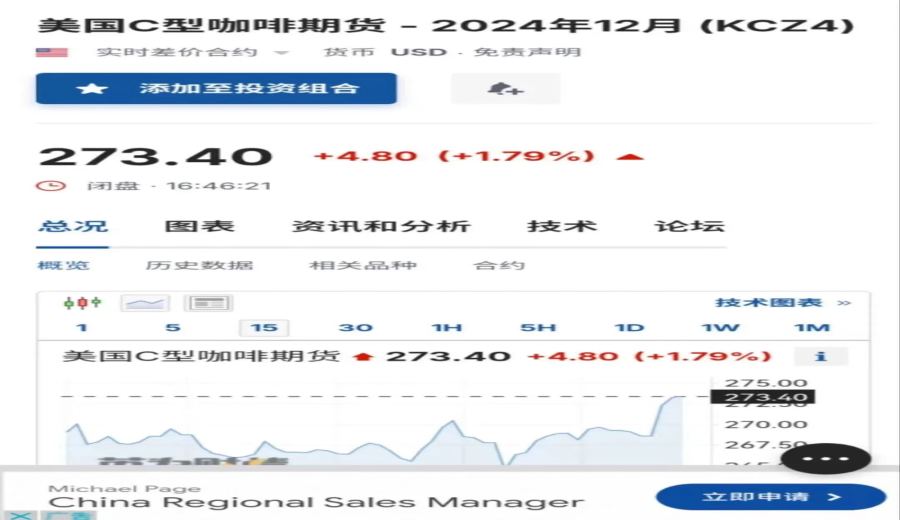
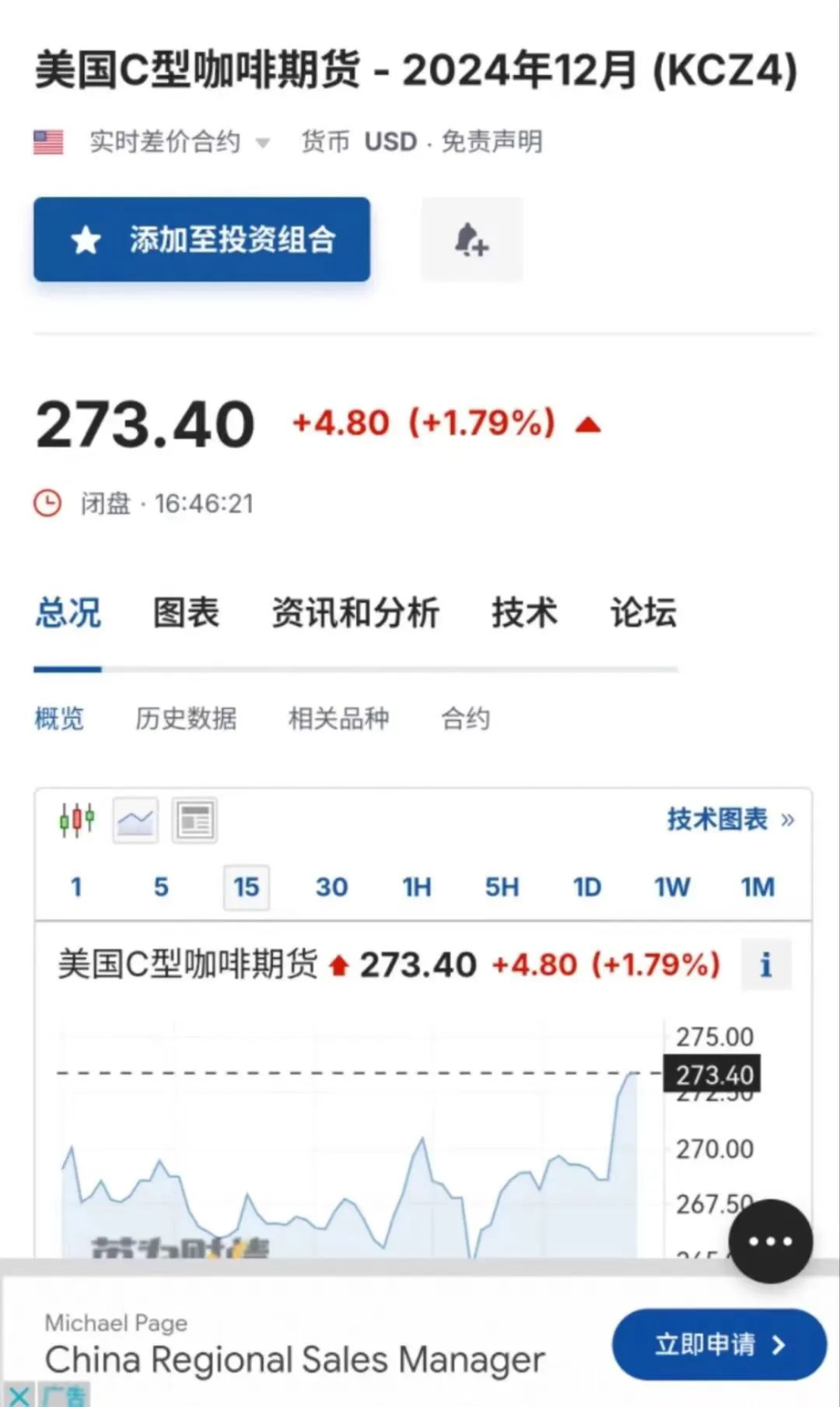
Introduction:Global coffee prices are at a ten-year high, with Arabica futures breaking through 273.4 US cents per pound, while Robusta has seen an annual increase of over 74%. Behind this surge lies Brazil’s ongoing extreme drought and high temperatures, coupled with uneven rainfall, which have severely impacted coffee production. This article delves into how climatic factors are shaking up market supply and demand, helping you understand the truth behind the soaring futures prices and the challenges that may arise in the upcoming harvest season.
The global coffee market is experiencing an unprecedented price fluctuation. Due to Brazil’s prolonged drought, high temperatures, and extremely uneven rainfall distribution, along with the continuously rising global demand for coffee, the futures prices of both Arabica and Robusta have climbed to historic highs. Among them,Arabica futures prices have surged past 273.4 US cents per pound, marking a ten-year peak; while the rise in Robusta has been even more dramatic,with an annual increase of up to 74%. As the world’s largest coffee producer, Brazil has also seen a simultaneous spike in retail coffee prices, reaching their highest level since records began in 1997.
This price surge is not caused by a single factor. Multiple international media outlets have analyzed that the extreme climate challenges faced by Brazil—including persistent heatwaves, severe rainfall shortages, and similar issues in other major producing regions—along with the steady growth in global coffee consumption, have collectively driven up market prices. Among them,the rise in Robusta coffee prices has been particularly astonishing. In August of this year, the price of Robusta in Brazil soared to 1,483.95 Brazilian reais per bag, not only doubling compared to the same period last year but even surpassing the local price of Arabica.
From the beginning of the year to now, Robusta futures prices have risen cumulatively by 74%, while Arabica futures have increased by 40%. Market data shows thatRobusta futures prices once touched $5,483 per ton, andArabica futures reached as high as 273.4 US cents per pound, continuously breaking historical records. These figures are not just surface manifestations of market volatility but also reflect the immense pressure on the global coffee supply chain.
Data from Brazil’s National Meteorological Institute (Inmet) shows that the country is currently experiencing its seventh heatwave of the year, with record-high temperatures being broken in multiple cities across central and southeastern states. Among them,São Paulo state is expected to see the highest temperatures of the year, possibly exceeding 35°C again; while Rio de Janeiro recorded a high of 39.5°C in January and may approach 39°C this time as well;Minas Gerais state’s predicted maximum temperature may even exceed 34°C, significantly higher than the average for the same period in previous years, with a difference of over 5°C.
At the same time, a strong mass of hot air continues to linger over central-western Brazil, blocking the movement of rain clouds inland and causing precipitation to concentrate heavily in southern Rio Grande do Sul. The southern part of the region has seen daily rainfall as high as 100 millimeters, not only triggering river flooding but also increasing the risk of landslides. Due to the blocking effect of the hot air mass, cold air that should have moved southward with the airflow has been forced to remain in Rio Grande do Sul, leading to rare hail weather in the area.
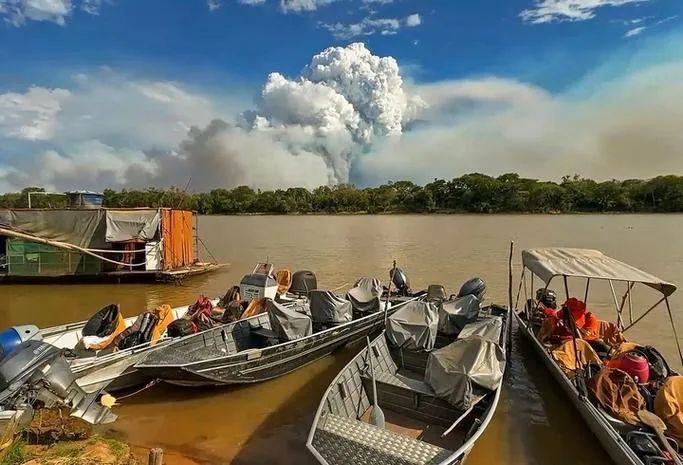
In recent years, Brazil’s coffee-growing regions have repeatedly suffered from extreme weather, and this year they are facing the double blow of drought and high temperatures, resulting in a significant decline in coffee production and causing retail coffee prices in Brazil to continue soaring. According to statistics from Brazil’s National Consumer Price Index (IPCA),domestic coffee prices have increased by 16.6% year-on-year, far exceeding the overall inflation rate of 4.2%.
Data shows that in August of this year, the average price of coffee per kilogram in Brazil’s retail market reached 39.63 Brazilian reais, setting a historic high since the Brazilian Coffee Industry Association (Abic) began recording in 1997. Looking back to January 2021, when the price of coffee was only 15.37 reais per kilogram, in just three and a half years,the retail price of coffee has skyrocketed by 157%, an astonishing increase.
The head of the Brazilian Coffee Industry Association pointed out that 2020 was the peak year for Brazilian coffee production, with a total output of 63.07 million bags (calculated at 60 kilograms per bag). However, the following year, 2021, saw a severe frost that heavily damaged many coffee plantations, and the continuous drought and high temperatures have prevented production from returning to previous levels.
It is worth noting that Brazilian coffee production usually follows a “biennial cycle,” where high-yield and low-yield years alternate. However, recent production fluctuations have broken this traditional pattern. According to the latest forecast released by Brazil’s National Supply Company (Conab) in September, 2024 was supposed to be a “positive year” with peak production, but the estimated total output is only 54.79 million bags, not only lower than last year’s negative year output but even6.8% less than the May estimate of 58.81 million bags. Conab analyzes that the main reason for this production decline is due to drought, uneven rainfall, and high temperatures during the fruit development period.
Researchers from the Center for Advanced Applied Economic Research (Cepea) at the University of São Paulo further warn that the harvest for the next season also looks bleak. Normally, September should mark the start of spring and the rainy season in Brazil, but so far, there has been no significant rainfall in the coffee-growing regions, with some areas experiencing more than 160 days without rain, leading to a severely deteriorated growing environment. Weather forecasts indicate that even when October arrives, high temperatures will continue, and there may even be another heatwave in early October; however, rainfall is expected to gradually return starting in November, first affecting the southern regions, then spreading to the central-western and northern regions in December.
Market traders generally believe that the current coffee price surge is too rapid and there is almost no room for correction. Many traders used to stock up during low-price periods, but after a year of continuous price increases, most companies have already cleared their inventories and now have no stock left to sell. Coupled with the continuously declining production, analysts generally predict that coffee prices will continue to rise in the future and are unlikely to return to reasonable levels in the short term. This trend poses a significant challenge to the entire coffee industry chain. Although the coffee held by producers is now more valuable, without sufficient production volume to support it, high prices are difficult to translate into substantial profits.
The above content is compiled by CoffeeHunters, a coffee news website.


