








Introduction:Costa Rican coffee is renowned for its sweet, fruity profile, and the key behind this lies in the region’s prevalent honey processing method. This technique, which falls between washed and natural processing, preserves varying levels of fruit mucilage to impart rich sweetness and complex layers to the coffee. This article delves into the evolution of honey processing—from its origins derived from Brazil’s pulped natural method to the black honey, red honey, yellow honey, and white honey classifications developed in Costa Rica based on terrain and disaster conditions. It also explores the emerging characteristics of raisin honey processing and how it influences the final flavor profile of the coffee.
When it comes to coffee with a sweet, mellow profile and distinct caramel notes, Costa Rica is often the top choice for many coffee enthusiasts. This is closely tied to the honey processing (Honey Process) method widely adopted there. Honey processing is a technique that sits between traditional washed and natural processing, retaining the natural sugars from the coffee pulp while controlling the fermentation process to deliver a richer, smoother sweetness. It is often described as having caramel, honey, or even dried fruit flavor characteristics.

The English term for honey processing is “Honey Process,” sometimes also written as “Miel Process.” The term “蜜” (honey) originates from the Spanish word “Miel,” meaning honey. Interestingly, in Costa Rica, local farmers commonly refer to the sticky layer of mucilage in the coffee fruit as “Miel,” which is also the origin of the name for this processing method. Although “honey processing” is generally associated with Costa Rica, its origins can be traced back to Brazil’s pulped natural method—a technique initially developed to conserve water.
Around 1997 to 2000, due to persistently low international coffee prices, many small-scale coffee farmers in Costa Rica began processing their own beans to increase income. Against this backdrop, they adopted Brazil’s pulped natural technique and gradually developed their own honey processing system based on the region’s unique geography and climate. The central part of Costa Rica is traversed by the Cordillera mountain range, forming numerous mountains, basins, and volcanic terrains. The country’s seven major coffee-growing regions are all concentrated in high-altitude areas between 1,200 and 1,650 meters above sea level.
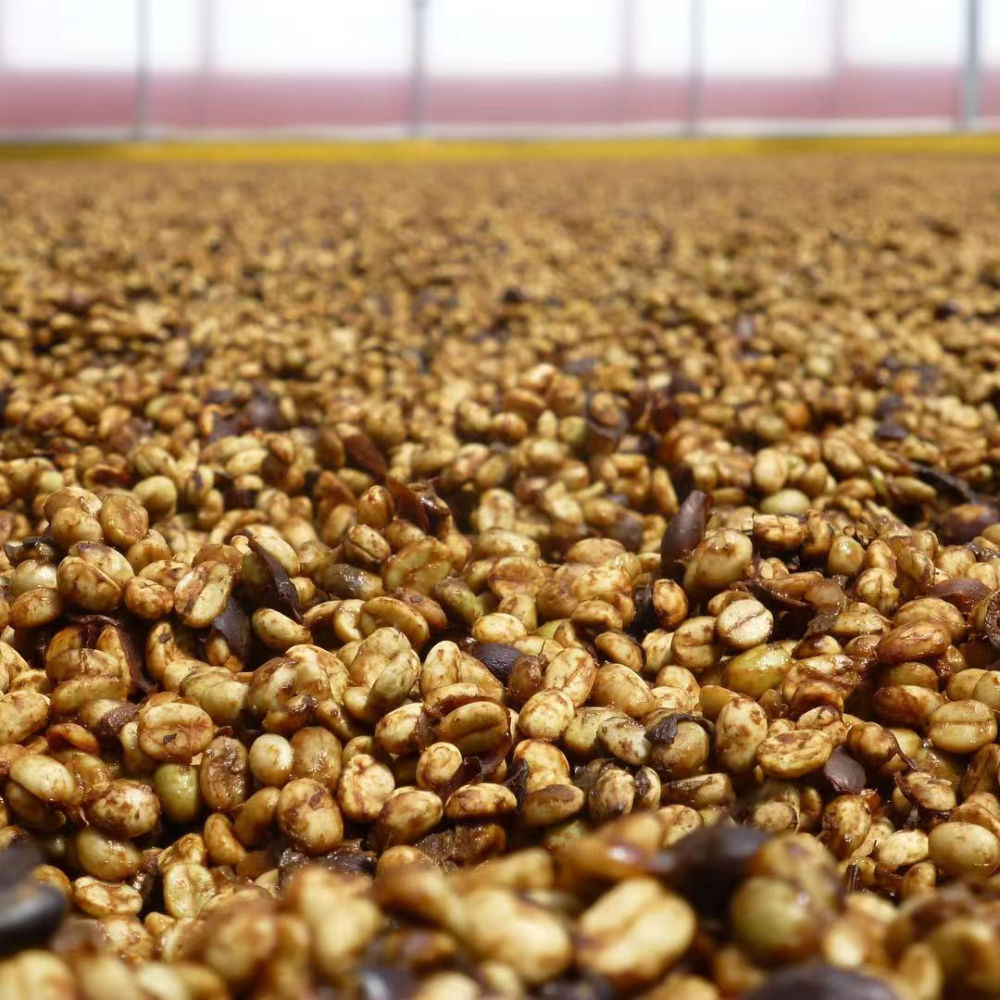
However, located along the Pacific Ring of Fire, Costa Rica experiences frequent earthquakes. A major earthquake in 2008 caused power outages and water shortages in many areas. Coupled with the inherent difficulty of water storage in high-altitude regions, water-intensive washed processing became less feasible. Additionally, unlike some parts of Africa, the area lacks abundant sunlight, making traditional natural processing riskier. Under these constraints, honey processing— a relatively “water-saving” method that retains fruit mucilage sugars—gradually became an important choice for local coffee farmers.
Initially, honey processing was not well regarded because the drying process, which retained mucilage and some fruit flesh, was thought to lead to over-fermentation or instability. However, many farms found through experimentation that, when managed properly, it could not only significantly reduce water usage but also impart a richer sweetness and fruit aroma to the coffee. As the technique matured, Costa Rican farmers began to further subdivide the process based on the amount of mucilage retained, creating different grades such as black honey, red honey, yellow honey, and white honey. Each grade exhibits distinct differences in flavor and appearance.
Generally, the honey processing workflow involves harvesting ripe coffee cherries, then using a depulper to remove the outer skin and part of the mucilage without adding extra water. The beans, still coated with residual mucilage, are then spread out on raised drying beds to dry. The key lies in controlling the thickness of mucilage retention and the drying time, which in turn affects the final flavor profile and exterior color. For example, black honey processing retains nearly 100% of the mucilage with minimal removal, and drying typically takes over 14 days. The beans turn blackish-purple due to oxidation. Red honey retains about 80% of the mucilage, with a drying time of around 12 days, and the beans exhibit a reddish-brown surface. Yellow honey retains approximately 40% to 60% of the mucilage, dries in about 8 days, and the beans show a warm yellow-brown hue. White honey retains less than 40% of the mucilage, has an even shorter drying time, and the bean surface appears lighter, closer to the look of washed processed beans.
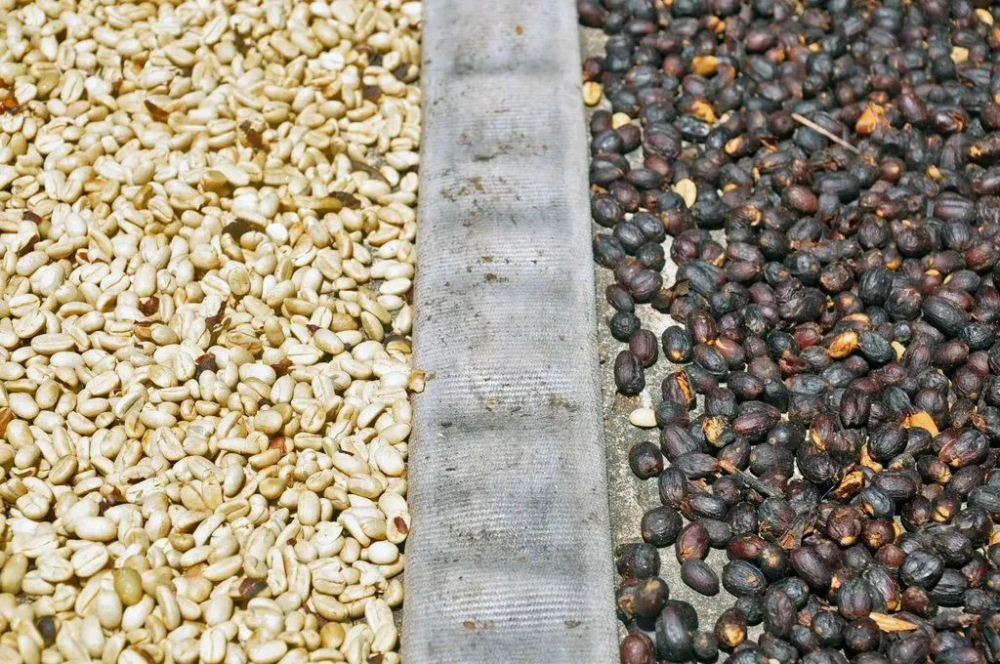
Beyond the traditional black, red, yellow, and white honey processes, Costa Rica has recently seen the rise of a more challenging and intensely flavored raisin honey processing (Raisin Honey). The hallmark of this method is that after harvest, the coffee cherries—first sorted via floatation to select fully ripe red fruits—are directly dried until the skins wrinkle, resembling raisins. Only then are the skins and pulp removed, while the semi-dried mucilage is retained to continue the drying process. This approach uses almost no additional water and preserves 100% of the sugars in the mucilage, resulting in coffee beans that exhibit exceptional sweetness and intense dried fruit flavors after roasting.
However, raisin honey processing also comes with higher technical barriers and risks, requiring rigorous environmental control and frequent turning to avoid mold or over-fermentation. For this reason, farms that successfully execute this technique usually have extensive experience and well-equipped facilities. For instance, a classic example of raisin honey processing is the “Strawberry Candy” lot produced by a well-known estate. When brewed, this coffee often showcases pronounced strawberry and raisin notes, with a lingering finish of candy-like sweetness, nutty richness, and a smooth mouthfeel reminiscent of cream and honey. It’s an unmissable choice for coffee lovers who enjoy sweet and fruity profiles.
The above content is compiled by CoffeeHunters, a coffee news website.


