







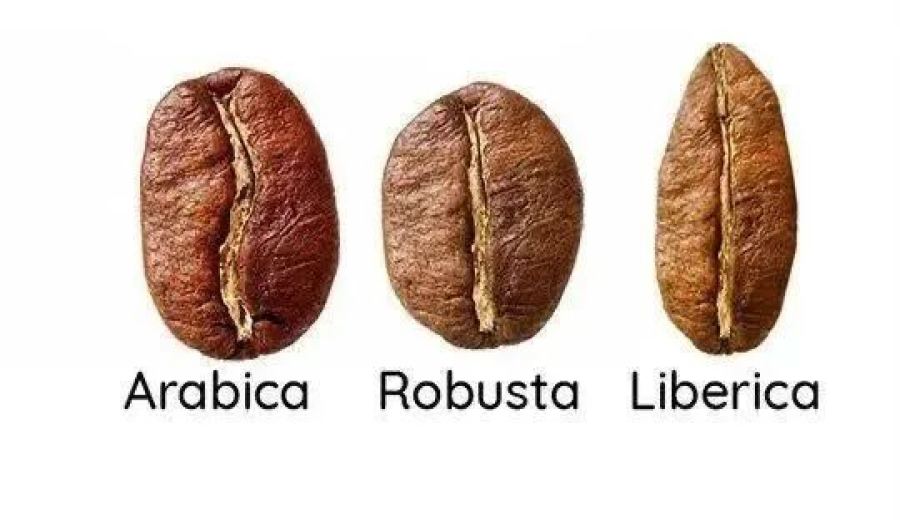
Introduction:Robusta coffee is one of the most important varieties in the global market, accounting for approximately 40% of market share, standing shoulder to shoulder with Arabica. Originating from the Congo Basin in Africa, it has thrived in countries such as Vietnam, Brazil, and Indonesia thanks to its disease resistance, high yield, and strong adaptability. Its success has even elevated Vietnam to become the world’s second-largest coffee exporter. This article delves into the historical roots and varietal characteristics of Robusta, and details the development trajectory of its major producing regions, helping readers gain a comprehensive understanding of this robust coffee variety.
In today’s global coffee market, the two major varieties — Arabica and Robusta — dominate the landscape, each accounting for about 60% and 40% respectively. Among them, Robusta plays an indispensable role across many coffee-producing nations due to its unique varietal traits and stable output. In addition to offering a bolder, more bitter flavor profile compared to Arabica, its higher caffeine content and rich crema also make it a key base for instant coffee and Italian-style blends.
The earliest records of Robusta date back to 1898, when it was discovered in the Congo Basin of Africa (now within the Democratic Republic of the Congo) by a Belgian botanist. This variety belongs to the species Coffea canephora, also known as the Congo coffee plant, and shows clear biological differences from the more familiar Coffea arabica. For instance, Arabica has 44 chromosomes and is self-pollinating, while Robusta has only 22 chromosomes and requires cross-pollination. Furthermore, its caffeine content is about twice that of Arabica, which explains its greater resistance to diseases but also results in a relatively stronger and more direct flavor.
As the world’s largest coffee producer and exporter, Brazil cultivates both Arabica and Robusta, with Arabica accounting for around 60% of its exports and Robusta making up the remaining 40%. Coffee was introduced to Brazil in the 18th century, initially dominated by Arabica, which then quickly spread throughout the country. By the 19th century, Brazil’s coffee production once reached 30% of the global total, becoming a vital industry driving its economy. However, Arabica’s sensitivity to climate changes and greater cultivation challenges led some farmers to switch to the more resilient Robusta. This variety is drought-tolerant, disease-resistant, and highly adaptable, allowing it to be grown in a wide range of areas across Brazil, particularly in hotter or drier regions.
Vietnam is another major producing region where Robusta takes center stage. As the world’s second-largest coffee producer, the majority of Vietnam’s coffee output comes from Robusta, far exceeding other varieties. Although there is also some limited Arabica cultivation in the northern regions, it accounts for only 2% to 3% of the national output. Dating back to the mid-19th century, the French introduced coffee to Vietnam, initially focusing on the northern areas with Arabica varieties under a plantation system. However, a rust outbreak in the late 19th century drastically reduced yields. Entering the 20th century, with land reforms and rising coffee prices, Vietnam shifted to a high-yield-oriented cultivation strategy, gradually making Robusta the dominant variety. Even though its cultivation area is less than one-third that of Colombia, Vietnam maintains its position as the world’s second-largest coffee exporter, thanks to the high per-unit yield of Robusta.
Moving on to Indonesia, the world’s fourth-largest coffee producer, its coffee structure is heavily skewed toward Robusta, which makes up 85% of its output, while Arabica accounts for just 15%. As the world’s largest archipelagic nation, Indonesia’s mountainous and volcanic terrain offers diverse microclimates suitable for growing various coffee varieties. Generally, Arabica is concentrated in high-altitude mountainous areas, whereas Robusta is more commonly found in low-elevation regions. In fact, Indonesia began cultivating coffee during the Dutch colonial period in the 17th century, when Arabica was first introduced. By the early 18th century, there were already records of thousands of pounds of coffee being exported. However, the rampant coffee leaf rust disease in the 1860s severely damaged local Arabica plantations, prompting farmers to turn to the more disease-resistant and adaptable Robusta, thus forming the Robusta-dominated industry we see today.
Beyond the three major producing countries mentioned above, Uganda in Africa also primarily cultivates Robusta, with native Robusta trees found in the regions near Lake Victoria in the south, ensuring stable local output. India is another noteworthy country; although its Robusta production is limited, it has produced what is hailed as “Royal Coffee” — a specialty-grade Robusta, showcasing the potential for high quality within this variety. Additionally, Robusta can be found in some Southeast Asian and West African countries, and with its rising market price in recent years, some countries in the Americas have also begun experimenting with its cultivation, further expanding its global presence.
In summary, Robusta coffee not only holds significant importance in commercial cultivation and market demand, but also becomes a core component in many blended coffees and instant products due to its unique growth conditions and flavor profile. Understanding its main producing regions and characteristics helps both consumers and industry professionals gain a more comprehensive grasp of this robust variety’s role and value in the global coffee supply chain.
The above content is compiled by CoffeeHunters, a coffee news website.


