







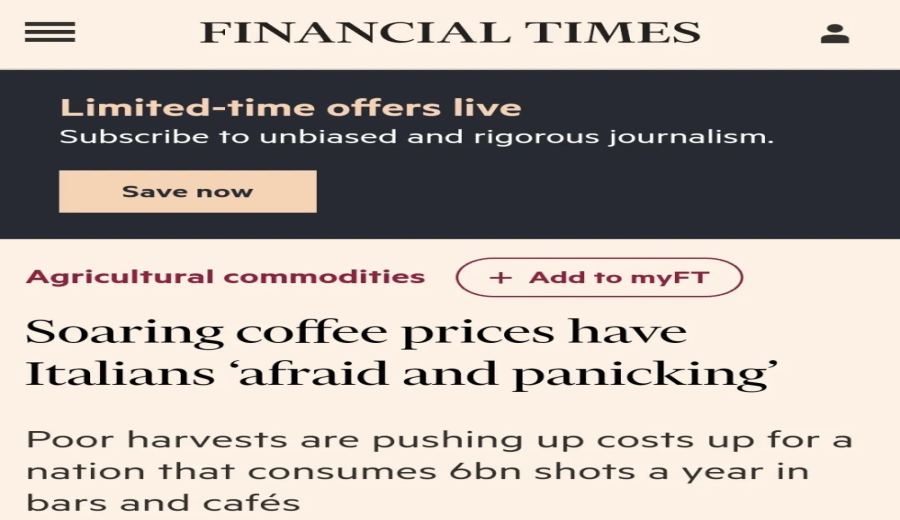
Introduction:Recently, global coffee bean prices have hit an all-time high. As the birthplace of espresso culture, Italy is facing unprecedented cost pressures. Since 2021, the price of an Italian espresso has quietly risen by about 15%. This crisis, triggered by climate change, rising energy costs, and shipping disruptions, is altering the daily coffee habits of Italians. This article delves into the reasons behind the price hikes and explores their impact on Italian cafés and consumers.
The global coffee bean market has recently experienced significant volatility, with both New York Arabica futures and London Robusta futures reaching all-time highs, posing a serious challenge to Italy, the cradle of espresso culture. Since 2021, the price of an espresso in Italy has risen by approximately 15% cumulatively. Many consumers worry that what used to cost just €1.2 may soon rise to €2.
Coffee prices in Italy have always been relatively low compared to other Western European countries. In street-side cafés, a standard espresso typically sells for around €1.2 (approximately NT$42), while a cappuccino is about €1.5 (approximately NT$53). This affordable pricing has fostered a deep caffeine dependency among Italians.
According to estimates by local consumer associations, Italians and foreign tourists consume up to 6 billion cups of coffee in public places each year, generating around €7 billion in revenue for the industry. However, the global coffee supply crisis caused by climate change could push the price of each cup up to €2, presenting a major challenge for Italian consumers.
The Italian Consumer Association points out that since 2021, the price of an Italian espresso has risen by about 15% cumulatively, primarily due to soaring energy costs, abnormal weather affecting coffee bean yields, and supply chain issues caused by disruptions in Red Sea shipping. These factors combined have put immense profit pressure on café operators.
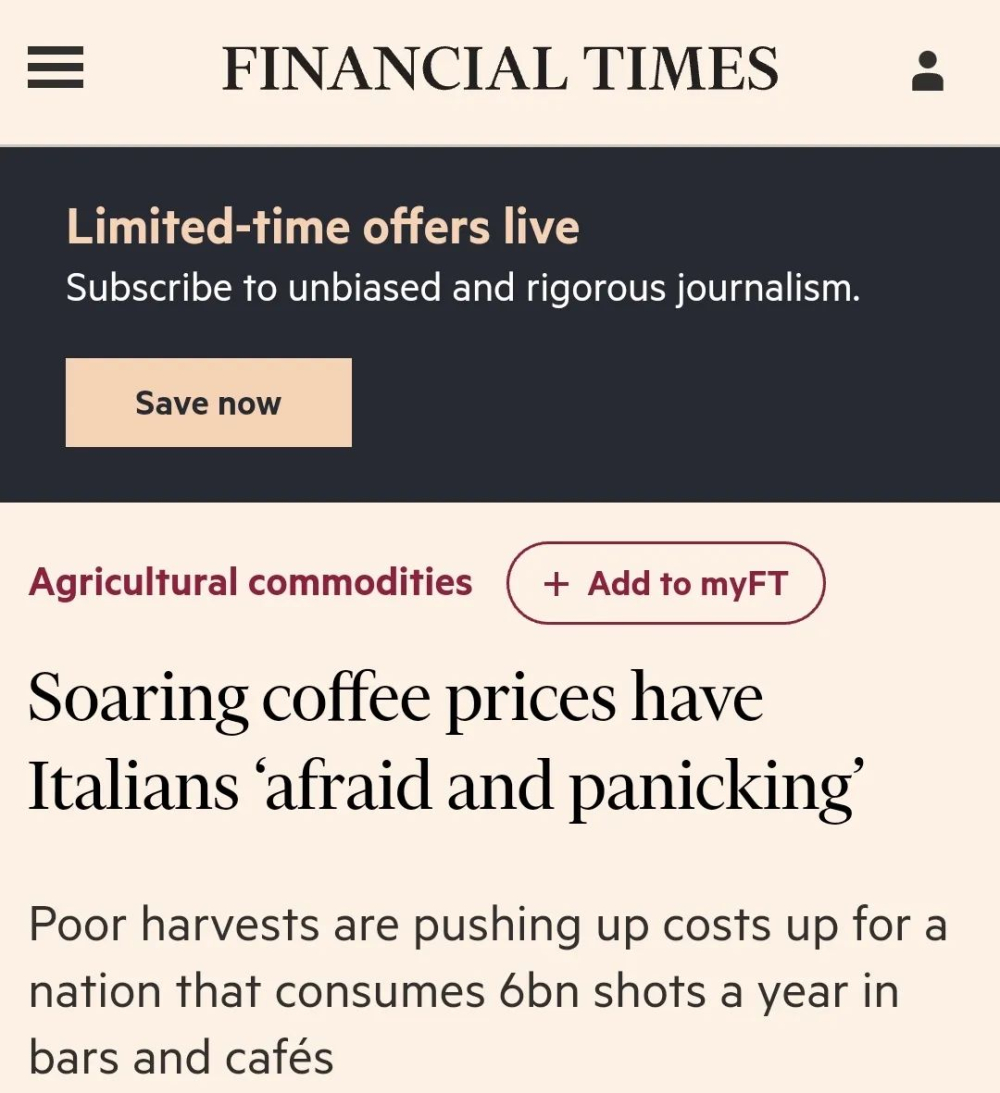
Recent severe weather in major global coffee-producing regions is the direct cause of the surge in international coffee prices. This week, the price of high-quality Arabica coffee futures on the New York market rose to $2.49 per pound, while London Robusta coffee futures reached $5,000 per ton, doubling compared to a year ago. These price fluctuations directly impact the procurement costs for roasters, which in turn drive up retail prices.
Meanwhile, attacks on ships by Houthi militants in the Red Sea have further exacerbated the coffee supply chain crisis. Since November last year, cargo ships traveling between Asia and Europe have had to reroute around the Cape of Good Hope instead of passing through the Suez Canal, significantly increasing transportation time and costs. These factors have collectively forced roasters to raise the prices of coffee beans.
Although the upward trend in prices seems inevitable, the Italian Consumer Association believes that for Italian cafés, the production cost of a cup of coffee is far lower than its selling price, and profit margins are still expanding. However, this view is disputed by industry insiders. The president of a public association representing around 132,000 Italian cafés pointed out that only traditional cafés run by families, without employees and without high rental costs, can continue to survive.
Historically, Rome imposed price controls on espresso. Although such controls have long been lifted, local consumers have grown accustomed to cheap coffee, viewing it as a daily necessity. As a result, when customers become aware of the importance of the product, it becomes difficult for cafés to raise prices. Some cafés may charge more for labor-intensive drinks like cappuccinos or snacks, but they still face social pressure to maintain low prices for basic coffee.
An operator who inherited a café founded by his father 70 years ago revealed that he currently sells an espresso for €1, up from €0.9 previously. The owner stated that if raw material prices continue to soar, he may increase the price of espresso by another 10%. This coffee price storm is profoundly changing Italians’ daily coffee rituals.
The above content is compiled by CoffeeHunters, a coffee news website.


