







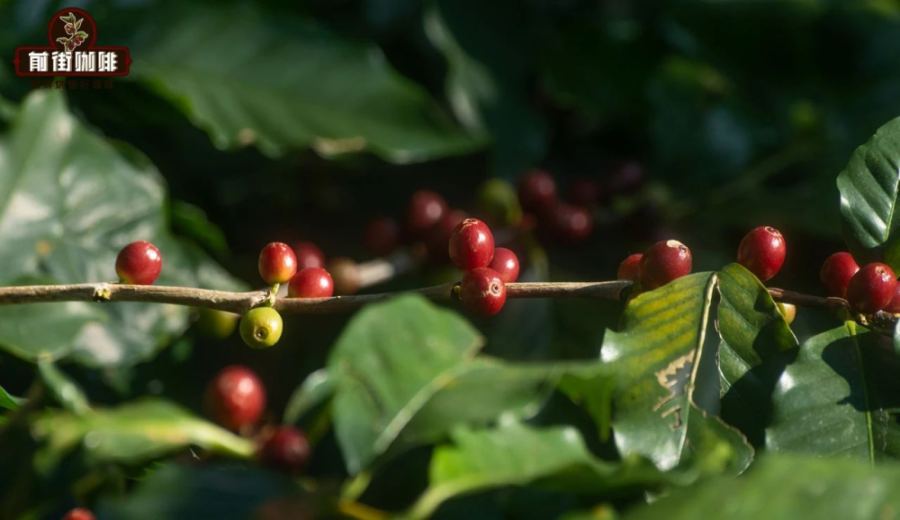
Introduction:Ethiopia is hailed as the cradle of coffee, and the Kafa Forest in its southwest is an even richer gene bank for Arabica coffee. This article delves into the natural conditions, wild coffee ecology of the region, as well as common misconceptions with the Gesha variety, and provides practical V60 pour over parameters and flavor experiences to help you better understand the charm of this magical coffee homeland.
To truly understand the origins of coffee, one cannot overlook Ethiopia. This East African country is not only the birthplace of Arabica coffee, but its Kaffa Zone in the southwest is also regarded as the genetic origin of wild Arabica coffee. This article will take you from Ethiopia’s overall coffee environment, look closely at renowned regions including Yirgacheffe, and focus on the unique geographical and ecological conditions of the Kaffa area. It will analyze the growing environment and characteristics of local wild coffee, while debunking common varietal misunderstandings — such as the difference between the Kafa Forest and Panamanian Gesha. Additionally, it will share practical pour over parameters and flavor insights, allowing coffee enthusiasts to get closer to the soul of flavors from this sacred coffee land.
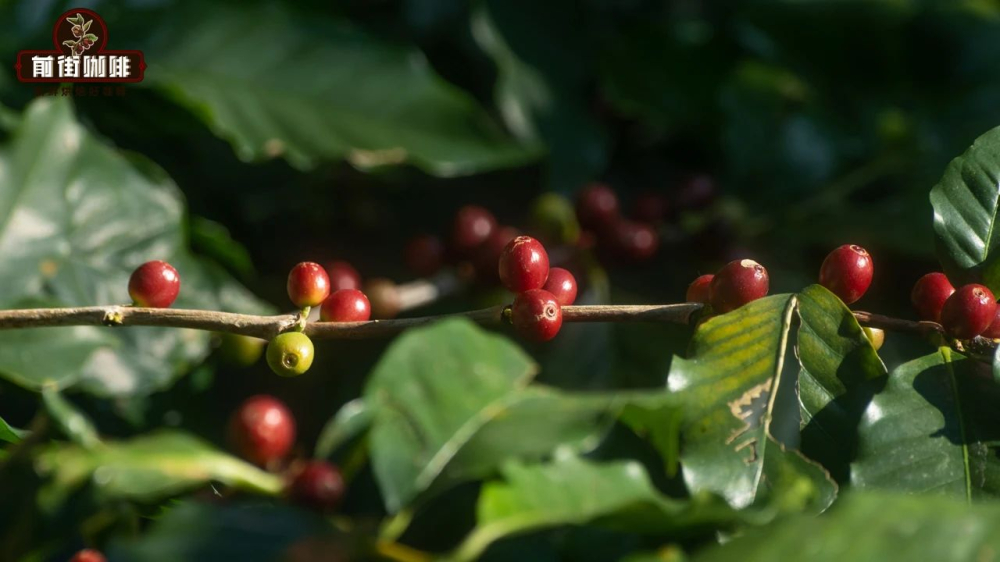
Coffee trees are extremely picky about their growing environment, thriving best in tropical and subtropical regions that offer stable high temperatures, moderate rainfall, and ample sunlight. The area located between the Tropic of Cancer and the Tropic of Capricorn is broadly referred to by the industry as the “Coffee Belt” due to its ideal climate conditions. Over three-quarters of Africa’s landmass lies within this zone, with average annual temperatures mostly above 20°C, making it highly suitable for coffee cultivation — hence its reputation as the “Tropical Continent.” Not only is the climate favorable here, but the terrain is predominantly highland, with elevations generally around 750 meters. Coupled with numerous volcanoes and water bodies, this has created fertile soils, making Africa one of the world’s major coffee-producing regions, with Ethiopia standing out among them.
Located in East Africa, Ethiopia’s terrain is primarily highland and mountainous, with most of the country situated on the Ethiopian Highlands, which have an average elevation exceeding 2,000 meters. The East African Rift Valley runs through the entire country, forming numerous mountains, volcanoes, and rivers, resulting in a diverse and complex natural environment. The characteristics of high altitude and significant diurnal temperature variation mean that, although situated in the tropics, the country enjoys relatively cool weather, with annual temperatures hovering around 16°C. The climate is mainly divided into two major seasons: dry and rainy. These natural conditions, along with fertile volcanic soils and abundant water sources, provide an almost perfect environment for coffee growth.
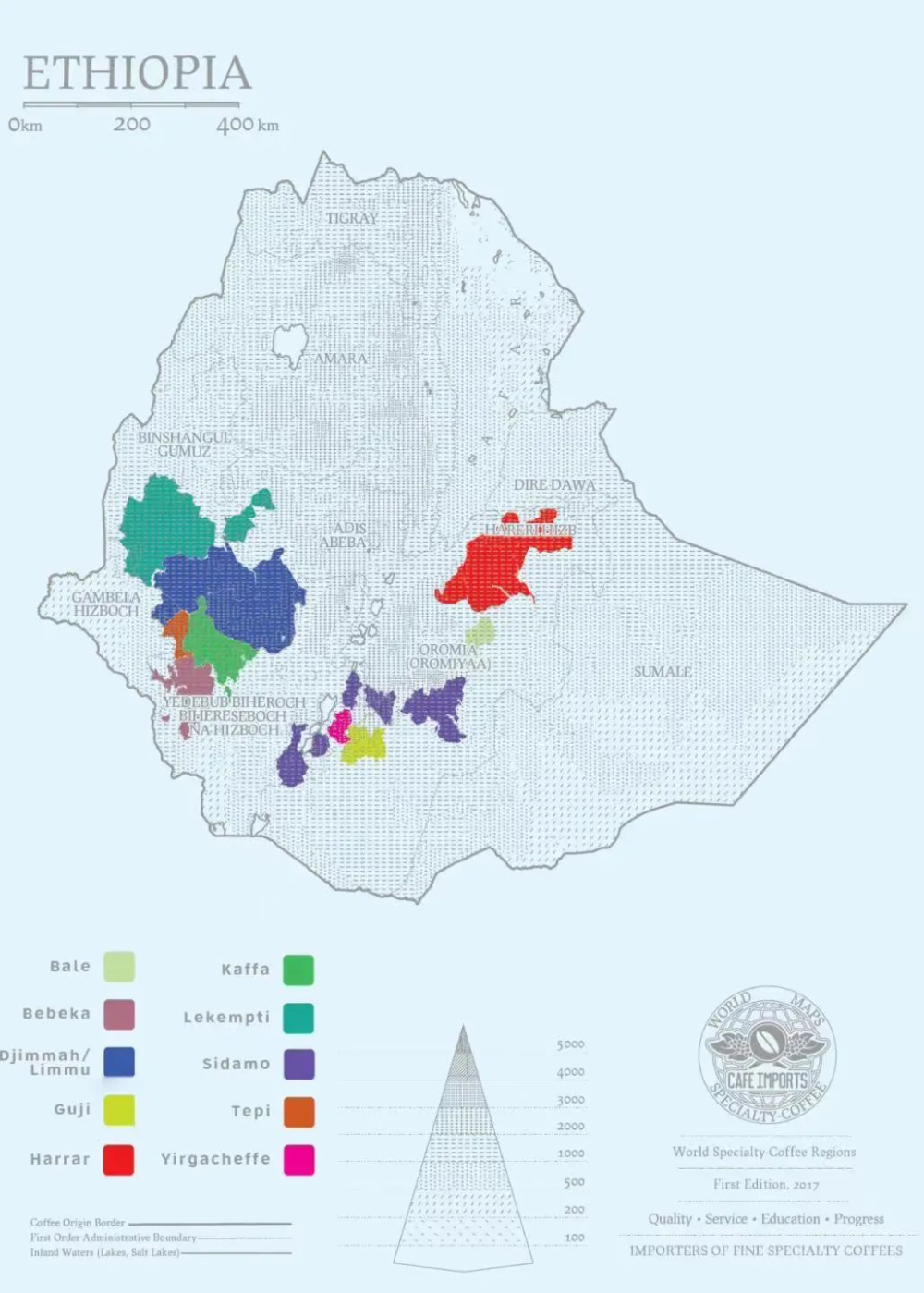
Currently, Ethiopia is divided into 12 administrative regions and 2 autonomous regions, with 10 major coffee-growing regions. These include Sidamo, Jimma, Harrar, Kaffa, Guji, and Yirgacheffe, among others. Guji and Yirgacheffe were originally part of Sidamo but were later designated as separate regions due to their distinctive flavor profiles. Each of these regions has its own unique characteristics, with Yirgacheffe being the most renowned.

Yirgacheffe was originally just a small town within the Sidamo region, but as its coffee flavors gained recognition, it has now developed into an independent specialty coffee-producing region. Its actual scope includes not only the town of Yirgacheffe itself, but also neighboring sub-regions such as Wenago, Kochere, and Gedeb. These areas are mostly mountainous, with a mild and humid climate, moderate annual temperatures, and elevations ranging between 1,750 and 2,200 meters. Coupled with abundant water sources, they are ideal locations for cultivating high-quality coffee.
A certain brand’s Yirgacheffe everyday coffee beans, made from local heirloom varieties and processed using the washed method, often exhibit prominent floral, citrus, and berry notes when brewed. The acidity is clean and bright, reminiscent of lemon, with a refreshing mouthfeel. It’s a popular choice for many beginners entering the world of specialty coffee.
Returning to the origin story of coffee, everything begins in the southwest of Ethiopia. The Kaffa Zone is believed to be the place where wild Arabica coffee was first discovered, and it still preserves many wild coffee mother trees. The name Kaffa originates from an ancient kingdom — the Kingdom of Kaffa — which was incorporated into the Ethiopian Empire in the late 19th century. Today, the Kaffa region belongs to the Southwest Ethiopia Peoples' Region in the southwest of Ethiopia. This region was split off from the Southern Nations, Nationalities, and Peoples' Region following a referendum in 2021, and Kaffa is located in the northern part of this new region.
The Kaffa region is dominated by humid tropical rainforest landscapes, most notably the Kafa Biosphere Reserve. This reserve is surrounded by several national forest priority areas, including the Bonga National Forest Priority Area, Adiyo Woreda, Gojeb River, Gewata-Yeba (Boginda) National Forest Priority Area, and the Gesha National Forest Priority Area, covering a total area of 760,144 hectares. It is home to over 5,000 different coffee tree species, making it a global hotspot for wild Arabica coffee diversity and a genetic treasure trove.
Around 30 coffee producer cooperatives have been established within and around the reserve. These cooperatives mainly harvest wild coffee berries during the forest’s ripe season and sell them after traditional processing. The most unique aspect of the Kafa Forest is that its coffee trees are not planted by humans but grow naturally in shaded environments at altitudes between 1,400 and 2,100 meters. The red soil, moderate rainfall, stable microclimate, and dense forest shade provide ideal growing conditions for these wild coffee trees, giving rise to their unique flavor potential.
A certain brand once launched a washed coffee bean from the Kafa Forest, roasted to a medium-light level. When brewed, it emits bright white floral aromas, with a fresh lemony acidity upon entry, followed by sweet orange and bergamot notes, and a finish that carries subtle melon and nutty tones. The overall mouthfeel is as refreshing as green tea. Its flavor profile can be summarized as: bergamot, white florals, orange, and apricot.
It is worth mentioning that because the Kafa Forest is said to be the inspiration for the legendary origin of the “Gesha” variety (specifically the Geisha Mountain area), some merchants mistakenly label the region’s coffee as “Kafa Forest Gesha.” However, in reality, “Gesha” is a well-known variety originating from Panama, famous for its slender bean shape, floral and fruity aromas, and layered flavors — completely different from the native varieties of the Kafa Forest. Therefore, the brand still classifies the product as an Ethiopian Heirloom variety on its labeling, accurately reflecting its origin and varietal characteristics.
To fully experience the flavors of this Kafa Forest washed coffee, it is recommended to use the V60 dripper for pour over brewing. The V60 dripper, with its unique spiral ridges and large central hole design, effectively controls water flow rate and extraction time, making it ideal for highlighting fruity acidity and floral layers. Suggested parameters are as follows: water temperature controlled at 91–92°C, 15 grams of coffee grounds, a 1:15 coffee-to-water ratio, and a grind size roughly the size of fine sugar (approximately 80% passing through a #20 sieve). Use a three-stage pouring method: start with 30 grams of water for a 30-second bloom, then pour 95 grams of water, wait until the coffee bed has drained halfway, and then add the final 100 grams of water. Maintain a gentle, steady circular pouring motion throughout to avoid over-extraction or channeling. Finally, gently swirl the coffee slurry and start tasting from a high temperature to enjoy its fresh fruitiness and well-balanced, layered acidity and sweetness.
Through this pour over method, the unique charm of Kafa Forest coffee can be fully unlocked — upon entry, you’ll taste juicy fruit acids reminiscent of yellow peach, sweet orange, and grapefruit, paired with clear nutty tones and a smooth sweetness, as if sipping a gentle cup of tropical fruit tea, leaving an unforgettable impression.

The above content is compiled by CoffeeHunters, a coffee news website.


