








Introduction:Recently, several food safety incidents have emerged at Tims locations across Ontario, Canada — from discovering unidentified mushroom residues at the bottom of cups and finding flies in coffee, to concerns raised over improper employee handling. The brand’s reputation is now facing a serious challenge. This article delves into the details of the incidents, consumer reactions, and offers practical advice on identifying potential risks in coffee beverages.
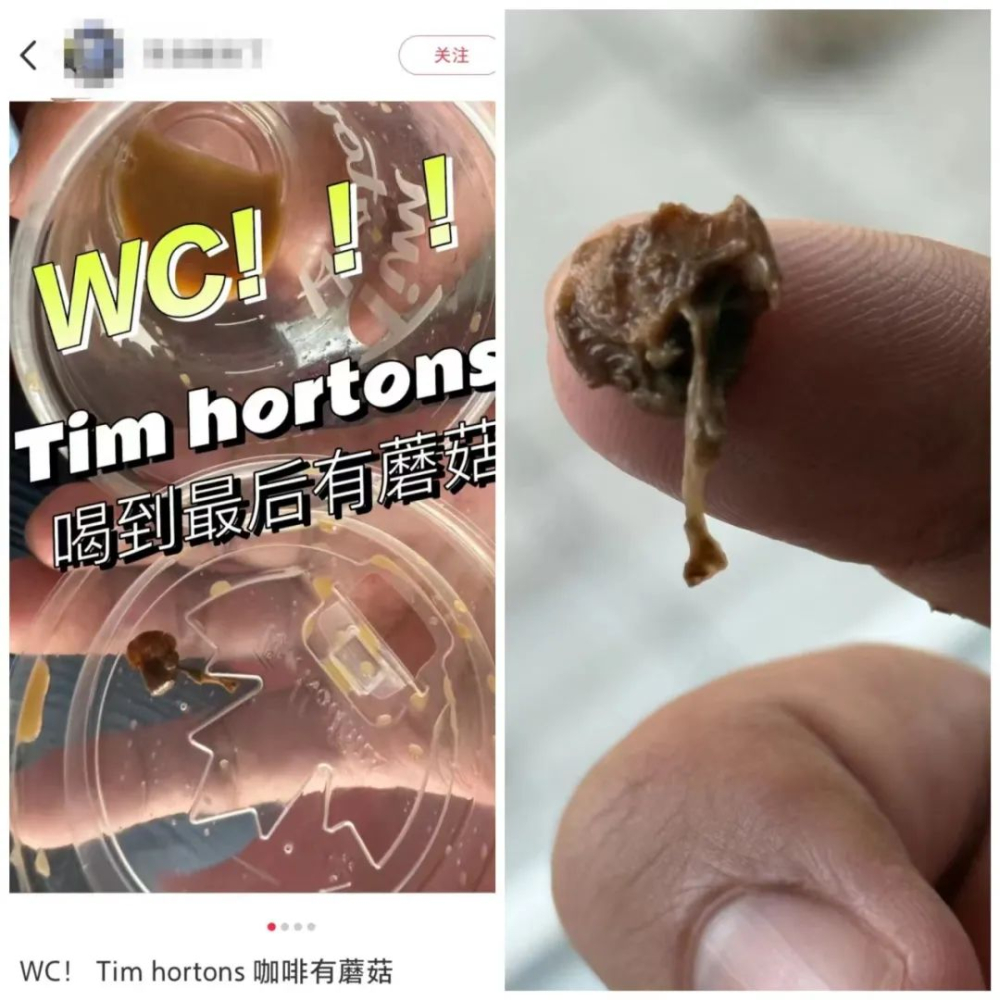
A consumer from Markham, east of Toronto, reported to the media that on October 3, they found unidentified mushroom residues at the bottom of a drink purchased from a local Tims café. The customer stated that although Tims has launched mushroom-flavored beverages, the appearance of the residue was clearly different from common white button mushrooms, raising strong concerns about the source of the ingredients.
The involved store responded by saying that the weekend manager was not on duty and that further investigation and verification would need to be handled by the supervisor on Monday. After the incident spread on social media, it quickly sparked numerous comments and discussions online, with many people expressing worry about the presence of unexplained mushrooms in beverages and concerns over potential food safety hazards.
In fact, this is not the first time Tims has faced food safety controversies in Canada. In the past, customers have complained about finding mold in popular products, even insects in their coffee, and there have been reports of employees being seen using coffee cups to hold saliva and other inappropriate behaviors. These accumulated incidents have led to a trust crisis among many consumers regarding the brand.
Local residents have specifically pointed out that currently, many Tims store employees are of Indian background, and some consumers have reported that these employees demonstrate a rather casual attitude during food preparation, failing to strictly adhere to food safety standards. Eyewitnesses have described seeing employees not following proper handwashing procedures or engaging in non-compliant operational behaviors in the preparation area.
Even more controversially, a white female employee who has worked at Tims for four years recently accused the company’s management of having discriminatory hiring policies, allegedly prioritizing applicants of Indian immigrant background. The post detailing this accusation garnered over 4.2 million views online. Although the authenticity of the claims remains to be verified, it has sparked widespread discussion.
Many netizens have pointed out in discussions that this phenomenon of “hiring within the same ethnic group” is not limited to Tims but is common across many retail and food service industries. When Indian employees dominate the human resources department, they often tend to hire job seekers from similar backgrounds, leading to a more homogenous ethnic composition in the workplace.

Industry experts remind consumers that if they find any foreign objects in their drinks, they should immediately stop drinking and retain evidence to report the issue to the store. When purchasing coffee products, it is recommended to choose brands with high transparency, pay attention to whether the beverage preparation process meets hygiene standards, and prioritize visiting stores with steady customer traffic and standardized management.
This series of incidents highlights the challenges international chain brands face in localized management while operating across borders. How to maintain brand consistency while adapting to the cultural characteristics of different regions and ensuring food safety is a serious issue that international coffee brands like Tims need to carefully consider.
The above content is compiled by CoffeeHunters, a coffee news website.


