







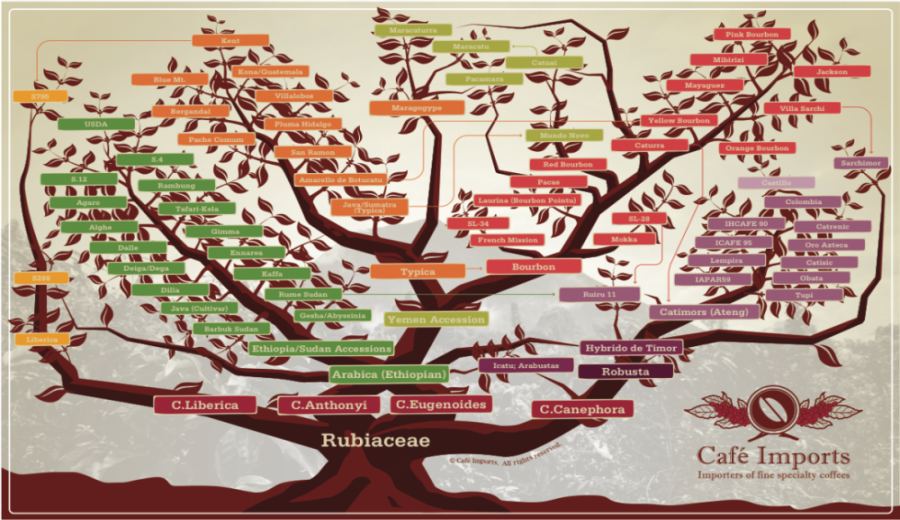
Introduction:As an ancient and highly representative variety within the Arabica family, Bourbon is renowned for its rich diversity in fruit color mutations. From the classic Red Bourbon to the rare Pink variety, these coffees not only exhibit notable differences in appearance but also vary significantly in flavor profile, yield, and disease resistance. This article delves into the evolutionary journey of the Bourbon variety, exploring the origins, characteristics, and cultivation status of the four major color variants—Red, Yellow, Orange, and Pink—helping readers gain a more comprehensive understanding of the unique traits of these classic varieties.
Bourbon is one of the most genetically significant and ancient varieties within the Arabica species. Compared to Typica, it not only plays a more influential role in the evolution of coffee varieties but also garners significant attention due to its diverse range of fruit color mutations. Originating in Yemen, the variety was named after its transplantation to the Île Bourbon (now Réunion Island), and subsequently spread to places such as Brazil and El Salvador through colonial expansion. Over a long process of transplantation and mutation, the Bourbon variety gradually evolved into multiple fruit color variants, including Red, Yellow, Orange, and Pink. These mutations not only altered the appearance of the coffee cherries but also directly influenced their flavor profiles, yield efficiency, and resistance to diseases. The following will take you on an in-depth exploration of the origins and characteristics of these precious variants.
Within the Arabica variety lineage, Typica and Bourbon are the two oldest genetic pillars, still holding a place in global coffee cultivation today. Among them, Bourbon has garnered particular attention from specialty coffee enthusiasts and agricultural researchers due to its higher tendency to undergo natural mutations, resulting in numerous color variants. The most representative of these include Red Bourbon, Yellow Bourbon, Orange Bourbon, and Pink Bourbon—each color carrying a unique evolutionary history and agronomic characteristics.
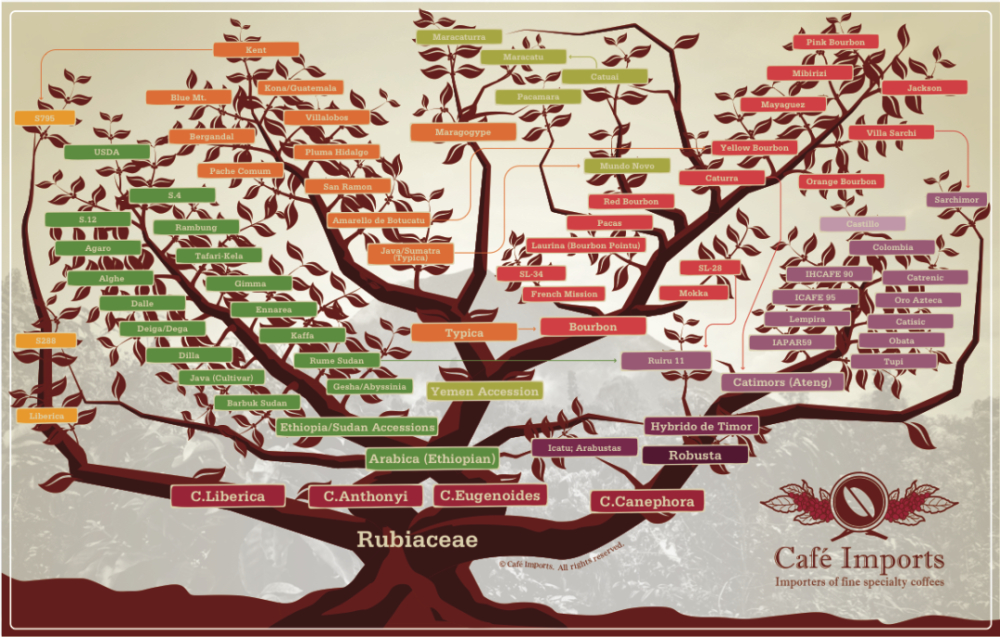
The earliest history of Bourbon can be traced back to the early 17th century. It is recorded that French missionaries introduced it from Yemen to the Mascarene Islands, located approximately 680 kilometers east of Madagascar. The islands were later renamed Île Bourbon by the French (now Réunion Island). As the variety became stably cultivated on the island and emerged as the primary coffee crop, the term "Bourbon coffee" came into being. By the mid-19th century, with the movement of French missionaries across Africa and South America, Bourbon was gradually introduced to these regions, becoming a foundational element of specialty coffee in many countries.
Take Brazil as an example: Bourbon was first introduced to the southern region of Campinas in the 19th century. At the time, Brazil primarily cultivated Typica, but although Bourbon faced similar challenges with pests and diseases, its per-unit yield was superior to that of Typica. As a result, it quickly gained popularity locally and gradually expanded throughout Central and South America. However, over time and through multiple crossbreeding efforts, Bourbon has been largely replaced by descendant varieties such as Caturra, Catuai, and Mundo Novo in most traditional growing areas of Latin America. It is now only continuously cultivated in a few countries, including Brazil, El Salvador, and Peru.
Generally speaking, normally ripe coffee cherries transition sequentially from green to light yellow, then to orange, and finally to deep red. However, over the course of its long evolution, the Bourbon variety has developed various mutated variants in fruit color, such as yellow, orange, and even pink. To distinguish these variants from the most common red-fruited type, the red variant is referred to as "Red Bourbon." Such mutations are often closely associated with sugar accumulation inside the fruit, acidity expression, and disease-resistant genes.
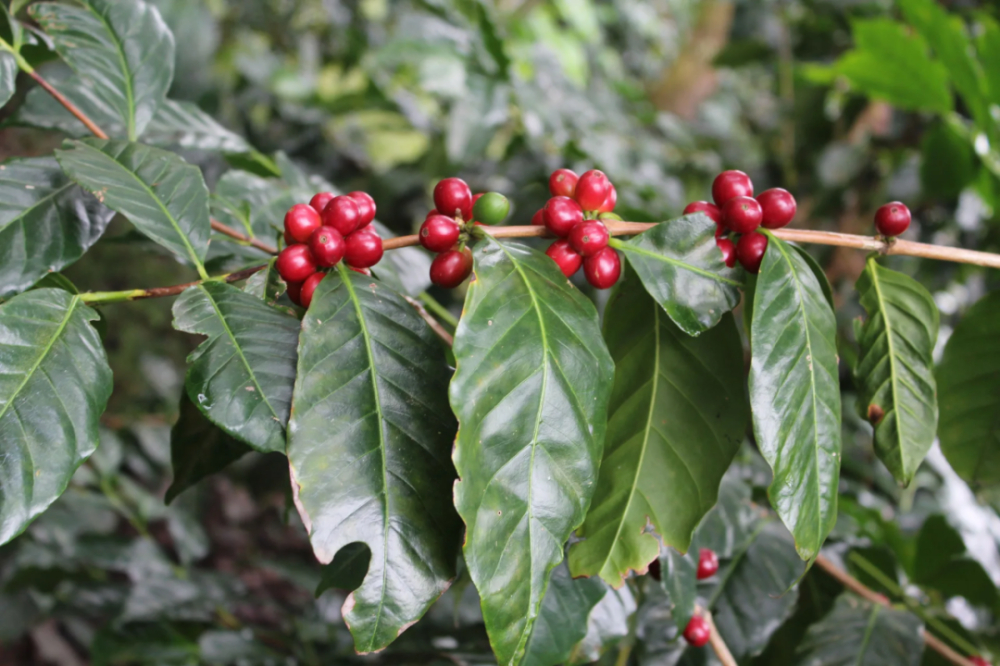
Yellow Bourbon is believed to have been first discovered in the 1930s on a Bourbon plantation in the state of São Paulo, Brazil. Some believe it to be a natural mutation of Red Bourbon, while others speculate it may have resulted from a natural cross between Red Bourbon and a local yellow Typica variant known as "Amerelo de Botocatu." The Instituto Agronômico de Campinas (IAC) later conducted in-depth research on this variety and successfully developed several commercially viable Yellow Bourbon cultivars in the 1950s. Yellow Bourbon has a relatively shorter maturation period, and its sweetness and aroma typically outperform those of Red Bourbon, featuring a distinct citrus acidity. However, it yields less and has weaker disease resistance, so it is currently limited to small-scale cultivation in certain areas of São Paulo, Brazil. Its flavor often showcases clear fruity sweetness, paired with sugarcane, nut, and chocolate notes, offering a smooth and delicate mouthfeel.
Orange Bourbon is another naturally mutated variety, first recorded in the region of El Salvador. This variety is named for the warm orange hue of its ripe cherries and represents a rarer phenotypic expression within the Bourbon genetic lineage. The characteristics of Orange Bourbon share some similarities with Yellow Bourbon, but it generally features softer acidity and more pronounced body, making it suitable for consumers who prefer balanced flavors. However, due to its lower yield and weaker disease resistance compared to Red Bourbon, it remains a niche variety in commercial cultivation.
Pink Bourbon is a variety that has gradually gained attention in recent coffee competitions. Its ripe cherries display a soft pink hue, hence the name. This variety is believed to be a descendant of a cross between Red Bourbon and Yellow Bourbon. Its unique pink fruit skin is a result of recessive gene expression, which can be easily masked if surrounded by dominant red or yellow genes. Therefore, special care must be taken to isolate Pink Bourbon during cultivation to maintain its appearance and flavor characteristics. Additionally, although Pink Bourbon exhibits high disease resistance, its yield is extremely low and unstable, posing significant challenges for commercial cultivation. Notably, subsequent genetic analysis suggests that the genetic background of Pink Bourbon may not be purely Bourbon but shows high similarity to certain native Ethiopian varieties, leaving its true origin still debated.
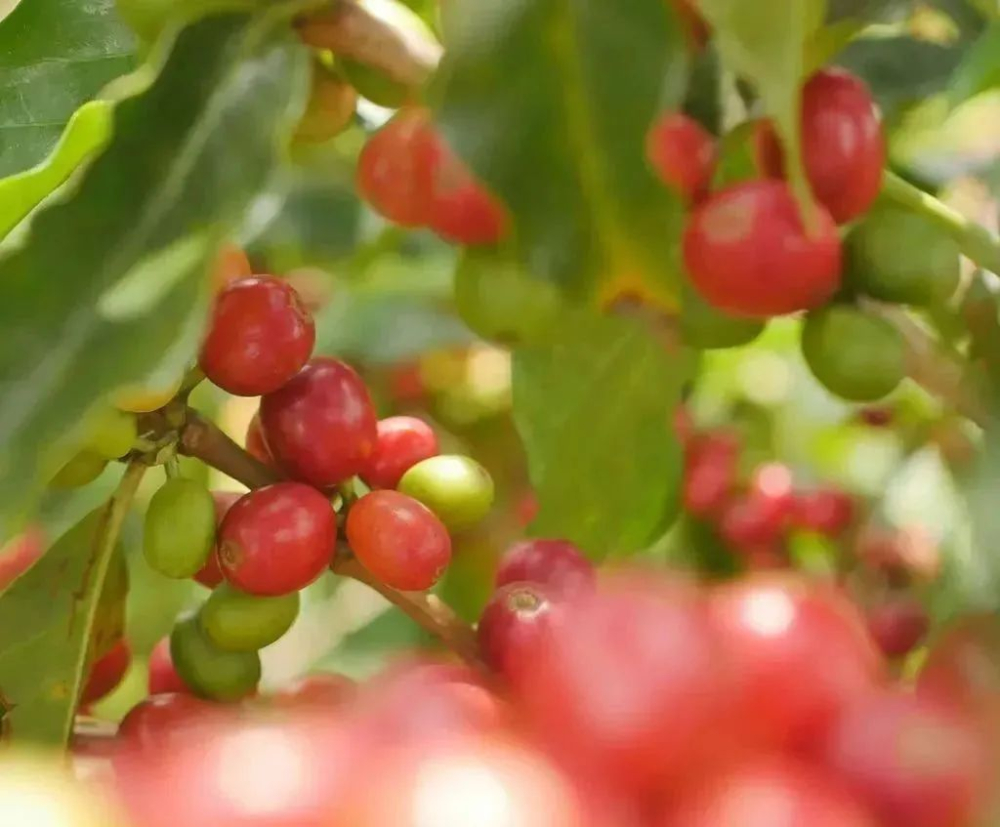
Overall, the various color variants of the Bourbon family not only enrich the biodiversity of coffee cultivation but also offer the specialty coffee market a wider array of flavor choices. Whether coffee lovers prefer sweet fruit tones, rich balance, or unique acidity expressions, they can find a preferred option among these variants. Understanding the history and characteristics of these mutated varieties helps consumers make more informed decisions when purchasing coffee beans and enables growers to select the most suitable varieties for cultivation based on local conditions and needs.
The above content is compiled by CoffeeHunters, a coffee news website.


