








Introduction:In recent years, post-shift cleaning in the food and beverage industry has become one of the stressors for employees. Some Heytea outlets have introduced an outsourced cleaning mechanism, where third-party teams are responsible for equipment and environmental cleaning after store closure. This reduces the burden on staff and can even extend the lifespan of equipment. However, this new measure is not applicable to all locations, and it raises concerns about workforce adjustments and cost shifting. Is outsourcing store closing a boon for employees or a potential risk? This article takes you deeper into the issue.
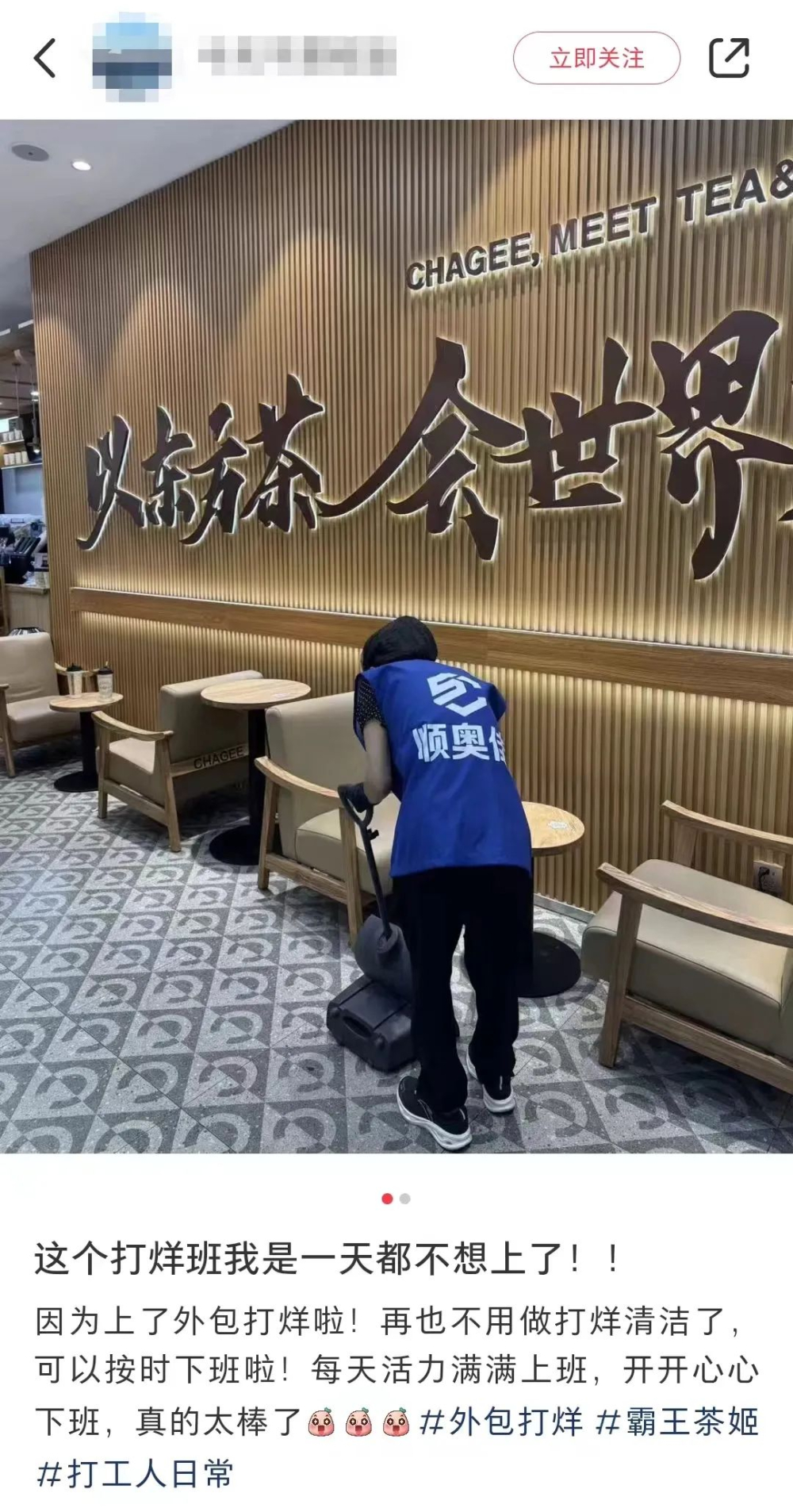
In the food and beverage sector, especially in tea and coffee shops, post-closing cleaning has long been a headache for employees. Not only does it extend working hours, but it often also leads to unpaid overtime. Recently, Heytea has trialed an “outsourced store closing” model in some outlets, handing over post-closure cleaning tasks to professional third-party teams. This move has allowed many frontline employees to finally leave work on time, significantly reducing the pressure of overtime.
According to reports, this initiative is funded by the brand, which hires external cleaners to handle environmental tidying and equipment cleaning at closing time, including tea-making machines, countertops, floors, and more. These outsourced personnel have received certain training and are familiar with the brand’s standard procedures. They can effectively remove stains, such as tea marks and grease, and some employees have reported that after their cleaning, the equipment looks almost brand new, even giving the impression of “saving on replacement part costs.”

However, this seemingly positive policy still comes with many limitations and concerns in practice. First, it is currently only implemented in some directly operated stores. Franchisees who wish to adopt the model must contact third parties themselves and pay additional service fees. Since these fees are not covered by the brand’s subsidies, some franchise owners admit that to control costs, they may consider reducing existing staffing levels in the future.
Additionally, even with outsourced cleaning, employees are not entirely off the hook. According to several store staff, while the outsourced team mainly handles routine end-of-day cleaning, tasks such as weekly deep cleaning of ice machines and regular equipment maintenance still need to be managed by in-store workers. This means the actual workload hasn’t been fully reduced—in fact, it has created a situation where “the outsourced team does half, and the staff make up the rest.”
Moreover, some employees worry that if stores reduce staffing due to the introduction of outsourced cleaning, it could increase job insecurity. Although there have been no large-scale layoffs so far, some franchise operators have hinted that after bringing in third-party cleaners, they will reassess current staffing needs. This possibility of “reducing staff for efficiency” has led many frontline employees to view the outsourced store closing measure with caution or even concern.
In summary, the outsourced post-closing cleaning measures adopted by some Heytea outlets have indeed brought a certain level of stress relief for frontline staff, while also improving cleaning quality and equipment maintenance. However, because it is only applicable to specific stores, franchisees bear extra costs, and it doesn’t fully cover regular maintenance tasks, employees still face residual work and potential risks of workforce adjustments. Whether outsourcing store closing can truly become a long-term solution remains to be seen.
The above content is compiled by CoffeeHunters, a coffee news website.


