








Introduction:The United States continues to impose a national emergency on Ethiopia, which not only affects bilateral trade but also directly impacts market opportunities for major export products such as coffee. This article provides an in-depth analysis of the actual effects of this policy on Ethiopia’s economy and coffee industry, as well as the potential challenges ahead, helping readers stay informed about the latest developments in the global coffee supply chain.
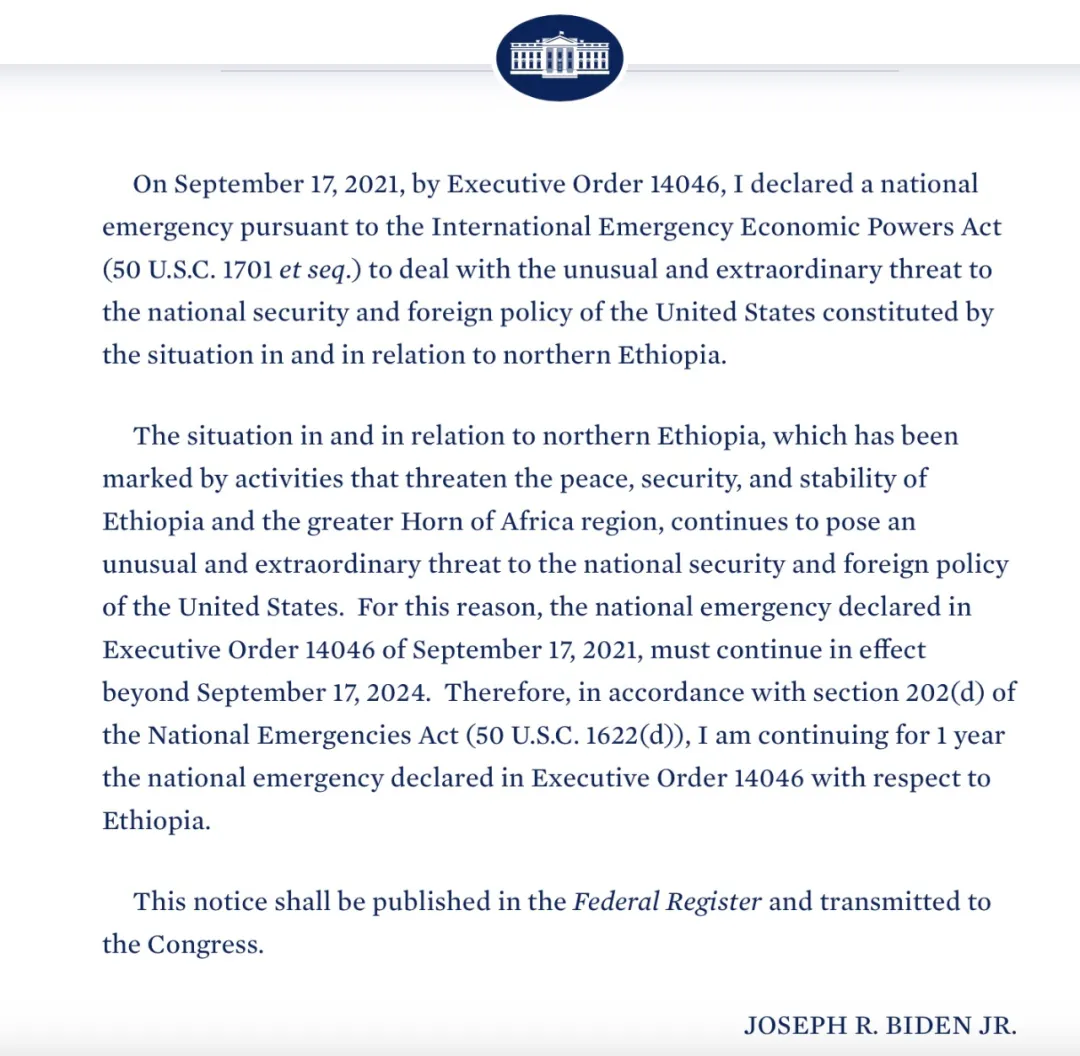
The White House officially announced on September 6, 2024, that it will maintain the national emergency on Ethiopia. This decision came shortly after news broke of a currency swap agreement between China and Ethiopia. Although Ethiopia’s Minister of Finance has confirmed the existence of the agreement, specific details and implementation timelines remain confidential. Since 2021, the United States has kept the state of emergency in place under the International Emergency Economic Powers Act and extended it through 2025, further complicating the country’s economic outlook.
This state of emergency was initially imposed in response to developments in northern Ethiopia. The U.S. believes that the unrest in the region threatens overall peace, security, and stability in the Horn of Africa, and even impacts American diplomatic and national security interests. As a result, the U.S. President is authorized by law to impose sanctions on specific governments, organizations, enterprises, or individuals in the targeted country, including restricting trade and technology transfers, thereby increasing pressure on Ethiopia’s economic activities.

At the same time, since 2022, the United States has removed Ethiopia from the African Growth and Opportunity Act (AGOA), causing major Ethiopian exports such as coffee, textiles, and leather products to face high tariffs once again. These industries have been vital sources of foreign exchange for Ethiopia, especially coffee, which accounts for a significant portion of the country’s economy. Although Ethiopia introduced a new foreign exchange policy in August this year, allowing the local currency, the birr, to depreciate moderately—leading to slight softening in the U.S. stance—regaining AGOA eligibility still faces numerous obstacles, particularly regarding security and political stability outside the capital.
In fact, according to official U.S. statistics, Germany is the largest importer of Ethiopian coffee, followed by Saudi Arabia and Japan, while the United States ranks only fourth, accounting for approximately9.3%of total exports.
However, the U.S. market has extremely high requirements for coffee quality and origin transparency. If trade restrictions intensify, it will not only affect export revenues but may also indirectly drive up global coffee prices.
The continuation of the emergency by the United States may further restrict bilateral trade, not only hindering Ethiopia’s coffee exports but also affecting the country’s ability to import fertilizers and industrial supplies, leading to increased production costs and reduced supply chain efficiency. Coupled with already soaring domestic prices due to foreign exchange policy adjustments, the cost pressures on coffee cultivation and processing will also rise.
It is worth noting that Ethiopia’s current domestic situation remains unstable. In addition to the conflict in the north, unrest has gradually spread to the central and southern regions. Relations with neighboring countries Somalia and Eritrea have also continued to deteriorate due to disputes involving Somaliland, keeping geopolitical risks high and making the investment environment and trade conditions even more challenging.
From an industry perspective, Ethiopian coffee is renowned for its unique flavor profiles, especially those from the central highlands, which often exhibit notes of blueberry, floral, and citrus tones, making them highly favored in the global specialty coffee market. However, if the international trade environment continues to tighten, these premium qualities may struggle to effectively translate into market competitiveness, thereby affecting farmers’ incomes and the sustainable development of coffee-growing regions.
The above content is compiled by CoffeeHunters, a coffee news website.


