







Introduction:Why can Panama’s Geisha coffee stand out in the global specialty market? In addition to the renowned Hacienda La Esmeralda, its unique microclimate and volcanic soil are the key factors. This article will take you deep into Panama’s Boquete region to understand the golden environment where Geisha thrives, and detail how Hacienda La Esmeralda classifies Geisha into auction, red label, and green label grades based on altitude, plot, and cupping performance—so that everyone from beginners to advanced enthusiasts can grasp the essence.
Geisha (Geisha) coffee is now a star variety in the specialty coffee world, and Panamanian Geisha is considered the finest by many coffee lovers. What exactly makes Panamanian Geisha consistently top the market? The answer lies not only in its rare microclimate and fertile volcanic soil but also in a group of dedicated and professional farm owners who have created world-class coffee flavors through meticulous management and grading systems.
Panama is located in Central America, bordering Costa Rica and Colombia. Its mountain ranges stretch from east to west, creating a unique geographical environment. Especially in areas like Boquete and Candela, the over 6,500-meter-high central mountains block cold air, forming a cool, humid, and variable microclimate, which is the perfect condition for cultivating high-quality coffee.
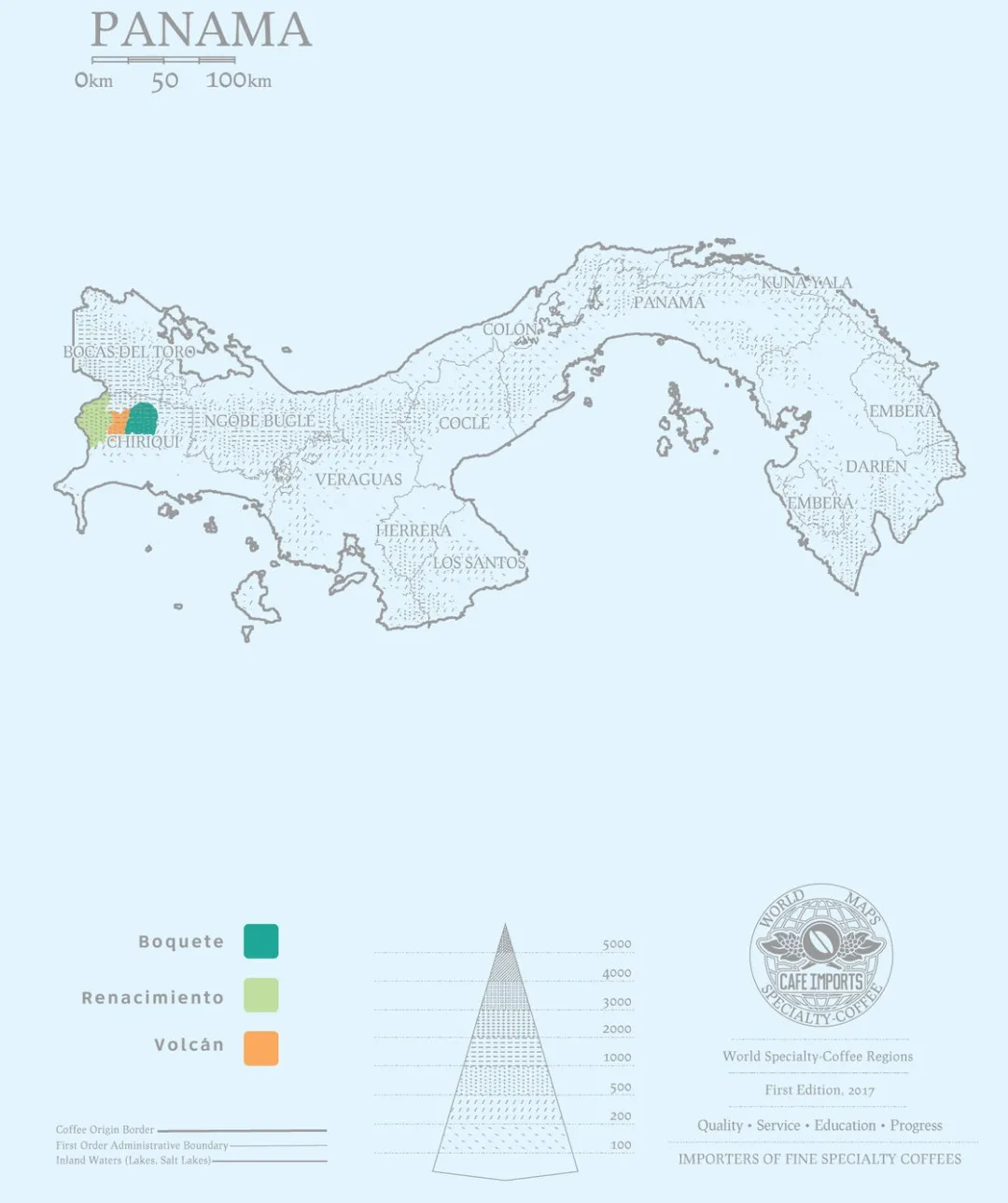
The country is divided into 10 provinces and 5 indigenous regions, with the main cultivation areas for specialty coffee concentrated in the western Chiriquí Province. This area is further divided into three major regions: Boquete, Volcán-Candela, and Renacimiento near Costa Rica. Among them, Boquete and Volcán, embraced by the Volcán Baru, benefit from both altitude and climate advantages, making them the golden zone for Geisha coffee.
Panama’s coffee planting history can be traced back to the 1780s, when a British retired naval captain first introduced the Typica and Bourbon varieties to the Boquete Valley. To avoid pests and diseases, early coffee trees were mostly planted at higher altitudes, especially in the later-famous Boquete Valley and volcanic areas, gradually becoming the cradle of premium coffee.
In 1989, the collapse of the International Coffee Agreement caused international coffee bean prices to plummet, prompting Panama to turn to the specialty coffee market. In 1996, seven local farms jointly established the Panama Specialty Coffee Association (SCAP) and launched the BOP (Best of Panama) competition and online auction, successfully bringing Panamanian coffee onto the international specialty stage. Geisha later became the focal variety.
Boquete is located at the foot of the Volcán Baru, characterized by a tropical highland climate influenced by moist airflows from both the Caribbean Sea and the Pacific Ocean. The significant day-night temperature difference helps coffee cherries accumulate sugar and complex flavors. The area generally has high altitudes, where coffee trees grow slowly with a long fruit maturation period, thus creating more layered aromas and acidity. The frequent fog and fertile volcanic soil make it an ideal place for growing high-end varieties like Geisha.Generally speaking, for every 100 meters increase in altitude, there is a noticeable improvement in flavor complexity and sweetness.
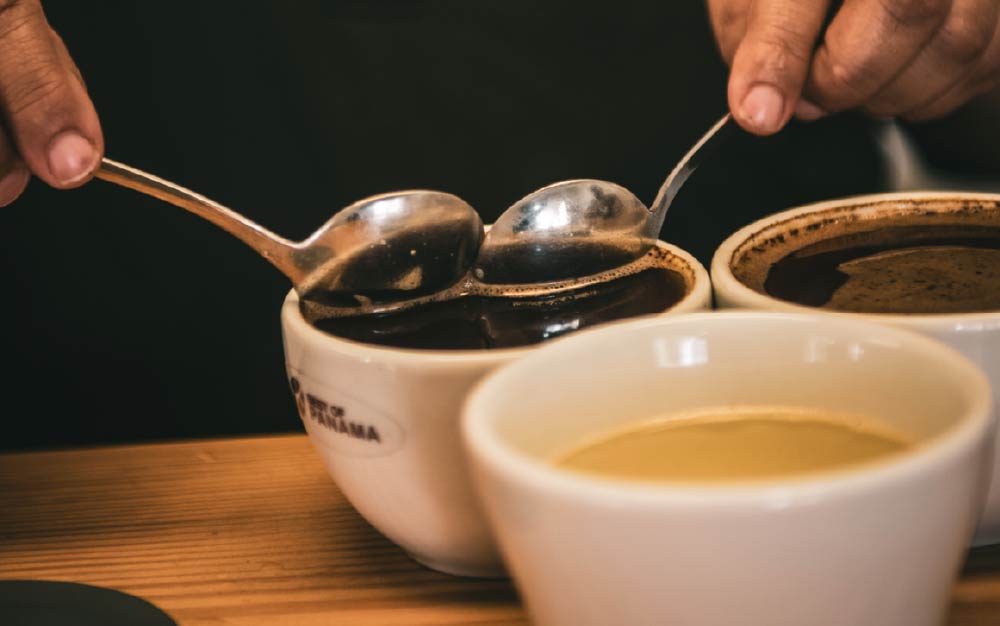
When talking about Geisha, one cannot overlook Hacienda La Esmeralda. In 2004, the farm won the BOP first prize with Geisha, not only making Geisha widely renowned but also establishing Panama’s leading position in the global specialty coffee scene. Hacienda La Esmeralda was the first to establish a rigorous grading system, classifying Geisha into multiple grades based on altitude, plot, and cupping results, making it easier for consumers to understand the origin and performance of each coffee.
The predecessor of Hacienda La Esmeralda was the Pamela Farm, purchased by American banker Rudolph A. Peterson in 1964. Initially focused on dairy products, it didn’t transition to coffee cultivation until 1987, when it introduced the Caturra and Catuaí varieties. After establishing a washed processing facility in 1994, it officially embarked on the specialty coffee path. By 1997, the third-generation owner Daniel joined, ushering in a new era of cupping and variety grading.
Hacienda La Esmeralda currently has four brands corresponding to different grades of Geisha:Esmeralda Auction (auction lots), Esmeralda Special (red label), Private Collection (green label), as well as non-Geisha varieties such as Diamond Mountain. Among them, the auction lots typically come from the highest-altitude plots with the best cupping scores, making them highly sought-after collectibles for enthusiasts.
The red label Geisha (Esmeralda Special) is the high-end representative of Hacienda La Esmeralda,grown at altitudes exceeding 1600 meters, with cupping scores of at least 91 points or above. Each batch comes with detailed production area information, including plot name, altitude, processing method, harvest time, etc. For example, the red label Geisha from the “Sugar Cane” plot, after 25 days of slow sun-drying, presents rich notes of jasmine, citrus, berries, and spices—making it a dream choice for pour over enthusiasts.
The green label Geisha (Private Collection) is a more accessible specialty-grade option,mainly a blend of beans from plots between 1600 and 1800 meters. Though not participating in auctions, it retains the classic Geisha flavors of citrus, berries, and tea-like characteristics. Most green label batches are processed via washed methods, offering clear and bright flavors—suitable for everyday drinking or for those trying Geisha for the first time.
Hacienda La Esmeralda cultivates Geisha in numerous plots, including Jaramillo, Cañas Verdes, and El Velo. Each plot imparts unique characteristics to the coffee due to differences in microclimate and soil details. For example, Jaramillo features a large day-night temperature variation and annual rainfall of up to 4,000 millimeters, with six subplots under the red label such as Mario, Reina, and Caballeriza. Cañas Verdes, with its complex terrain and deep volcanic soil, showcases rich floral-fruity aromas and a full body.
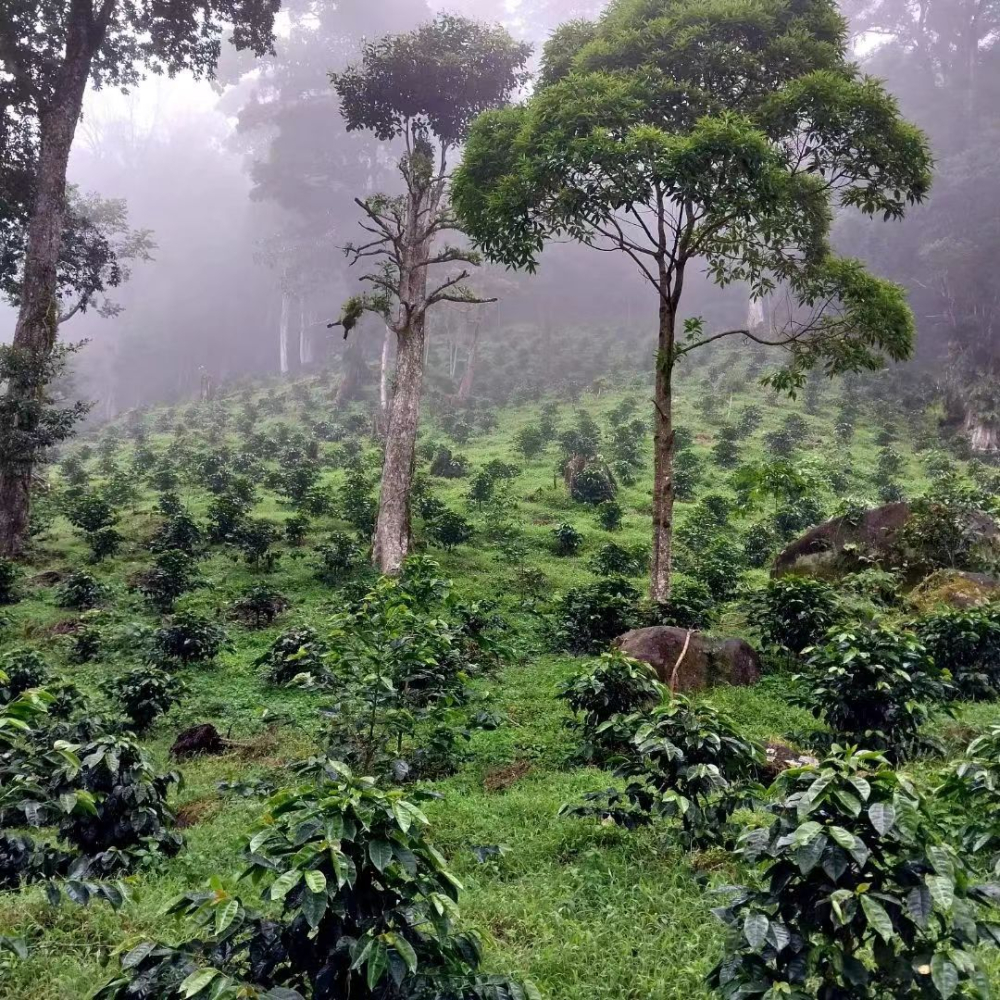
El Velo (The Veil) is one of Hacienda La Esmeralda’s highest-altitude farms, with extremely stringent growing conditions yet yielding the purest and clearest Geisha flavors. It includes seven meticulously managed small plots. Here, Geisha is not the only crop—over 400 experimental varieties from CATIE are also grown, making it a crucial base for future specialty coffee development.
In summary, the unique terroir of Panama’s Boquete region, combined with Hacienda La Esmeralda’s strict grading and management, allows Geisha coffee to not only possess high flavor potential but also meet the needs of various consumers through different grades. Whether you’re a pour over novice or a coffee connoisseur seeking ultimate flavors, understanding these behind-the-scenes details can help you better appreciate the value of a truly top-tier Geisha cup.

The above content is compiled by CoffeeHunters, a coffee news website.


