







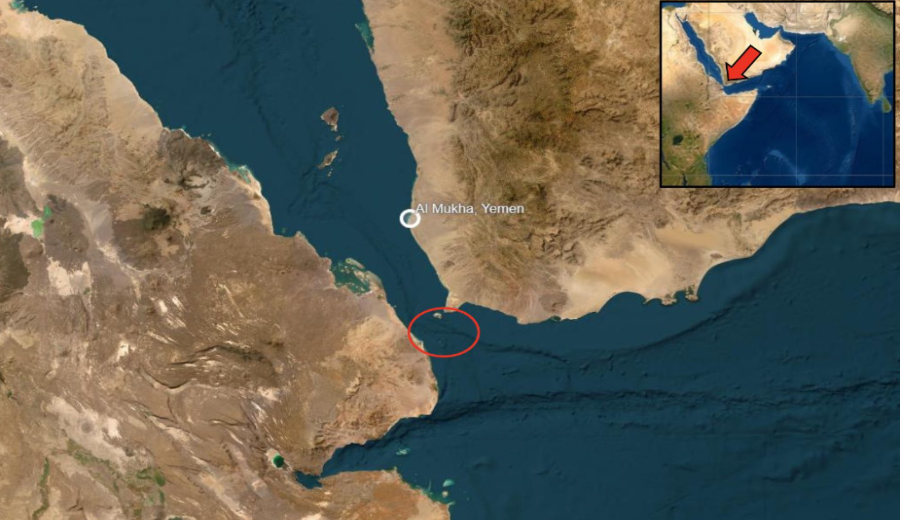
Introduction:Tensions in the Red Sea region continue to escalate, not only threatening regional security but also posing significant challenges to the global coffee supply chain. Frequent missile and drone attacks by the Houthi militants on commercial vessels have led to major adjustments in shipping routes, soaring freight costs, and a shortage of containers, further driving up coffee prices. This article provides an in-depth analysis of the actual impact of the Red Sea crisis on major coffee-producing regions and markets, helping readers stay informed about the latest market dynamics and supply chain trends.
Recently, the Houthi militants in Yemen launched a series of missile and drone attacks on multiple U.S. military vessels in the Red Sea. Although the U.S. claimed to have successfully intercepted the attacks, such military actions once again highlight the high level of instability in the Red Sea region. Since the escalation of the Israel-Gaza conflict last October, the Houthi militants have been attacking commercial ships passing through the Red Sea to pressure Israel to halt its military operations in Gaza. This has forced the global shipping industry to reroute, which in turn has had a profound impact on international trade, including coffee.
It is understood that during these military actions, the Houthi militants fired multiple missiles and drones at the U.S. Navy's USS Spruance, USS Stockdale, and USS Indianapolis. These vessels were passing through the Bab-el-Mandeb Strait into the Red Sea at the time. Although the U.S. emphasized that the majority of the attacks were successfully intercepted, some Houthi officials claimed that their attacks had "directly hit" the targeted vessels. Such incidents have caused great unease among international shipping companies, leading most commercial vessels to opt for the longer route around the Cape of Good Hope in South Africa rather than risk the more dangerous Suez Canal.
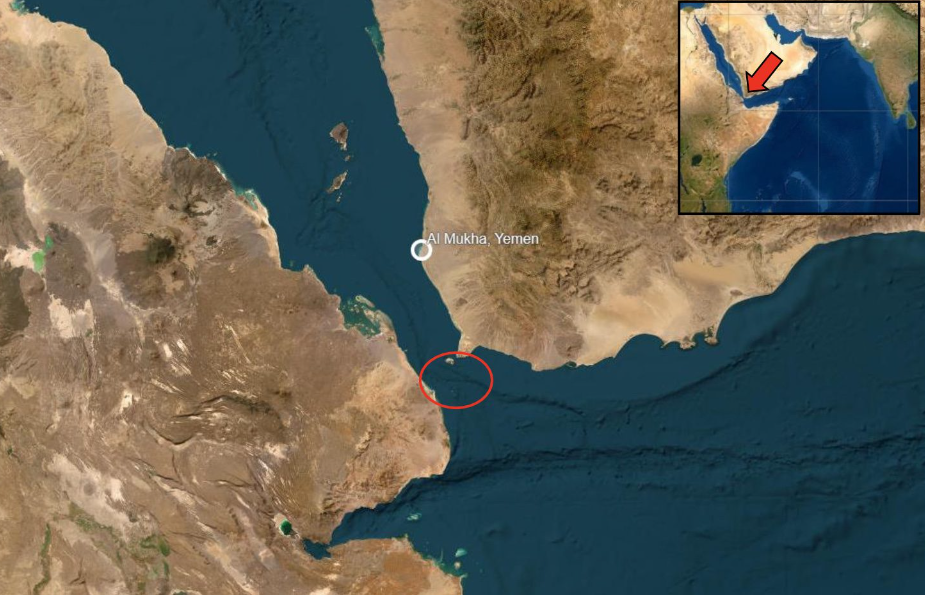
This change in shipping routes has led to obvious consequences: voyages have generally been extended by 10 to 14 days. The prolonged transportation time not only increases uncertainty but also directly drives up logistics costs. According to international shipping industry sources, this change has expanded from the original Asia-Europe route to the global supply chain, with many countries feeling the pressure of rising prices and supply shortages. The coffee market, in particular, has been significantly affected.
Since coffee is highly dependent on maritime transport, the surge in freight rates and unstable shipping schedules have led European buyers to gradually reduce their imports of coffee beans from Asia and instead increase purchases from Brazil. However, Brazil’s production capacity has its limits and cannot fully compensate for the supply gaps in other regions. A major coffee exporter in Vietnam stated that since the Red Sea crisis, the cost of shipping a single container from Asia to Europe has skyrocketed nearly sevenfold, reaching approximately $4,000, resulting in a sharp decline in overall exports. The income of many coffee farmers has also been severely affected as a result.
At the same time, international coffee market prices have continued to rise due to tightening supplies and rising transportation costs. In addition to freight factors, multiple countries have reported reduced coffee production, further exacerbating upward price pressures. Moreover, the impact of the Red Sea geopolitical crisis on East African coffee-producing regions should not be overlooked. Due to the region’s proximity to the southern end of the Red Sea, the operations of many key ports have been directly or indirectly disrupted.

Take the Port of Djibouti as an example. This port is a crucial gateway for East African coffee exports and is primarily controlled by the international shipping company MSC, whose transport capacity accounts for over 80% of the port’s operations. However, due to safety concerns, MSC has announced the suspension of services at the Port of Djibouti, posing serious challenges for Ethiopian coffee traders who rely on this port for exports. As one of the world’s major coffee-producing nations, Ethiopia’s landlocked geography makes its sea exports almost entirely dependent on Djibouti. The disruption of port services directly affects its international trade efficiency and revenue.
Additionally, East African countries such as Kenya, Uganda, and Rwanda are currently in the peak season for coffee exports. However, reports from multiple locations indicate a severe shortage of containers at ports. Due to many shipping companies rerouting around the Cape of Good Hope, containers that were supposed to return after unloading have not been able to do so on schedule, resulting in an extended container cycle and a situation where there is “cargo but no containers” at ports. Some ports in Kenya are also experiencing problems such as cargo backlogs and shipping delays due to the concentration of goods arriving at ports that lack sufficient handling capacity, further slowing down the overall supply rhythm.
It is worth noting that the European Union is set to fully implement the "Deforestation-Free Regulation (EUDR)." Many traders had previously viewed African coffee favorably due to its relatively strong traceability and environmental compliance potential, and thus planned to increase their imports from Africa. However, in reality, transportation delays have intensified, port efficiency has decreased, and container supplies remain insufficient, meaning the export challenges for African coffee have not lessened. At the same time, as the traditional peak shipping season approaches at the end of the year, market demand remains high, and it is expected that global coffee supply pressures will be difficult to alleviate in the short term. Price fluctuations may continue to affect the end market.
In summary, the Red Sea security crisis has evolved from a localized military conflict into a significant variable affecting the global supply chain, particularly coffee trade. From soaring freight rates and delayed voyages to container shortages and obstacles in origin exports, challenges at every link are continuously accumulating. Market participants need to closely monitor the development of the situation and prepare proactive strategies in advance to stabilize supply and cost structures.
The above content is compiled by CoffeeHunters, a coffee news website.


