








Introduction:The news that a recent master’s graduate took up a part-time barista job at Luckin Coffee has sparked widespread social discussion about the trend of highly educated individuals moving into the service industry. Amid concerns over degree devaluation and employment pressure, more and more young people are choosing light-physical industries such as coffee and tea beverages. This article delves into the underlying reasons, explores the real working environment, and offers deeper insights into career choices.
Recently, the news that a recent master’s graduate chose to join Luckin Coffee as a part-time barista has stirred extensive discussion on social media. Some believe that every profession deserves respect and that young people should be bold in trying new paths; however, others question whether such a choice represents a waste of higher education resources. In fact, with the number of postgraduates growing year by year—surpassing even undergraduates—and amid economic downturn and a tightening job market, many young people are turning their attention to service-oriented industries such as coffee and tea, which have relatively low entry barriers and lighter labor intensity.
This young graduate, who previously worked at a well-known research institute, had only worked in the education and training sector for a little over a month before resigning due to her inability to adapt to long hours in front of a computer and heavy administrative work. On social platforms, she shared that driven by personal interest and a longing for light-physical work, she decided to join Luckin as a barista and is currently participating in the brand’s onboarding training program. Such a shift surprised many netizens.

Netizens who support this choice argue that there is no hierarchy among professions, and that young people should try various paths to find work that truly suits them and brings a sense of achievement. Some students—both current and former—who have worked at Luckin shared that operating behind the bar and interacting with customers is more varied and interesting than the dull routine of office life. However, many others question whether graduates with high academic backgrounds should invest their advantages in what seems to be an unskilled physical job.
Observing recent trends in college admissions, many “Double First-Class” universities now have more postgraduate students than undergraduates. Taking the University of Chinese Academy of Sciences, Tsinghua University, and Fudan University as examples, the proportion of postgraduates at these institutions continues to rise, highlighting not only the popularization of higher education but also the underlying concern of relative "degree devaluation." Against the backdrop of an uncertain economic outlook, many graduates send out dozens of resumes without response and ultimately choose to enter the service industry as baristas, delivery drivers, or food and beverage workers.
Aside from external economic factors, many graduates also admit that the high-pressure rat race, complex interpersonal relationships, and difficulties in getting along with more senior colleagues in traditional office environments have led them to leave. In contrast, colleagues in coffee and tea shops are mostly peers, communication barriers are lower, team atmospheres are more relaxed, and some even hope to expand their social circles—or even find romantic opportunities—in such environments.
However, many highly educated part-time baristas also state that they do not plan to stay in this industry long-term. Due to the high turnover rate in the service sector, generally insufficient employee benefits and labor protections, this job is often seen as a short-term transition or a source of part-time income. Although making coffee may seem to require no advanced skills, it actually demands proficiency inextraction time, water temperature control, and coffee grind sizeand other basic parameters to ensure consistent quality. For beginners, the initial stage often involves feeling overwhelmed and dealing with customer complaints.
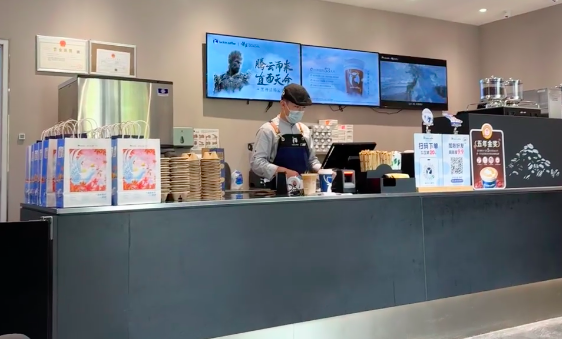
In terms of salary structure, baristas’ incomes are generally not high, and compared to factory jobs or delivery work, their competitiveness is not particularly strong. However, because the work environment is mostly indoors—free from sun and rain—and the job is labeled as “no mental exhaustion” or “relaxed,” it attracts many young people, including postgraduates. But in reality, employees working at chain coffee brands point out that daily pressures fromextraction speed, customer satisfaction, and managing negative reviews and complaintscan often be overwhelming. Young people who enter the barista role with the mindset of “taking off the Confucian scholar’s long gown” may, under actual workplace stress, reconsider whether their career choice is truly as carefree as they imagined.
Overall, the phenomenon of highly educated individuals choosing the service industry reflects the multiple challenges of the current job market and the shifting values of younger generations. Whether driven by interest, a desire to escape the rat race, or as a temporary transition, each career choice comes with its own considerations and realities. For readers interested in entering the coffee industry, it is advisable to first understandthe basic coffee-making process and equipment operation precautionsas well as the actual pace of work in the industry, in order to make a more suitable career plan.
The above content is compiled by CoffeeHunters, a coffee news website.


