







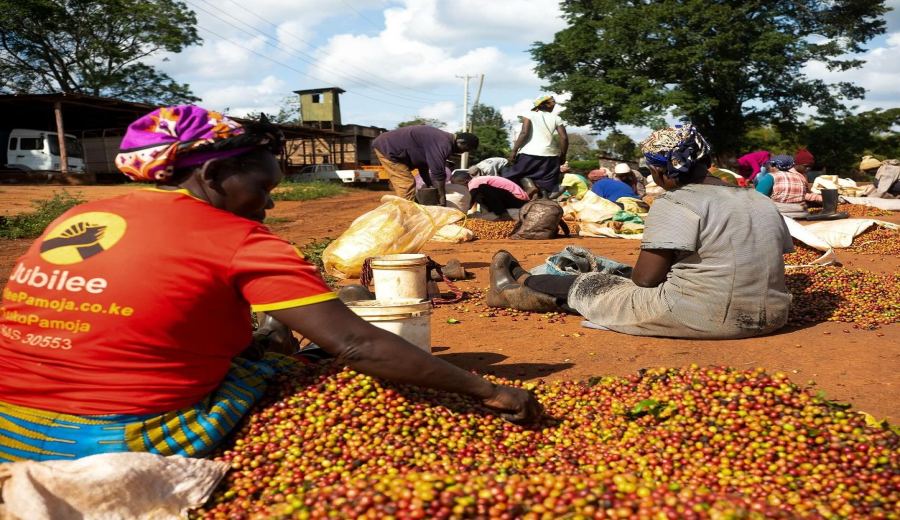
Introduction:Delve into the geographical advantages of the Nakuru and Kisii regions in central-western Kenya, explore the cultivation history and unique flavor profiles of the SL28 and SL34 varieties, and examine how the K72 washed processing method brings out the classic combination of berry acidity and sugarcane sweetness. From high-altitude environments to processing techniques, gain a comprehensive understanding of the essence of Kenyan coffee and brewing essentials.
As a representative specialty coffee-producing country in Africa, Kenya’s coffee-growing regions and refined processing methods have always been a focus for coffee enthusiasts. This article will begin with Kenya’s geography and climate conditions, fully outlining its three major planting zones—the central region, the East African Rift Valley, and the western region—while particularly highlighting the performance of the central-western Nakuru and Kisii regions. It also provides a detailed introduction to the cultivation background and flavor characteristics of the two classic varieties, SL28 and SL34, and analyzes how the K72 washed process shapes the signature berry acidity and sugarcane sweetness of Kenyan coffee. The article also retains actual brewing flavor references.
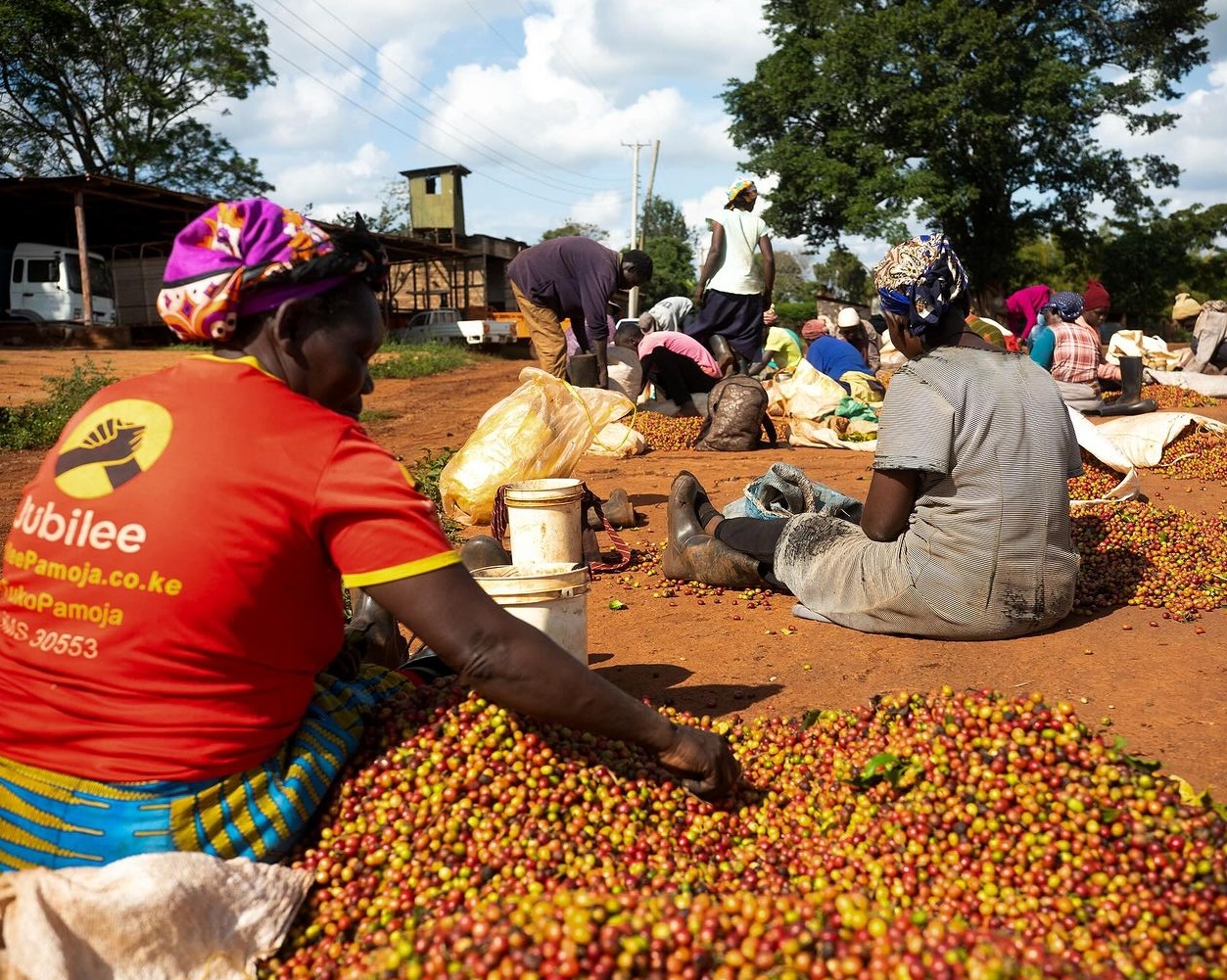
The African continent holds a pivotal position among global coffee-growing regions, especially East Africa, which has nurtured multiple renowned coffee-producing countries due to its high-altitude terrain and abundant natural resources. The East African Rift Valley stretches from north to south across the entire area, forming numerous mountains, volcanoes, lava plateaus, and lakes along the way, creating uniquely favorable growing conditions. Kenya stands out among them, renowned for its juice-like bright acidity and complex layered flavors.
Kenya straddles the equator, with the entire country situated in a tropical monsoon climate zone and featuring diverse climates, primarily tropical savanna. Coastal areas are hot and humid, while highland regions are mild and pleasant, with mountain peaks exceeding 3,500 meters in elevation even covered in snow year-round. Influenced by monsoons, the area is generally divided into rainy and dry seasons each year. Coupled with high altitude, volcanic soil, ample sunlight, and moderate rainfall, these factors provide an ideal growing environment for coffee trees.
Coffee cultivation in Kenya is mainly concentrated in the southwest and central-south regions, which can be divided into three major areas: the central region, the East African Rift Valley region, and the western region. Among them, the western region is dominated by Mt. Elgon, Trans-Nzoia, and Bungoma, particularly the foothills on the eastern side of Mt. Elgon; the East African Rift Valley region includes the two major producing areas of Nakuru and Kisii, located in the central-western part of the country.
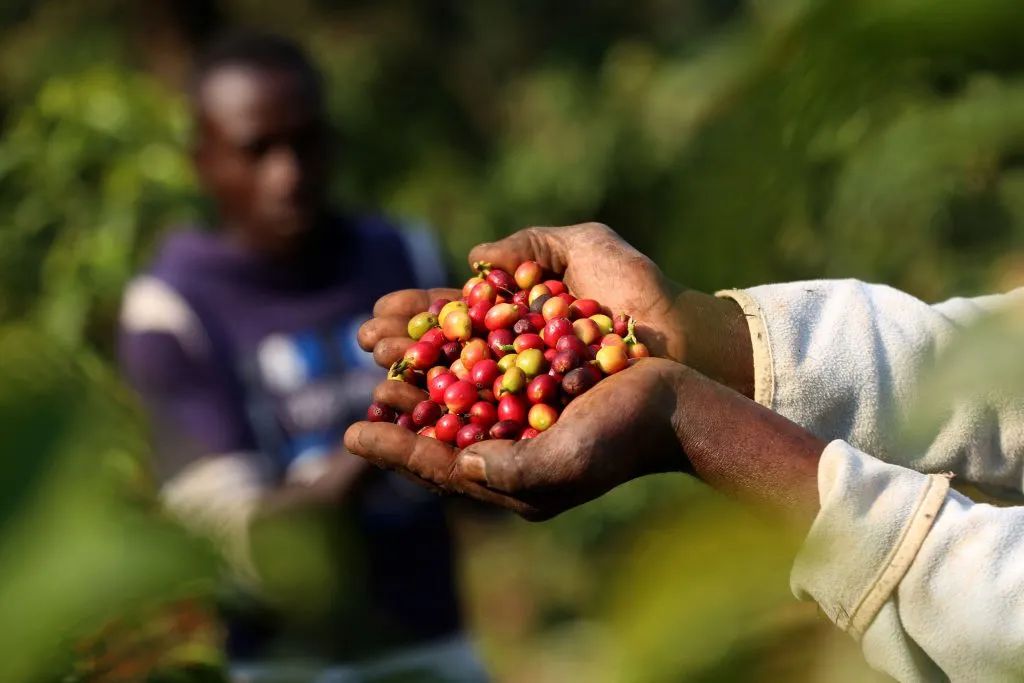
However, when baristas talk about Kenyan coffee, most are referring to the country’s central region. This area contributes about 60% of the nation’s total coffee production, with core producing regions such as Nyeri, Kiambu, Kirinyaga, Murang’a, and Thika all surrounding the Kenya Volcano.
Among them, Nyeri, Kirinyaga, and Thika are the most well-known producing areas in Kenya. They are close to Mount Kenya on the equator, Africa’s second-highest peak, which stands at 5,199 meters with snow-capped summits, misty surroundings, and 15 glaciers. The area between 1,500 and 3,500 meters in elevation is covered with dense forests and coffee plantations, where fertile soil formed by volcanic ash deposits is very suitable for cultivating crops such as coffee and bananas.
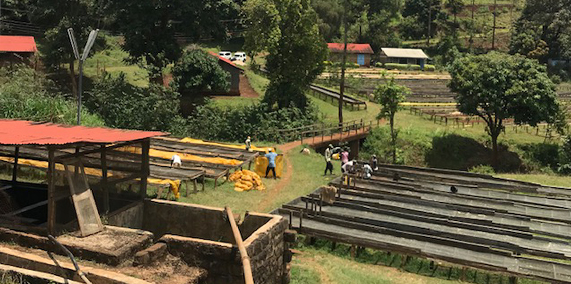
Many well-known roasters’ Kenyan offerings, such as beans from the Thika region, often use the SL28 and SL34 varieties and employ the K72 washed processing method. Such beans often emit aromas of ripe tomatoes and flowers when brewed, offering flavors of cherry tomatoes, blueberries, and dark plums on the palate, with bright acidity and prominent sweetness. The overall taste is clean and juicy.
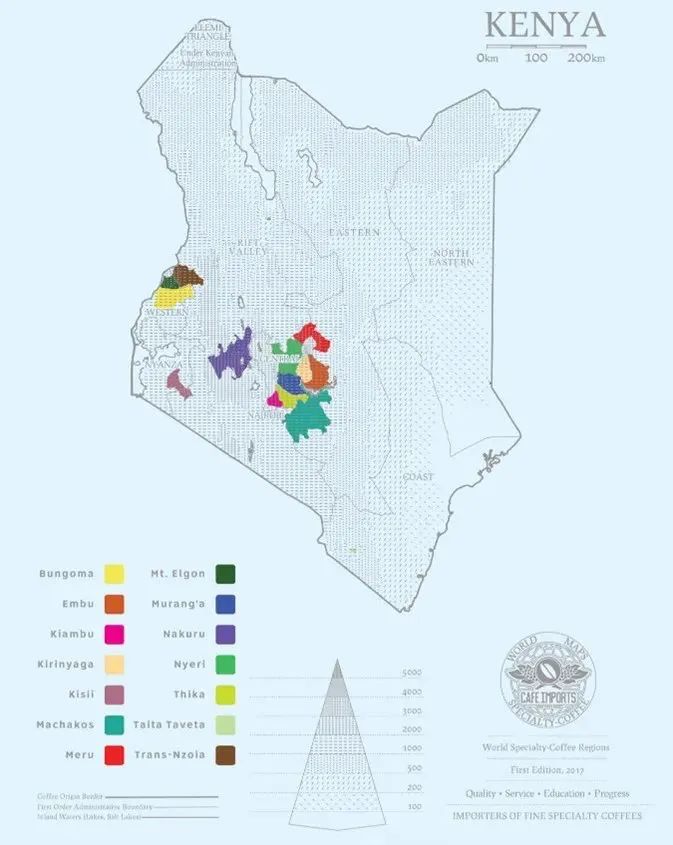
Beyond the central producing regions, the central-western Nakuru and Kisii regions of Kenya also hold potential. Both regions are located around the East African Rift Valley, with Nakuru City being the fourth-largest city in Kenya and the core of this producing area, adjacent to the famous Menengai Crater.
Nakuru is not only rich in natural resources but also home to the renowned Lake Nakuru National Park, famous for its flamingos and Lake Nakuru. The area gradually developed in 1900 after becoming an important station on the Mombasa-Uganda Railway. Initially, it mainly grew corn and engaged in livestock farming. Later, influenced by other coffee-producing regions, it gradually evolved into a high-altitude coffee-growing area. Coffee trees are mainly distributed between 1,850 and 2,200 meters, and the coffee produced typically features medium acidity, rich fruit aromas, and intense chocolate flavors.
The reason Kenyan coffee is known for its distinctive berry acidity, sugarcane sweetness, and juicy texture is inseparable from the two main local varieties, SL28 and SL34, as well as the unique K72 washed processing method.
The SL series varieties originated in the 1930s, when Kenya’s coffee trees were hit by a severe outbreak of coffee berry disease. The Scott Laboratories (Scott Laboratories) were commissioned by the government to focus on breeding new disease-resistant varieties. In the end, No. 28 and No. 34 performed outstandingly, not only demonstrating strong disease resistance but also excelling in flavor performance, thus becoming representatives of Kenyan coffee flavors. These two varieties often feature pronounced flavors of citrus, berries, and dark plums, with bright acidity and rich sweetness, and a deep, intense taste profile.
It is worth noting that although Kenya also cultivates varieties such as K7 and Ruiru 11, due to the more layered and distinctive flavors of SL28 and SL34, they are more favored by the market and coffee enthusiasts.
The above content is compiled by CoffeeHunters, a coffee news website.


