







Introduction:Delve into the origin characteristics and grading system of Colombian coffee, from the high-altitude environment of the Andes Mountains to the volcanic soils of Huila Province, and explore how they create its unique chocolatey and fruity-acidic flavors. This article also details the strict screening criteria for export-grade Excelso green beans and introduces the actual flavor profile of the representative Caturra washed beans from Huila.
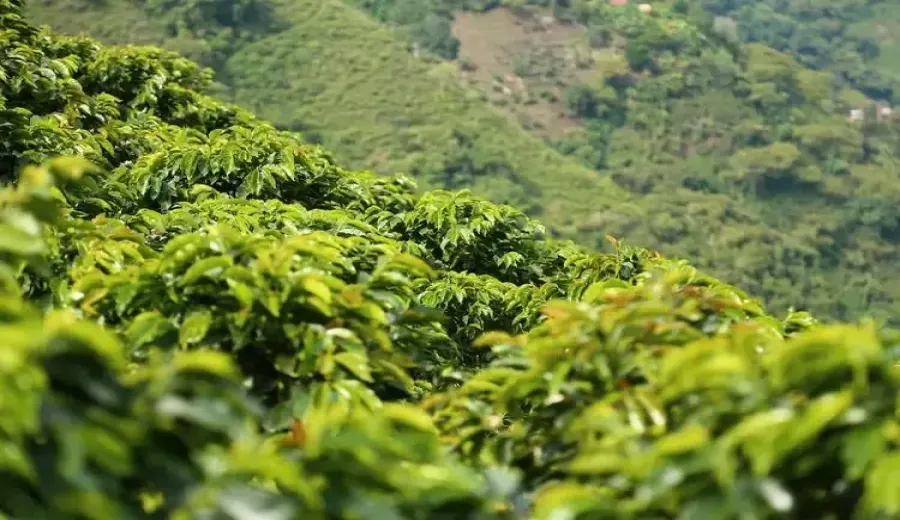
Colombia consistently ranks as the world’s third-largest coffee exporter. Its coffee-growing regions are mostly concentrated around the Andes Mountains, benefiting from volcanic soils, diverse microclimates, and high altitudes. The Arabica beans produced here are renowned for their balanced flavor and stable quality. In addition to its exceptional geographical conditions, the region's varied climate allows coffee cherries to ripen in stages throughout the year, effectively distributing the harvesting pressure and ensuring bean quality.
South America not only features diverse terrain but is also one of the most volcanically active regions in the world. The widespread highland areas and abundant water systems provide favorable conditions for agriculture. As a key economic crop, coffee has thrived in countries like Brazil and Colombia. Among them, thanks to its unique geographical location and environmental advantages, Colombia maintains the world’s third-largest annual coffee production, following only Brazil and Vietnam.
Colombia’s climate varies significantly by region, resulting in a diverse environment. The eastern part features tropical rainforests, while the Pacific coast is similarly humid and hot. The central and western mountainous areas mainly have subtropical and temperate climates. This three-dimensional climate structure, combined with large day-night temperature variations in the mountains, allows coffee trees to bear fruit at different times of the year, forming what is known as an "all-season producing region." This characteristic is also a major reason why Colombia can continuously supply high-quality green beans.
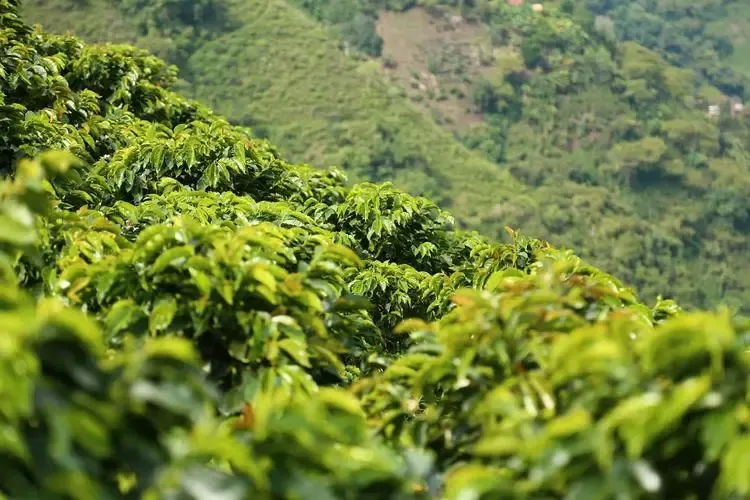
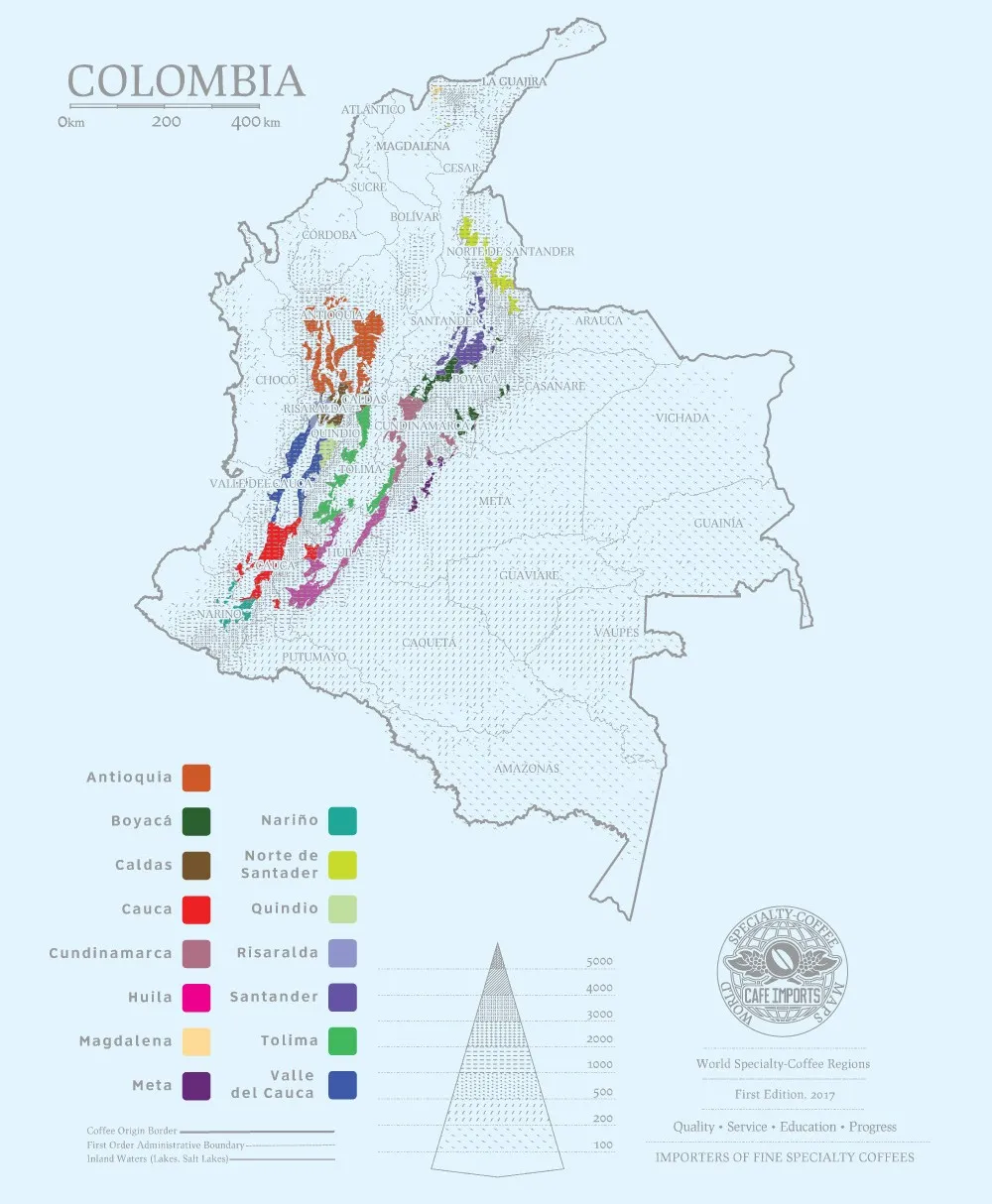
There are a total of 15 major coffee-producing regions across the country, spread across various provinces, including Cauca, Santander, Antioquia, Narino, Tolima, and Huila. Among these, Huila Province (formerly transliterated as "Uila") has gained rising fame in recent years and become a focal point for specialty coffee enthusiasts. Located in the southwestern part of Colombia, the province lies in the valley between two Cordillera mountain ranges, enjoying uniquely advantageous geography.
Huila Province is named after Colombia’s highest volcano — the Huila Volcano. The region generally sits at altitudes above 1,500 meters, with some premium coffee farms even located on slopes higher than 1,800 meters. The climate here is mild with ample rainfall, and the mountain barriers reduce the impact of extreme weather. In addition, the volcanic soil is rich in minerals, all of which contribute to coffee beans with intense and stable flavors. Moreover, the area has abundant water sources, with multiple streams running through the coffee farms, providing ideal conditions for washed processing and further enhancing the final beans’ clarity and complexity.
Among the many well-known farms, El Diviso and El Rorble are both located in this region, producing specialty coffee that has received high praise in the international market due to their rigorous cultivation and processing practices.
Colombia’s export-grade coffee beans are graded according to the “Excelso” standard, which primarily evaluates bean size, defect rate, and overall appearance. Green beans that meet the Excelso grademust have at least 50% of the beans larger than 15 mesh (approximately 15/64 inch), and none smaller than 14 mesh; beans sized between 12 and 14 mesh must account for no more than 5%. Additionally,the moisture content of the green beans must be controlled below 12.5%, the appearance should be uniform in color and free from off-odors, and they must pass a defect inspection — with no more than 24 total defects per 500g sample. This grading system ensures that exported beans meet a certain standard, helping to maintain Colombia’s reputation in the international coffee market.
Taking the commonly seen everyday coffee beans as an example, the washed Caturra variety from Huila Province in Colombia often exhibits prominent notes of dark chocolate, nuts, and caramel after proper roasting, accompanied by soft fruity acidity and moderate sweetness. The flavor is balanced and the aftertaste is clean. Especially when brewed at medium to low temperatures, its acidity becomes even softer, making it suitable for consumers who prefer a balanced taste. For brewing methods like pour over or drip filtration, it is recommended to use a coffee-to-water ratio between 1:15 and 1:16, with a water temperature of around 90–93°C, which can further highlight its layers.
Overall, although Colombian coffee shares the same South American origin as its neighbor Brazil, its flavor profile is vastly different. Compared to the common bold, nutty, and low-acidity traits of Brazilian beans, Colombian coffee blends bright fruity acidity and smooth texture within a chocolate base, showcasing a more layered and regionally distinctive flavor. As a result, it has become an important base for many blended coffees and is also widely loved by single-origin enthusiasts.
The above content is compiled by CoffeeHunters, a coffee news website.


