







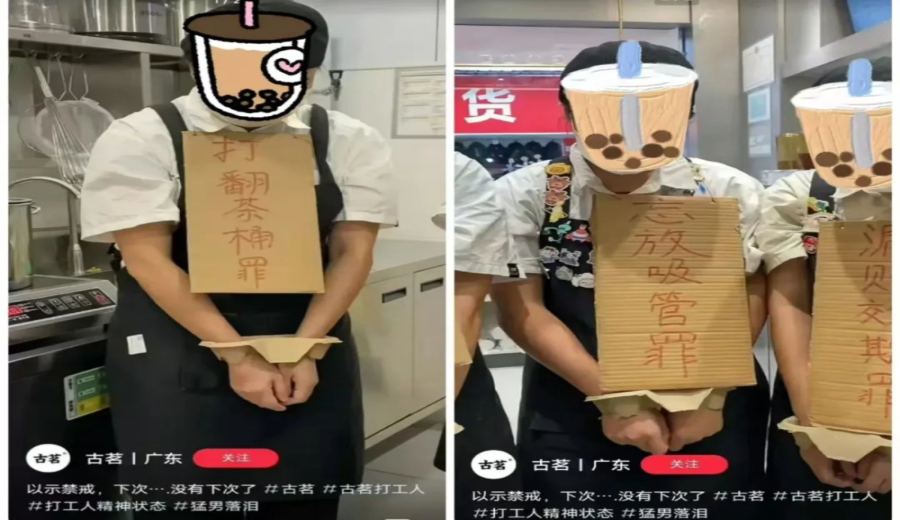
Introduction:When the tea beverage industry experiences peak order volumes, minor mistakes by staff are inevitable. However, some employees at Gumei's branches created prank videos using parody trial formats such as "guilt tags" and "cup holder handcuffs," which sparked widespread controversy on social media. What appeared to be lighthearted content actually crossed the line of workers' dignity and raised questions about the appropriateness of the brand officially promoting such material. This article delves into the origins of the incident, public reactions, as well as Gumei’s subsequent response and the lessons learned.
During peak hours in tea shops, busy staff occasionally make small errors—such as forgetting to include straws, improperly affixing expiration labels, or accidentally knocking over tea containers. Such incidents are actually quite common in the industry. Generally, these unintentional mistakes are handled with internal reminders or minor performance penalties, rarely escalating into major disputes.
However, a video circulating on social media recently plunged Gumei into a public relations storm. In the footage, an employee had her hands restrained with "handcuffs" made from paper cup holders, while a sign around her neck read "Guilt for Forgetting the Straw." Moreover, her colleagues were similarly displayed with signs like "Guilt for Missing Expiration Labels" and "Guilt for Spilling the Tea Container," creating a scene reminiscent of historically disrespectful public trials.
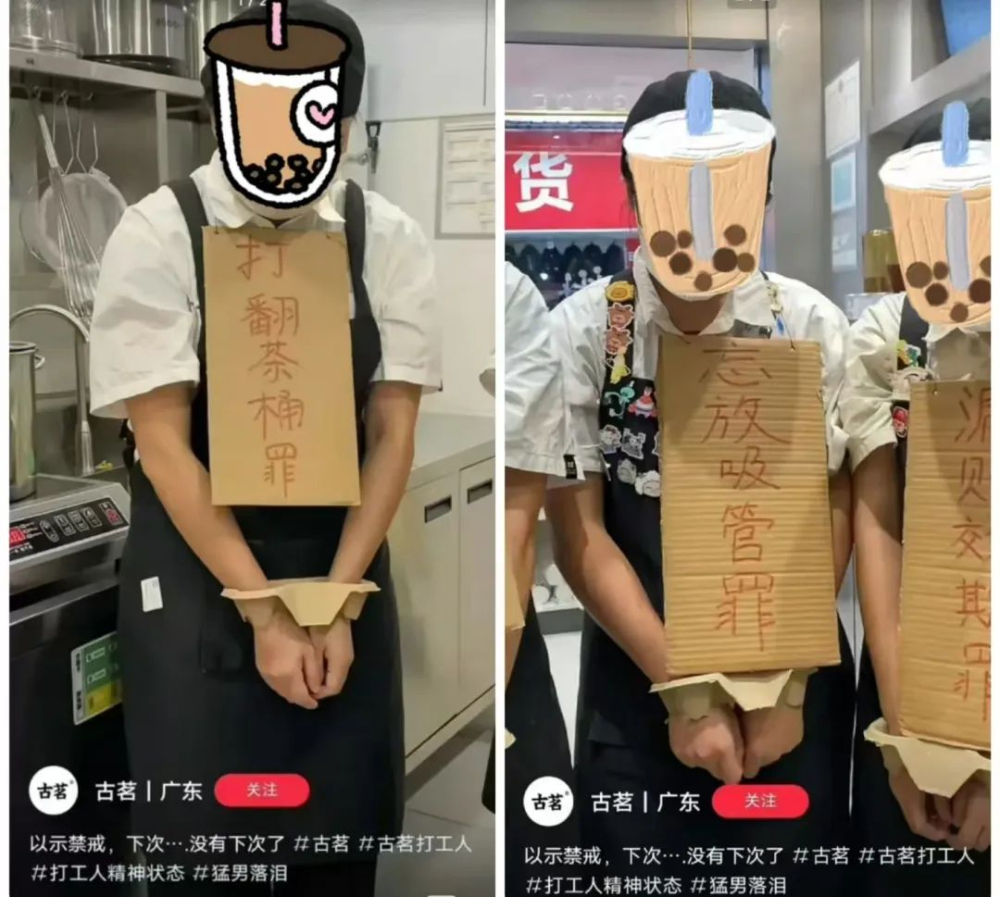
These videos not only stirred heated discussions on Xiaohongshu but similar content also spread on Douyin, with some employees even “confessing” on camera while the people filming laughed in the background. While some netizens suggested this might be humorous interaction among staff—or even a way to relieve work pressure—most consumers were not convinced.
Many users pointed out that even if the employees had a friendly rapport, publicly labeling them with “crimes” was still uncomfortable. They noted that such presentations closely resemble historical practices where individuals were forced to wear guilt placards and paraded in public trials. These acts not only showed a lack of basic respect for workers but could also reinforce negative stereotypes about service industry employees.
Even more controversially, some of the related videos were actively posted by Gumei’s official or store accounts. This shifted public discourse from mere “employee banter” to broader discussions about the brand’s values and social responsibility. Numerous comments expressed dissatisfaction, with netizens asking: “Gumei, what do you take us workers for?” and “You’re putting the shackles back on the working class, aren’t you?” Clearly, the public reaction to such behavior was strongly negative.
Observers noted that many Gumei employees belong to younger generations familiar with online memes such as “Lick Dog Guilt” and “Double Cup Cup Holder Handcuffs.” The original intent may have been simple team-based entertainment. But when these materials were reposted by official accounts and published on social platforms to attract attention, they struck a sensitive nerve regarding labor dignity.
Under public pressure, Gumei’s official Weibo account issued a statement this afternoon, admitting that the Xiaohongshu videos were inspired by popular Douyin memes and adapted to fit store work scenarios. They were planned and filmed jointly by regional branches and store employees. The brand publicly apologized for the misunderstanding and quickly requested the removal of the videos, including those on Xiaohongshu and Douyin.
Additionally, Gumei stated it would provide one thousand complimentary drink vouchers as compensation and an apology to consumers. Although this series of responses was prompt, it has prompted the industry to reflect: How can brands balance creative expression and employee rights—along with social perceptions—while chasing online trends and brand exposure?
This incident is not just a crisis management case for a single brand but also offers important lessons for the entire food and beverage service industry: when designing internal activities or social media content, brands must more carefully assess the social impact of their creativity, avoiding the oversight of worker respect and protection in the pursuit of momentary trends.
The above content is compiled by CoffeeHunters, a coffee news website.


