







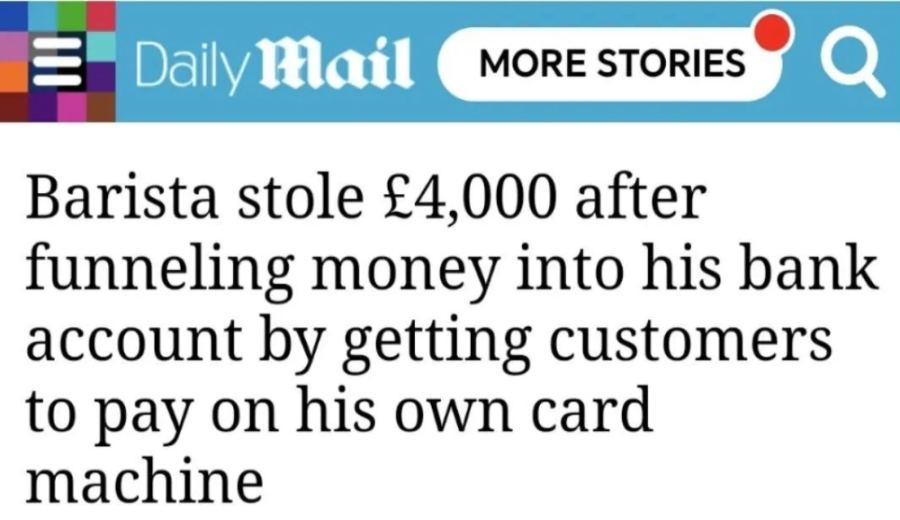
Introduction:A staff member at a café in the UK abused their position by secretly replacing the card payment device to steal customers' payments, accumulating approximately £4,000 in theft over several months. Although the individual was later arrested by police and fired from their job, the court ultimately only sentenced them to 12 months of community service and 120 hours of unpaid labor — no jail time and no compensation to the business. This case highlights the risk of employee misconduct and serves as a reminder for both businesses and consumers to strengthen payment security awareness.
A chain café in the UK recently experienced an employee card-skimming incident. A staff member took advantage of their position by covertly replacing the shop’s official card machine with their own device, quietly diverting customer payments into their personal account when neither the customers nor the owner were paying attention.
The incident was initially discovered by an attentive customer who noticed that although they had been charged £42.10 (approximately NT$1,660) at checkout, the actual amount deducted was £94 (approximately NT$3,690) — almost double. The customer initially thought it was a cashier error, approached the staff member to discuss it, and although the employee tried to process a refund using their personal device, it was unsuccessful. In the end, they had to go to a nearby ATM to withdraw cash and return the overcharged amount.
The customer then reported the matter to the store manager, raising suspicions within the business. After reviewing internal accounts, it was shockingly revealed that the actual amount received did not match the system records. Further investigation traced the issue to the very staff member who had been complained about, who was found to have used a personally brought card machine during transactions to redirect all customer payments into their private account.
Investigations showed that over the course of several months, this employee had continuously used this method to steal around £4,000 (approximately NT$150,000), causing significant financial losses to the café. Upon discovering the issue, the store manager immediately contacted the police and fired the employee.
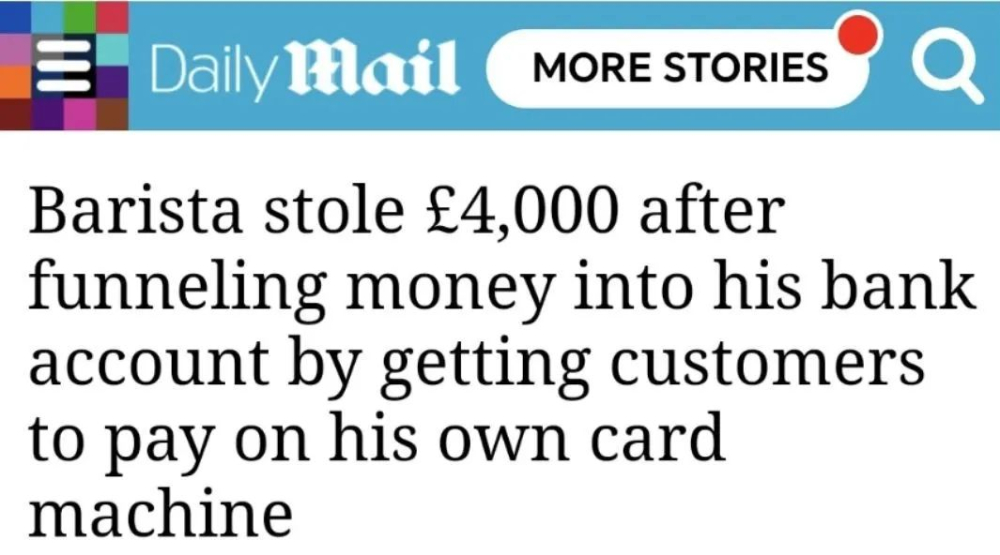
It was understood that the employee had a prior record of theft before this incident. Prosecutors determined that their actions constituted an abuse of position, defrauding customers through a disguised card machine, and thus charged them with fraud. The employee also admitted that they had been inspired after seeing other senior staff at the café using personal card machines for payments. They spent around £70 (approximately NT$2,700) to purchase chips and card devices, and whenever a customer opted to pay by card, they would pull out their own machine and transfer the funds directly into their bank account without the customer’s knowledge.
Although the employee admitted to the criminal acts, the judgment handed down by the local court was unexpected to many. The court ultimately only sentenced them to 12 months of community service and 120 hours of unpaid labor, with no jail time, no requirement to compensate the café for the financial loss, and only a £200 (approximately NT$7,700) fine.
The employee’s lawyer stated that their client had expressed apologies to the café and was willing to return the illicit gains, but the court ultimately ruled that they did not need to compensate the business. This verdict has sparked widespread public discussion regarding employee oversight mechanisms and consumer payment security.
Industry professionals advise that businesses should regularly inspect and maintain their card payment devices, and establish strict payment procedures and monitoring mechanisms to prevent similar incidents from happening again. Consumers should also pay attention to whether the transaction amounts are correct when making card payments, and may ask the merchant for confirmation or request a transaction receipt when necessary to protect their own rights.
The above content is compiled by CoffeeHunters, a coffee news website.


