








Introduction:The Coffee Taster’s Flavor Wheel is not just a reference tool during tasting, but also a bridge connecting sensory experience with professional terminology. This article takes you through a comprehensive understanding of the 2016 revised flavor wheel, led by the SCA and based on 13 national coffee samples and sensory ranking by 72 experts. We’ll break down this colorful sensory map step by step—from its compilation background and scientific foundation to practical application. At the end of the article, we also provide a high-resolution Chinese version of the image to help you accurately compare coffee flavor characteristics.
The Coffee Taster’s Flavor Wheel is an essential tool to help coffee enthusiasts build a framework for taste, but do you understand the scientific basis behind it and how it is practically used? This article will deeply analyze the 2016 revised flavor wheel launched by the Specialty Coffee Association (SCA), from the initial analysis of 105 coffee samples from 13 producing countries, to the compilation process of the World Coffee Research Sensory Lexicon, and then to the flavor sorting completed jointly by the UC Davis team and 72 experts—guiding you to fully understand this systematic sensory system. In addition, it will also remind you how to correctly view the specific descriptions on the flavor wheel and avoid common misconceptions.

Before discussing the flavor wheel, it’s recommended to first consider a fundamental question: what exactly is coffee flavor? Without a basic understanding of this, it’s difficult to effectively use these organized flavor attribute tools. The 2016 edition of the flavor wheel used in this article was developed on the basis of previous versions. The SCAA (now merged into SCA) gathered numerous professionals to conduct detailed analysis and testing on 105 samples from 13 major coffee-producing countries, categorizing and organizing the flavors perceived during actual tasting, and incorporating them into the World Coffee Research Sensory Lexicon, forming the theoretical foundation of the new flavor wheel.
Subsequently, the research team at the University of California, Davis, used sensory science and statistical analysis methods to rearrange the flavor attributes in the lexicon. They invited 72 experts with sensory evaluation experience to individually rank and verify each flavor, ultimately creating the clear-structured, color-rich new Coffee Taster’s Flavor Wheel that we see today.
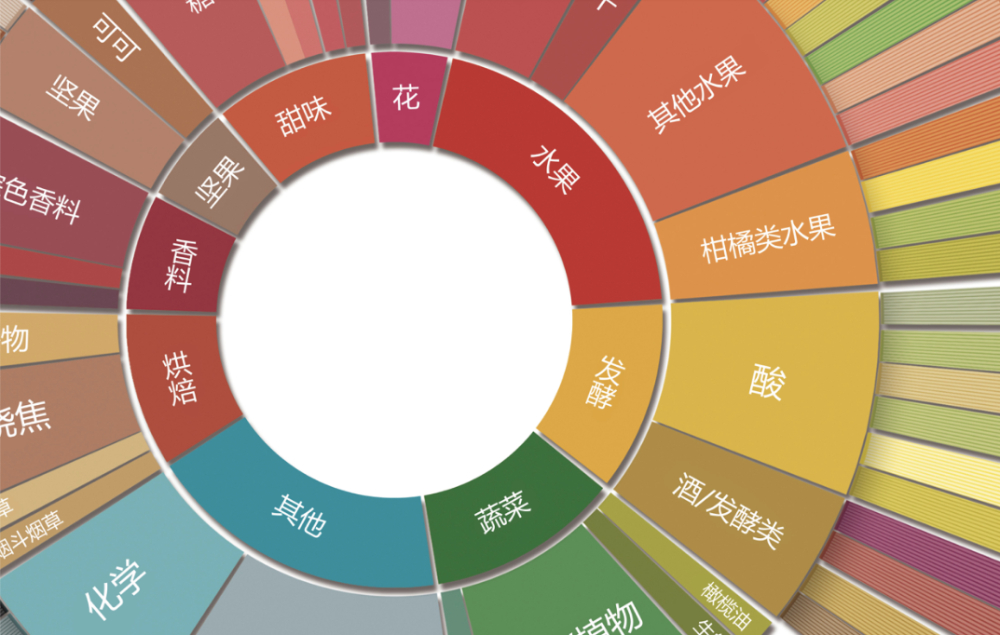
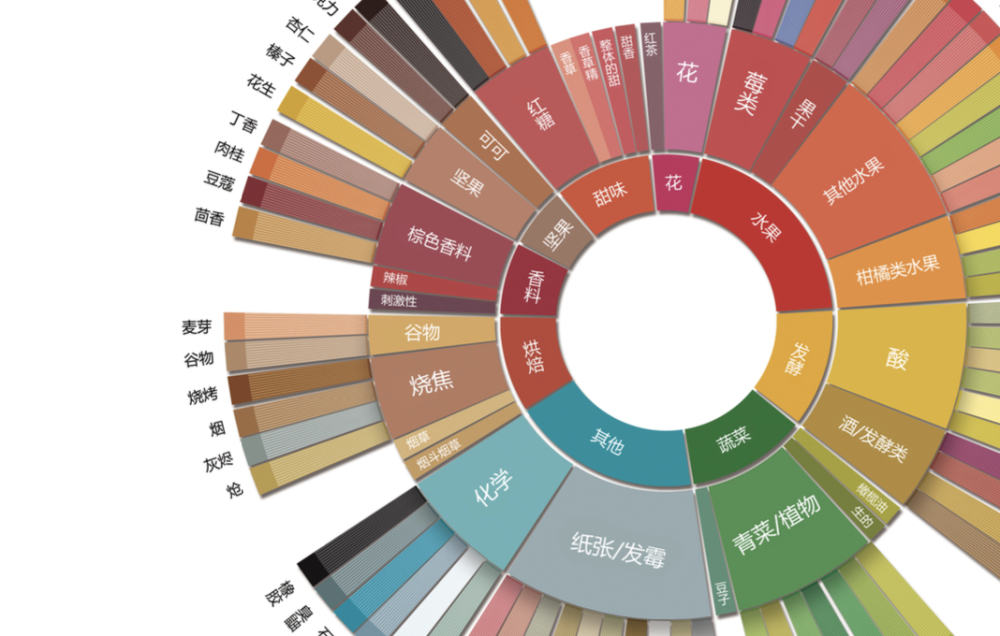
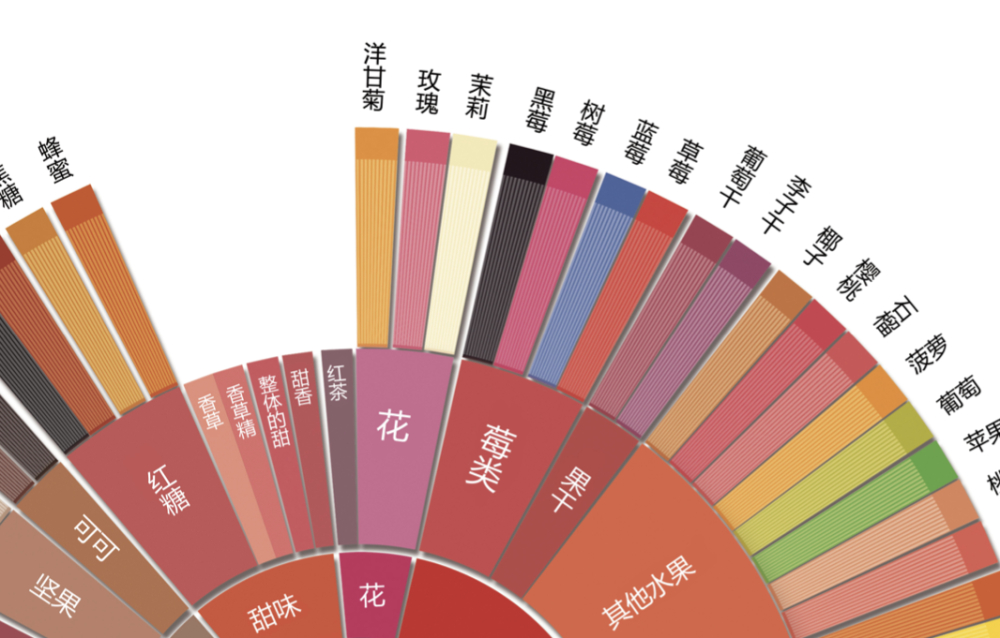
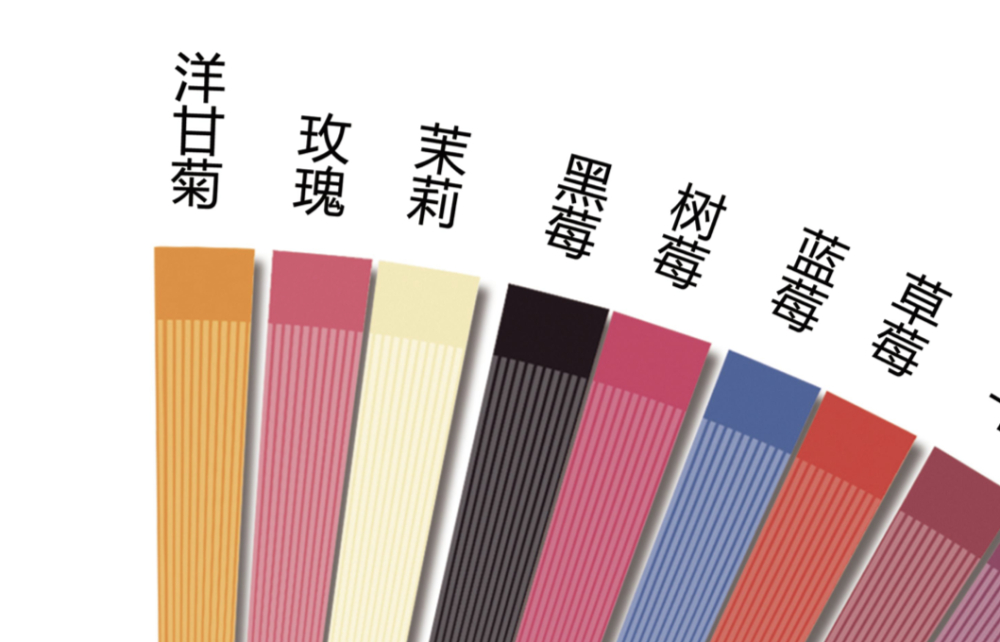
Compared to earlier versions, the 2016 revised flavor wheel features more detailed classifications and is also closer to actual tasting experiences, allowing users to more intuitively identify and describe the various flavor characteristics in coffee. When observing the flavor wheel, it is recommended to start with the overall structure to understand the distribution logic and relationships of different flavor segments. However, it’s important to note: the purpose of the flavor wheel is to assist us in organizing and finding clues about coffee flavors, not to provide absolute standards. Because some listed flavors, while indeed present in certain coffees, may not be experienced by everyone; conversely, some flavors we are familiar with may not have been included within the evaluation scope of the expert team.
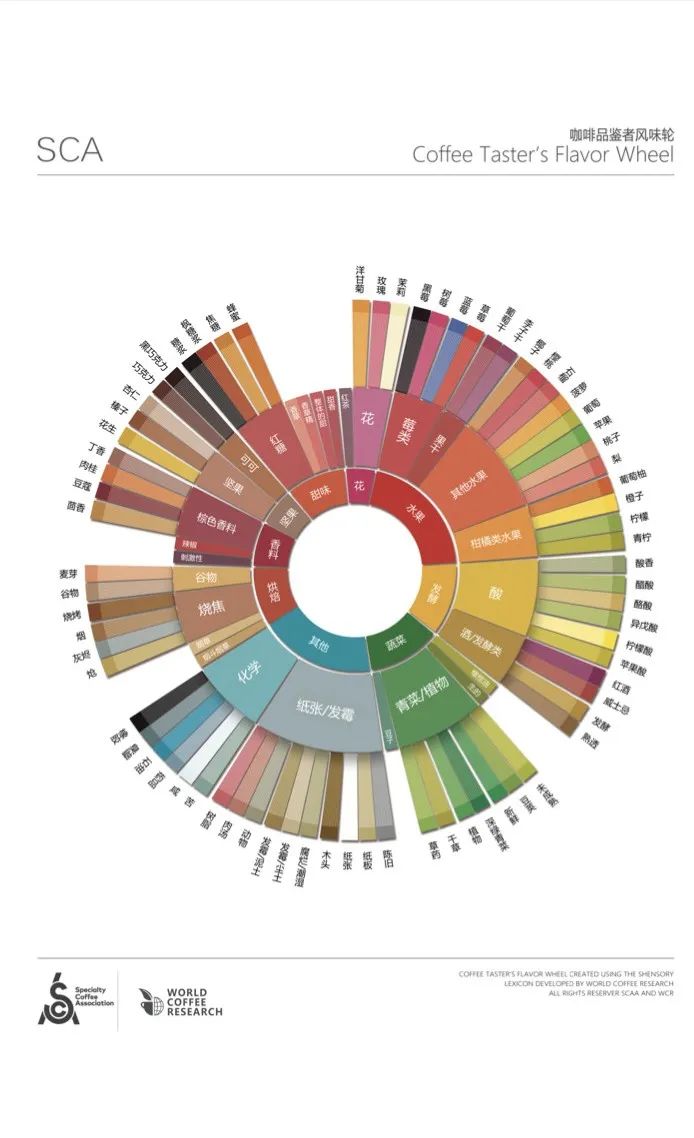
Through this flavor wheel, we can learn more systematically how to describe the aroma, flavor, and aftertaste of coffee. Whether conducting cuppings, selecting coffee beans, or daily brewing and tasting, it can serve as a practical reference. However, the key to using the flavor wheel lies in “assisting judgment,” rather than directly matching what you taste. It is recommended to combine it with your actual tasting experience and gradually build your personal flavor cognition system.

The above content is compiled by CoffeeHunters, a coffee news website.


