







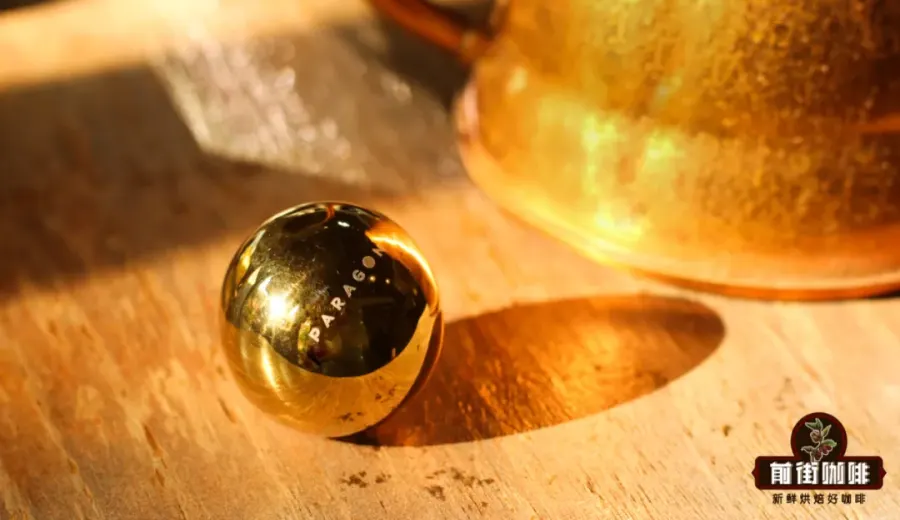
Introduction:Pour over coffee enthusiasts often seek richer aroma expression, and the Paragon Golden Orb designed by World Champion Sasa Sestic claims to enhance aroma retention by 40%. This golden sphere slows down aroma evaporation by rapidly cooling the brewed liquid—so how well does it actually work? This article breaks down its working principle through comparative experiments, analyzes the real impact of temperature changes on flavor layers, and helps you decide whether it’s worth the investment.
In the specialty coffee realm, the delicate presentation of flavors is always the core pursuit. Beyond selecting high-quality beans, many auxiliary tools have emerged, among which the Paragon Golden Orb designed by World Champion Sasa Sestic has garnered significant attention. This eye-catching golden orb claims to increase coffee aroma retention by 40% during brewing. Is this just marketing hype or does it really deliver? We’ll dive deep into its principle and verify its effects through actual brewing comparisons.
When discussing coffee's "Flavor," it actually encompasses both olfactory and gustatory experiences. Aroma molecules in the mouth travel through the retronasal passage, forming our specific associations with flavor. However, the thousands of aromatic compounds produced by roasted coffee beans are mostly volatile and tend to dissipate during grinding and brewing. The design intent of the Paragon Golden Orb is precisely to slow down this process by rapidly lowering the coffee liquid temperature.
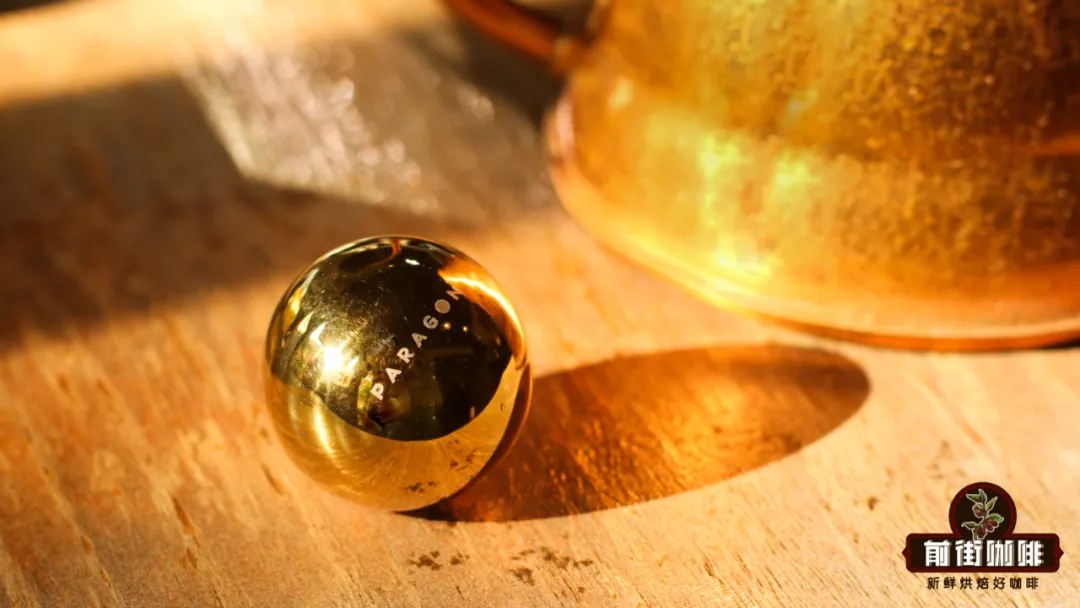
This tool, developed by a competition champion, resembles a solid gold-plated sphere. Official data shows that placing it in the brew can significantly reduce the final coffee temperature, thereby minimizing the escape of aroma molecules. Notably, the Sasa team recommends using the Golden Orb in the early stage of brewing—studies show that the most concentrated aromatic compounds are released at the beginning. So how much difference does this cooling strategy actually make in real brewing?
We conducted a controlled experiment using Panamanian Hartmann Gesha: 15g dose, 1:15 brew ratio, 92°C water temperature, using an Ek43 grinder at setting 9.5 (granulated sugar fineness, 80% extraction rate through a #20 sieve). In the three-stage brewing process,the control group was allowed to cool naturally to 66.7°C throughout, while the experimental group had the Golden Orb added after the second pour, resulting in a final temperature of just 55°C—a 10°C difference.
Brewing step details: First, a 30-second bloom with twice the coffee dose in hot water (about 30ml) to degas, followed by a circular pour of 130ml hot water. When the liquid level dropped to half the filter, the Golden Orb was removed, and the final large stream pour completed the extraction. Comparative tasting revealed that the control group exhibited distinct bergamot, passion fruit, and pineapple notes, with an Earl Grey tea finish; the experimental group, while showing brighter acidity, had limited improvement in overall flavor clarity—the main difference stemming from temperature variation rather than an increase in aroma.
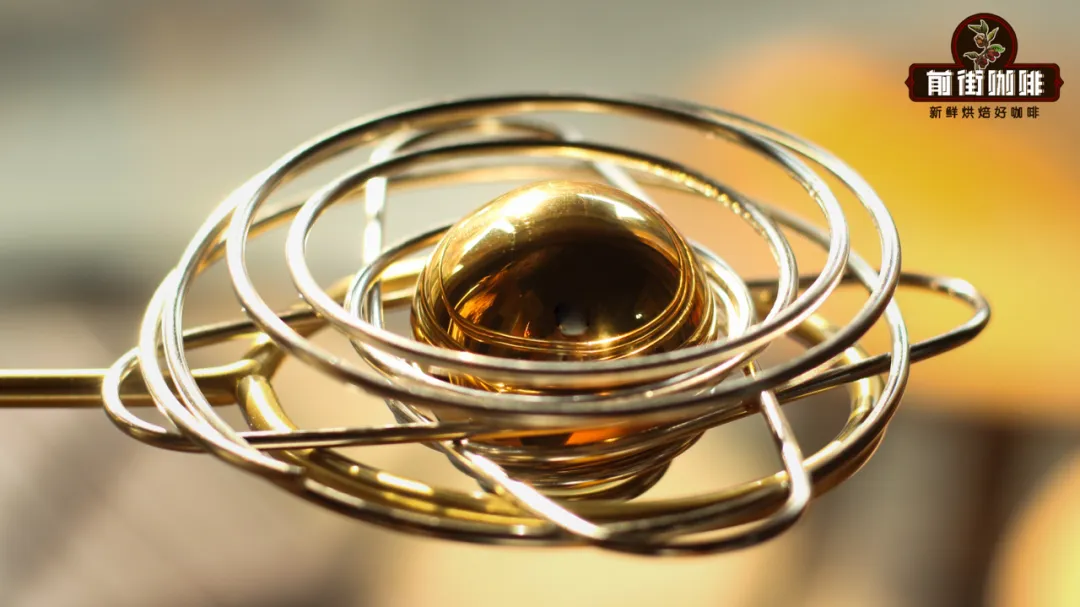
Actual test data confirms that the Golden Orb’s physical cooling effect does exist, reducing the coffee liquid temperature by about 10°C. This temperature control difference offers some help in preserving volatile aromatic compounds, especially when deployed in the early brewing stage. However, for the average consumer, unless they’re pursuing extreme flavor layering, its cost-effectiveness warrants careful consideration—after all, temperature control itself can achieve similar effects through adjusted brewing techniques.
In summary, the Paragon Golden Orb’s principle of slowing aroma loss through physical cooling has scientific basis and can bring subtle improvements in flavor clarity during actual brewing. But consumers should weigh their needs: professional roasters or competition brewers might value the 10°C temperature advantage, while everyday enthusiasts can also achieve good aroma performance through basic temperature control methods (like extending bloom time or adjusting pour speed). Whether to invest in this tool ultimately depends on your demand for fine-tuned coffee flavor.
The above content is compiled by CoffeeHunters, a coffee news website.


