








Introduction:Adjusting the extraction recipe for espresso every morning is a daily challenge for many baristas. But repeatedly experimenting not only wastes beans and incurs high costs, but can also lead to caffeine jitters. This article provides a practical method that only requires three types of beans to quickly determine the day’s extraction parameters: first assess whether the grind needs adjusting, then deduce extraction issues based on flavor, and finally master key details when adjusting the grind. It also includes tips like preheating blind baskets to help reduce waste and improve efficiency.
Many baristas often waste a lot of beans through repeated trial and error when adjusting espresso recipes in the morning—not only driving up costs, but also risking discomfort from excessive caffeine intake. Some shops have faced the same dilemma, with the root cause being an overreliance on adjusting grind settings without truly identifying the core issue. This article will detail a method that only needs three types of beans to determine the day’s extraction parameters: first judge whether the grind needs adjusting, then deduce under- or over-extraction from the coffee’s flavor, and finally learn key details such as distinguishing grind adjustment increments and clearing residual grounds. Additionally, it offers practical tips like blind basket preheating to help reduce bean waste and improve the efficiency of morning adjustments.
However, some people may need to try five, eight, or even ten or more shots during morning adjustments just to barely find a usable extraction parameter. This not only leads to high bean consumption and rising costs, but can also almost result in caffeine poisoning. Why does this happen?
In fact, this is a common issue for many beginners, and even shops at the entry level have made similar mistakes multiple times. The key lies in failing to accurately identify the problem and simply adjusting the grind setting. Therefore, this article will share how to quickly lock in the espresso extraction formula. As long as you master the following key points, you can usually determine the day’s espresso recipe with just three types of beans.

First, when adjusting espresso, many people immediately think of adjusting the grind. While grind size is indeed important, it’s not recommended to overly rely on it to solve problems. Because each grind adjustment not only consumes a lot of material and time, but just cleaning the grinder can waste quite a few beans. Therefore, grind adjustment should be a subsequent measure when there’s a significant deviation in extraction time, rather than the first solution to try.
Before making adjustments, you can first check the two variable parameters: dose and yield. If you follow the previous day’s extraction parameters and find that the extraction time hasn’t changed much, then you can consider adjusting the dose or yield based on flavor differences (or you might not need to adjust at all, because the taste might be just as good as—or even better than—yesterday’s). Only when the change in extraction time is too large should you consider adjusting the grind.
Second, you need to learn to identify flavor defects in coffee. Ideal espresso should have a balanced flavor of acidity, sweetness, and bitterness, as well as a rich and smooth mouthfeel, which requires the coffee to achieve an appropriate extraction yield and concentration. Once the extraction yield or concentration is substandard or excessive, the flavor balance will be disrupted, and the mouthfeel may also exhibit negative traits such as thinness or astringency.
Therefore, we need to clarify the source of a coffee’s problem: is it under-extracted or over-extracted, is the concentration too low or too high? Once the issue is identified, taking corresponding corrective measures can help you produce an ideal cup of espresso.
For example, if a dark roasted espresso tastes overly acidic or even sharp, this is usually a sign of under-extraction. In this case, you can reduce the dose or increase the yield based on the original recipe to raise the extraction yield and thereby improve the flavor. Other situations can be addressed similarly.
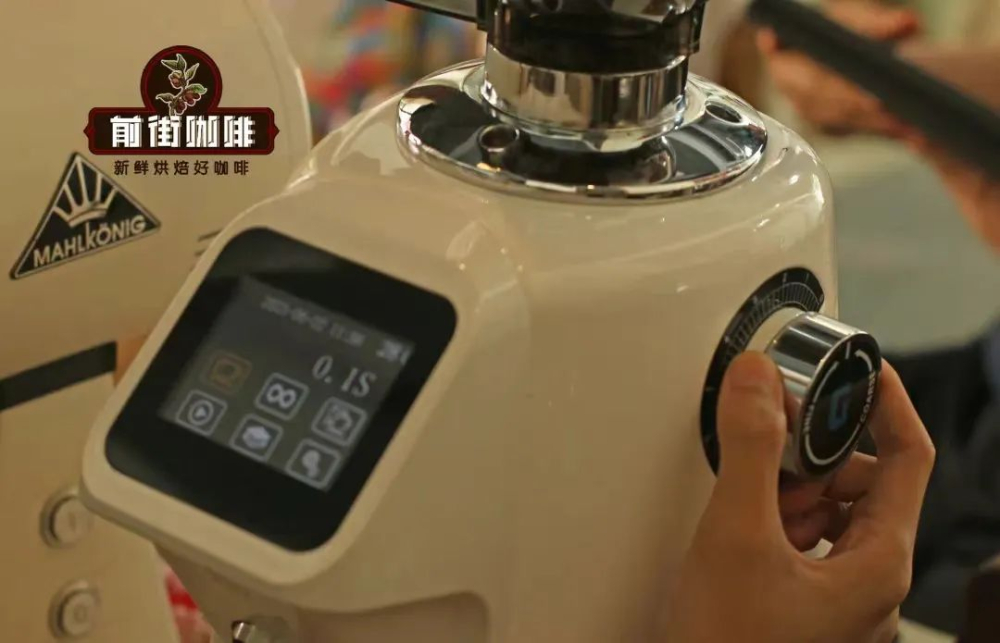
Finally, there are two key points to keep in mind when adjusting the grind—if ignored, they will greatly increase the difficulty of adjustments.
First, distinguish the magnitude of grind adjustment increments. Single-origin grinders have more grind setting levels because single-origin coffee is relatively more tolerant to particle size variations (compared to espresso extraction), so the adjustment range can be slightly larger, typically in 0.5 increments. However, espresso grinders produce much finer coffee particles, and the extraction process is more extreme—tiny changes in particle size can significantly affect extraction results. Therefore, espresso grinder adjustments are typically made in 0.2 increments.
When adjusting, do not turn the grind setting too drastically at once, otherwise the grinder may "stall" due to the large adjustment, resulting in prolonged idling without grinding, and the produced coffee particles may deviate significantly from the target size, further complicating adjustments.
Second, be sure to clear any residual coffee grounds inside the grinder. During the grinding process, the grinder does not release all the ground coffee completely—some coffee grounds may get trapped inside the burrs due to not being expelled in time. Some operators have conducted experiments where, after emptying all the coffee beans from the machine, they removed the trapped residual grounds from the burrs and found as much as about 4 grams.
Therefore, if these residual grounds are not cleared before adjusting the grind, they will mix into the next batch of coffee grounds, causing a blend of old and new grounds and leading to significant deviations in extraction results. It is generally recommended to pre-grind about 10 grams of coffee after adjusting the grind to flush out the residual grounds inside the grinder.

In summary, as long as you master the above three key points, you can quickly find an espresso extraction recipe suitable for the day. In addition, here are three more practical details:
First, if there’s a long interval between extractions, the pressure in some espresso machines may change, causing the first shot after restarting to be unstable until the pressure stabilizes again. The common practice is to discard the first shot as a “preheat,” but experienced users offer a more effective alternative: use a blind basket to let the pressure run for about 10 seconds to stabilize the machine before extracting. Practical tests have proven this method effective, reducing both coffee bean waste and misleading results.
(Blind basket: a special portafilter basket without holes, used to release pressure without extracting coffee liquid)
Second, extraction parameters are not universally applicable throughout the day. Since the condition of the coffee beans and environmental factors are constantly changing, it’s recommended to recheck the parameters every few hours to ensure extraction stability.
Third, for beginners who are new to using espresso machines, it’s advisable to set preliminary parameters for dose, time, and yield based on your own portafilter basket specifications and the roast level of the beans, and then make fine adjustments accordingly. If unsure where to start, you can refer to relevant professional materials or articles to build a foundational understanding.
The above content is compiled by CoffeeHunters, a coffee news website.


