







Introduction:The diplomatic storm in East Africa triggered by a sovereignty dispute is severely impacting the supply chain of Ethiopia, a globally significant coffee-producing country. This article delves into the reasons behind Somalia’s suspension of Ethiopian Airlines flights, explores how this incident affects the export of agricultural products such as coffee, and highlights the potential risks and coping strategies the industry should be aware of.
The recent aviation dispute in the East African region has escalated from the diplomatic sphere to the economic arena, particularly impacting Ethiopia, a major coffee-exporting nation. The spark was Somalia’s Civil Aviation Authority discovering references to “Somaliland” on the Ethiopian Airlines website, which it deemed a violation of national sovereignty. After Ethiopia failed to meet the deadline for rectification, Somali authorities took decisive action on August 23, suspending all Ethiopian Airlines operations.
The deeper cause of the dispute lies in a memorandum of understanding on port usage signed earlier this year between Ethiopia and Somaliland. According to the agreement, Ethiopia sought access to the Berbera Port controlled by Somaliland, under the condition that it recognize Somaliland’s independence. This sensitive issue immediately drew strong backlash from the Somali federal government, further deteriorating bilateral relations.
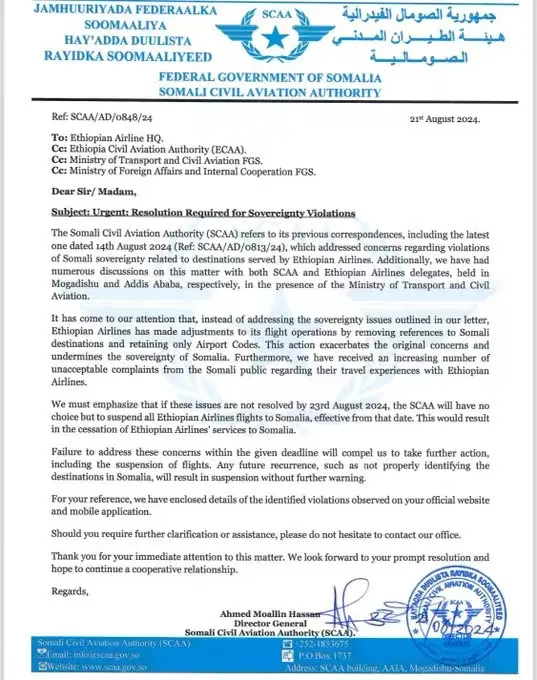
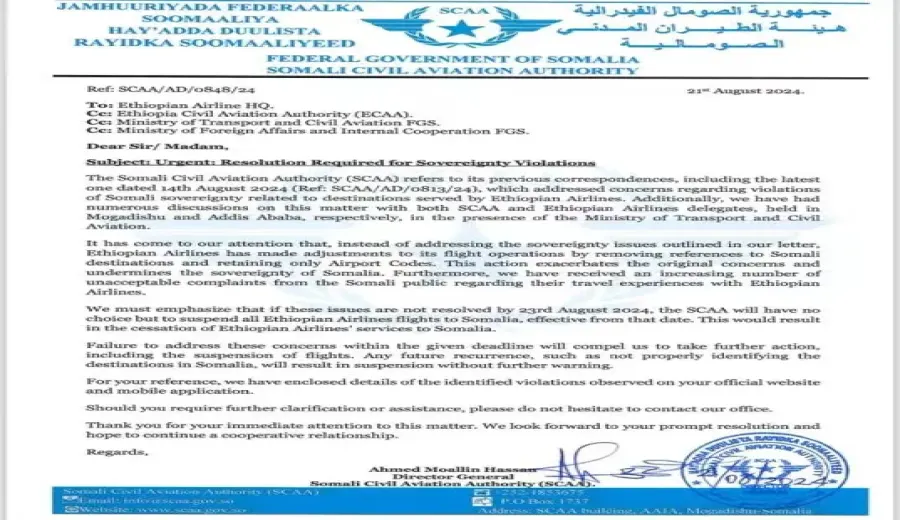
Developments show that the Somali Civil Aviation Authority (SCAA) had already issued a formal notice to Ethiopian Airlines on August 21, demanding the removal of all “Somaliland”-related content from its website within just two days (by August 23). Somali authorities made it clear that failure to comply would result in the immediate revocation of the airline’s operating license in Somalia and a ban on overflights.
Faced with the ultimatum, Ethiopian Airlines attempted to buy more time, claiming the August 23 deadline was too abrupt and requesting a grace period to complete the website changes. However, SCAA rejected the request, emphasizing that the technical modifications were not complex and could have been completed within the stipulated timeframe. Ultimately, Somali authorities opted to take firm action and fully suspended Ethiopian Airlines’ flight services.
Notably, Eritrea also announced the suspension of all Ethiopian Airlines flights around this time, further exacerbating Ethiopia’s transportation challenges. While the specific reasons remain undisclosed, sources suggest it may be linked to the increasingly close ties between Eritrea and Somalia.
Turkey attempted to mediate on August 14, organizing peace talks between Ethiopia and Somalia. Initial discussions did make some progress, with the third round of talks originally expected to reach a final agreement in early September. However, the situation took a turn for the worse on August 19 — after Somali President signed a military agreement with Egypt, he publicly criticized Ethiopia during a press conference, attributing the failure of the second round of talks to Ethiopia’s lack of respect for Somalia’s sovereignty and territorial integrity. Somalia further stated that dialogue would not resume until Ethiopia revoked the memorandum of understanding with Somaliland.
Currently, Ethiopia has yet to issue an official response to the Somali government’s latest stance, and Turkey has not confirmed whether the third round of talks will proceed as scheduled. A more complicated issue is that although an agreement with Somaliland has been preliminarily reached, port access rights have not yet been finalized, meaning Ethiopia still cannot actually use the Berbera Port.
Meanwhile, Ethiopia’s export difficulties are also affected by other factors. Due to strained relations with two key neighbors — Eritrea and Somalia — the country is unable to utilize their ports for cargo transportation. Especially amid the ongoing Red Sea crisis, the traditionally relied-upon Djibouti Port is also facing serious import and export obstacles.
For Ethiopia’s booming coffee industry, these transportation bottlenecks pose a real threat.As a major global coffee producer, Ethiopia’s coffee exports are highly dependent on a stable international logistics chain.Industry experts point out that while the depreciation of the local currency, the birr, theoretically boosts export competitiveness, the rising costs of production inputs such as fertilizers and fuel have significantly increased cultivation expenses, thereby affecting the final price of coffee.

Even more concerning is that prolonged shipping cycles and export uncertainties may further dampen the willingness of international buyers to purchase.For the specialty coffee market, origin stability and supply continuity are key factors influencing purchasing decisions.Under the current circumstances, Ethiopia’s coffee industry is facing one of the most severe challenges in the past decade, and the industry must closely monitor developments and assess potential supply chain risks.
The above content is compiled by CoffeeHunters, a coffee news website.


