







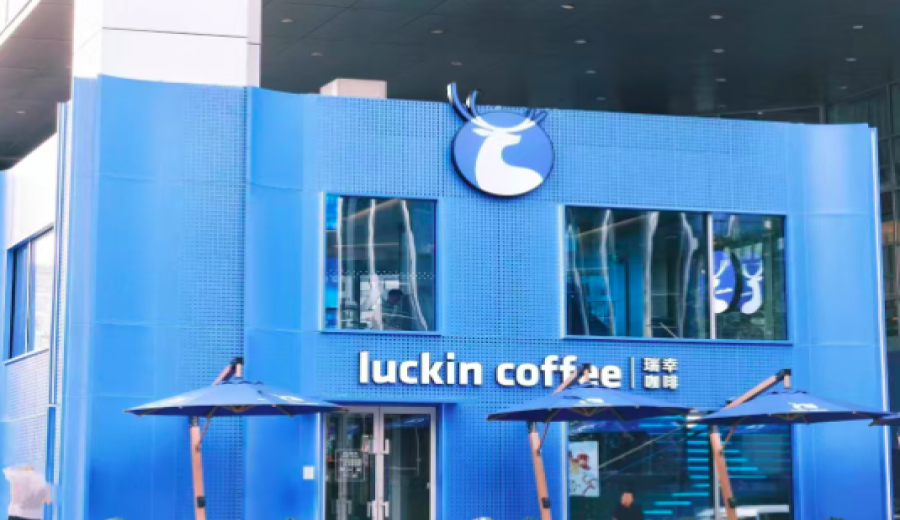
Introduction:Luckin Coffee's Q2 2024 financial report shows that total net revenue reached 8.403 billion yuan, with the number of stores approaching 20,000. However, same-store sales at company-operated stores declined by 20.9% year-on-year. Starbucks China also faces a challenge, with same-store sales dropping by 14%. This article delves into the profitability pressures behind the price war, explores how brands can seek breakthroughs in fierce competition, and reveals the current challenges and transformation directions facing the coffee industry.
According to Luckin Coffee’s Q2 2024 financial report, the brand’s total net revenue reached 8.403 billion yuan, with a net profit of 871.1 million yuan, and the total number of stores has approached 20,000. However, it is worth noting that same-store sales at its company-operated stores fell by20.9%year-on-year,14%Meanwhile, Starbucks China also recorded
On the surface, both brands are seeing continuous growth in revenue and store count, presenting a picture of market expansion. But a deeper look at same-store performance reveals an issue that cannot be ignored: even as more stores open, per-store sales are not increasing accordingly—in fact, they are declining—reflecting that overall market competition is intensifying.
Against this backdrop, competition among brands is becoming increasingly fierce, especially with the ongoing escalation of the price war. Currently, the market is flooded with promotions such as9.9 yuanand even6.6 yuancoffee deals. Brands are attempting to boost sales through low-price strategies, but these often fail to mask the underlying pressure on profitability. This is not only true for leading brands—numerous small and medium-sized coffee brands are also caught up in this intense battle over locations and pricing.
Luckin is undoubtedly a key player in this wave of price competition. Since engaging in price competition with Cotti last year, the brand has significantly increased its visibility and rapidly expanded its user base. However, it has also faced ongoing declines in operating profit margins and worsening profit losses. To control costs, Luckin tried to readjust the prices of some popular products back to their original levels, which led to customer dissatisfaction. Some users switched to competing brands, resulting in a noticeable decline in store sales.
Seeing this, competitors quickly responded with even lower prices—including9.9 yuan or even 6.6 yuanpromotions—to capture market share, further worsening the overall price competition. Even Starbucks, which had rarely participated in price wars in the past, had to adjust its strategy and join this market battle.
It is undeniable that low-price strategies can indeed drive short-term sales growth, but this does not equate to achieving profitability. For small and medium-sized brands with limited capital, sacrificing profits for market share often leads to a “selling one cup at a loss” situation, which can easily result in operational difficulties in the long run and even the risk of closure.
Even well-funded leading brands face financial strain from prolonged involvement in price wars. As a result, brands are turning to another form of competition—the location battle—by opening more stores to expand market coverage and sales opportunities. However, as store density increases, competition between individual stores also intensifies, with some poorly located outlets even struggling to break even.
In such a market environment, “not making money from opening stores” is no longer an issue exclusive to small brands—even leading players like Luckin and Starbucks are starting to feel the pressure. Moving forward, finding a balance between expansion and profitability will be a critical issue that the entire coffee industry urgently needs to address.

The above content is compiled by CoffeeHunters, a coffee news website.


