







Introduction:Once known for its specialty coffee, Seesaw has been closing stores frequently in first-tier cities and is now seeking growth in second- and third-tier cities such as Datong in Shanxi and Weihai in Shandong. Faced with competition from low-price brands like Luckin and Xingyunc (幸运咖), and a consumer trend toward greater price sensitivity, can Seesaw’s premium pricing strategy succeed? This article analyzes its expansion strategy, market challenges, and possible future directions.
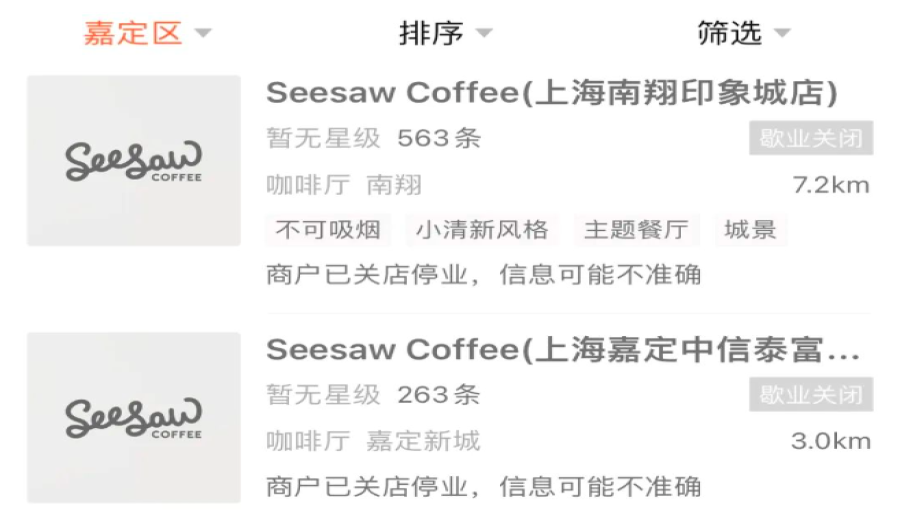
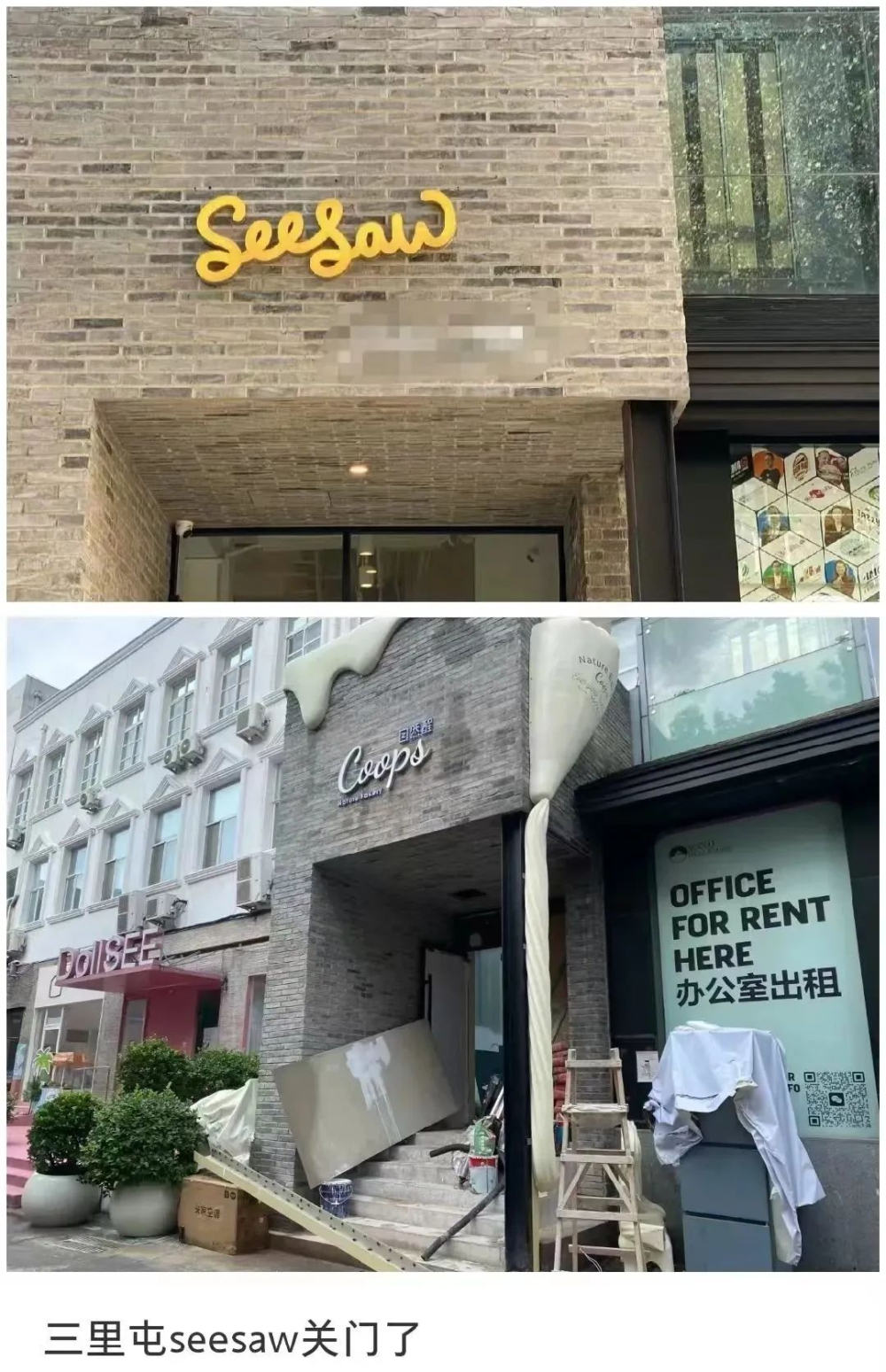
Seesaw was once one of China’s representative specialty coffee brands, with stores in prime locations in first-tier cities like Beijing, Shanghai, Guangzhou, and Shenzhen, attracting a large number of coffee enthusiasts who pursue quality. However, recently the brand has closed multiple stores in cities such as Shanghai, Beijing, and Shenzhen, with a noticeable decline in its market share in first-tier cities.
According to data from food delivery platforms, many Seesaw stores have been marked as “temporarily closed.” If we refer to the operating store information on the official mini-program, currently Seesaw still operates 35 stores in Shanghai, only 9 in Beijing, and a mere 3 in Shenzhen, which is in stark contrast to its previous scale of expansion.
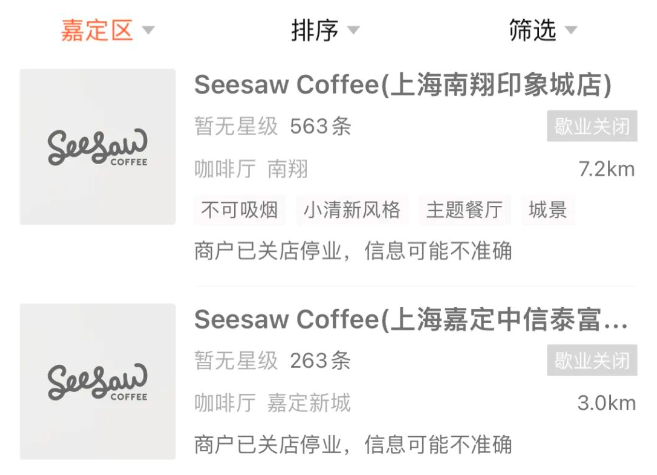
This wave of store closures is not sudden. As early as the end of last year, Seesaw was reported to be under operational pressure, including a full withdrawal from the Wuhan market where all four of its stores were closed, drawing attention from many fans. Subsequently, several stores in Hangzhou also closed, and now stores in first-tier cities are also struggling to survive, raising questions about the brand’s future development.
Despite facing difficulties, Seesaw has not stopped moving forward. In addition to adjusting its store closures, the brand has tried to boost sales and brand exposure through joint promotions and discounts on certain products. However, these efforts do not seem to have significantly attracted new customers, with the main consumer group still consisting of loyal existing customers, providing limited help to overall performance.
In search of new growth points, after opening up franchising, Seesaw has turned its attention to less competitive second- and third-tier cities, such as Datong in Shanxi and Weihai in Shandong. The brand is creating the concept of a “first store in [location]” and launching opening promotions such as “buy one get one free” to try to attract local consumers’ attention.
However, whether this strategy can be sustainable remains in question. Some industry observers point out that while short-term promotional activities can generate buzz and attract crowds, if product pricing remains at a high level of thirty to forty yuan, many customers may not repurchase after the promotions end. Especially when consumers face competitors like Luckin and Xingyunc, whose average prices range from ten to twenty yuan, the pricing disadvantage of specialty coffee becomes even more apparent.
For some consumers in second- and third-tier cities, price is often the main factor in purchasing decisions. Brands like Luckin and Xingyunc offer affordable coffee with better cost-performance, aligning more closely with the daily consumption needs of the general public. For a high-end specialty coffee brand like Seesaw, if it cannot provide significant product differentiation or a sense of value, it can easily be seen as a “one-time check-in” choice, making it difficult to cultivate a stable customer base.
In addition, some consumers have noted that although Seesaw’s store decor and design style are attractive, nowadays many people purchasing coffee place more emphasis on actual taste and quality rather than simply seeking an environment or photo-worthy setting. Amid the trend of consumption downgrading, price has become an increasingly crucial consideration. As a result, brands like Luckin and Manner, which offer both quality and reasonable pricing, have gradually become mainstream in the market.
Overall, the current coffee market is highly competitive, not only with the ongoing intensification of price wars among brands but also with each brand actively competing for popular commercial districts and high-foot-traffic locations, further exacerbating the “involution” phenomenon in the market. Against this backdrop, Seesaw has had to adjust its strategy, shifting its focus to lower-tier markets. However, the contradiction between its premium positioning and current consumption trends remains a major challenge for the brand’s development.
Whether Seesaw can find a suitable position in these emerging markets in the future and successfully adjust its pricing and product strategies to meet consumer needs still remains to be seen. But one thing is certain: in this market reshuffle, only brands that truly understand local consumers and flexibly adapt their business models are likely to stand firm in the fierce competition.

The above content is compiled by CoffeeHunters, a coffee news website.


