







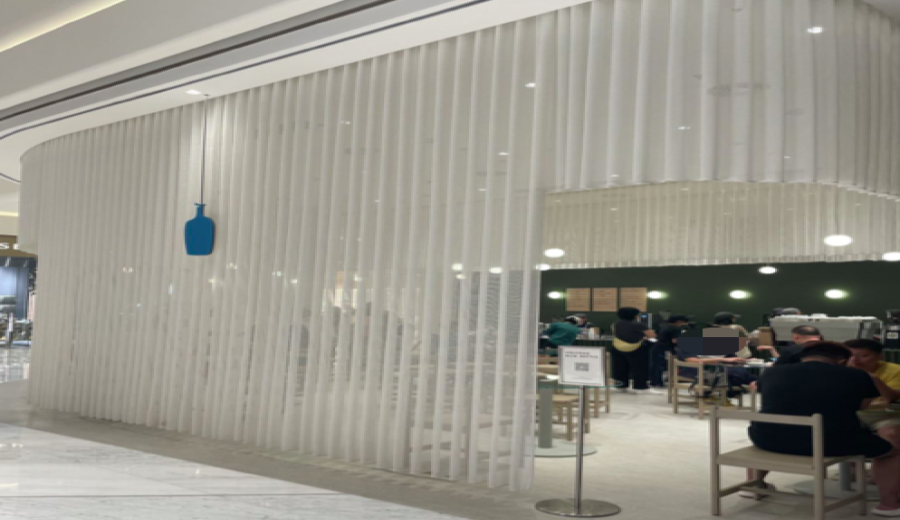
Introduction:Blue Bottle Coffee’s second Shenzhen Luohu MixC location has officially opened, continuing the brand’s signature design aesthetic and introducing limited-time desserts inspired by Lingnan flavors. However, the opening day did not see the same level of crowds as the first store. This article analyzes Blue Bottle’s expansion strategy in South China and consumer reception — from store design to menu innovation, to market feedback — while also exploring how specialty coffee can strike a balance between price competition and local demand.
Blue Bottle Coffee’s second Shenzhen Luohu MixC outlet has recently commenced operations. Designed by the renowned firm wrk-shp, the space translates the geographic characteristics of Luohu District — “half mountain, half city” — into its interior design language. The area is divided into two main sections: the softly ambient “Lake Area” and the clean-lined “Mountain Area,” complemented by fabric brand signage and a curtain-style backdrop wall. The dynamic visual effects have become a highlight of the store.
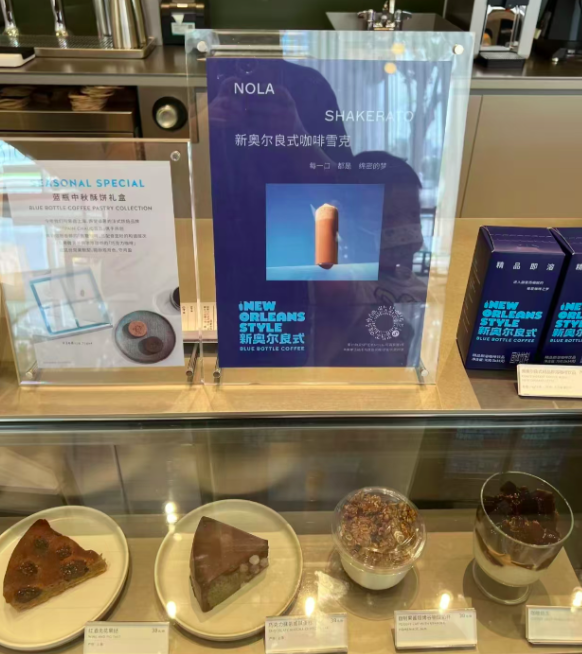
The new store has also launched two signature food items: a coffee panna cotta inspired by Lingnan-style sweet soups, and a chocolate matcha chiffon cake that echoes the store’s interior style. The merchandise lineup includes a travel thermos developed in collaboration with Kinto, as well as the newly released specialty instant coffee series, “New Orleans Style.”
The Shenzhen second store opened just one month after the first store in the region. Although fans were pleasantly surprised, the preparation timelines for both stores were actually similar; the initial store simply benefited from more advance publicity, creating a first-mover impression. However, on opening day, the expected crowds did not materialize — there were no long lines, plenty of seating was available, and orders required almost no wait time.
Compared to the opening of the first Blue Bottle store years ago, which saw queues of up to two hours, the contrast with this second store is striking. Not only was foot traffic notably lighter, but online discussion was also relatively muted. Many customers mentioned they only stopped by to take photos and share on social media, with no intention of returning specifically.
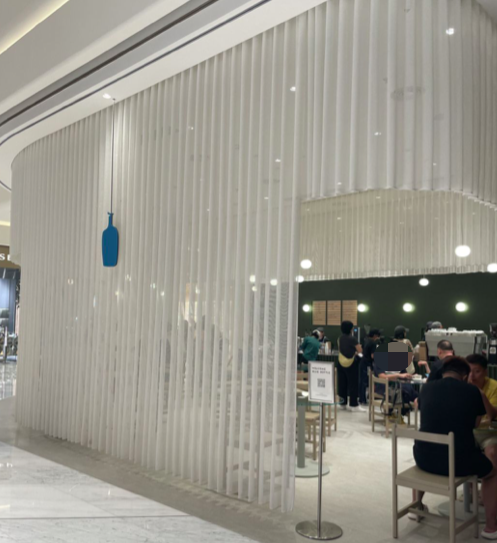
Since the beginning of this year, Blue Bottle Coffee has accelerated its expansion in the Chinese market, opening three stores within two months, including the upcoming Shanghai West Bund Center store set to launch later this month. In the past, Blue Bottle was known for its “measured and unhurried” brand pace, but the current rate of store openings has clearly increased, breaking away from its previously slow-expansion image.
Blue Bottle Coffee has long been hailed as the “Apple of the coffee world,” attracting a loyal following through its distinctive design aesthetic and high-quality coffee experience. When the brand first entered China, its Shanghai flagship store generated tremendous buzz, with lines stretching up to seven hours outside the store — a testament to its initial appeal.
However, in recent expansions across South China and other first-tier cities, Blue Bottle has not replicated that same level of enthusiasm. Aside from intensified market competition and ongoing price wars, some consumers have pointed out that the quality control and pricing strategies of Blue Bottle in the South China region have fallen short of expectations — particularly in terms of taste consistency and service details, which show a gap compared to its premium specialty positioning.
Many coffee enthusiasts note that Blue Bottle has always emphasized “one store, one design,” using spaces that integrate local culture to attract visitors. Yet, the two Shenzhen outlets have been criticized for lacking the brand’s original sense of refinement. Furthermore, the execution of specialty coffee offerings has struggled to demonstrate the expected rigor and consistency, making it difficult for many customers to build brand loyalty after their first visit.
Although the new store design and some of the food innovations have received positive feedback, overall, many customers view it more as a social media photo spot rather than a daily coffee choice. For Blue Bottle to solidify its presence in China’s competitive market, maintaining its design edge will not be enough — finding a better balance between pricing, product quality, and localized tastes will be the key challenge ahead.
The above content is compiled by CoffeeHunters, a coffee news website.


