








Introduction:Luckin Coffee recently implemented a new "full-scan" closing procedure, requiring employees to scan all materials with expiration labels individually fifteen minutes before store closure, and repeat the process the following morning by the early shift. This has led to a significant increase in workload for frontline staff, with unpaid overtime becoming the norm. Coupled with frequent system recognition failures, what was originally a digital measure to manage material shelf life has instead become a focal point of controversy. This article takes an in-depth look at the actual execution details of the new policy and feedback from those on the ground.
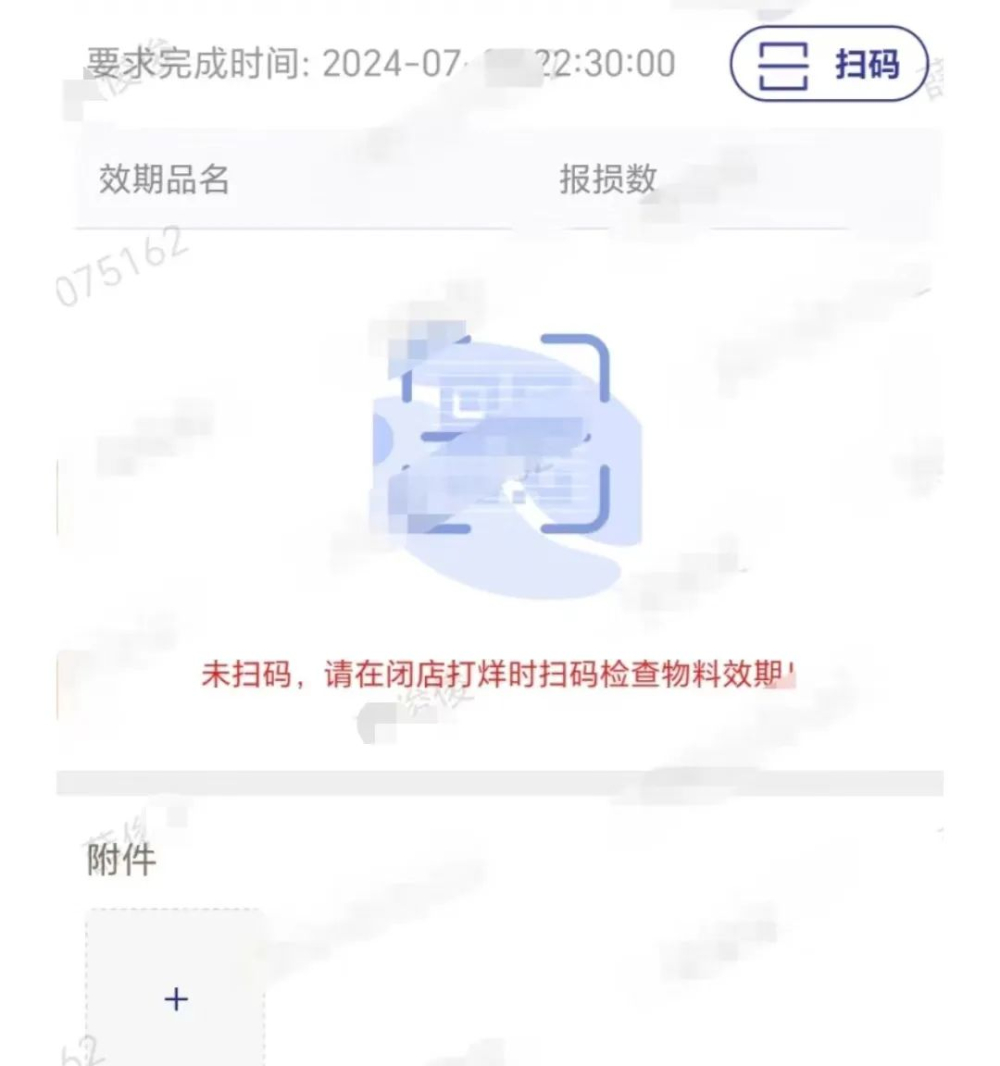
At the end of July, Luckin Coffee introduced the new "full-scan" closing rule in its store systems, mandating that employees scan and record all materials with validity labels in the store fifteen minutes before closing, and that the early shift repeat the same procedure the next day. This policy has sparked strong dissatisfaction among frontline staff on social platforms. The existing staffing was already stretched thin, and the new policy further reduced break time, with periods of unpaid overtime continuing to lengthen.
According to employees, previously the system allowed stores to close early based on actual conditions, with only the need to organize and photograph materials to complete the inventory. However, the new rule requires that, in the final fifteen minutes before closing, all products with expiration labels must be scanned using a mobile phone—regardless of whether the items have been thawed, opened, unopened, or are to be discarded that day—none are exempt. To make matters more cumbersome, the early shift the next day must also repeat the scanning process.

Taking the newly launched blended drinks promoted by Luckin as an example, most contain concentrated fruit juice, and the rate of new product iteration is extremely fast, with store fridges often stacked with various ingredients. During closing, employees often have to move and scan over a hundred bottles of juice one by one, taking over ten minutes per item. If a single employee is on duty, they also have to handle cleaning, taking orders, and closing duties, making "unpaid overtime" of several minutes the norm.
System instability has further exacerbated tensions. When scanning thawed juice, label smudging due to moisture or mobile phone recognition issues often lead to scan failures. Even when scans are successful, the system may still display error prompts, requiring manual correction by staff. Many veteran employees lament that previously, early or late shifts were usually staffed with two or three people working in division, but now most stores are only assigned a single employee, dramatically increasing the workload.
Luckin is known for its digital operations, and this new policy stems from shelf life management needs during the testing phase, with the original intention of preventing materials from expiring unnoticed. However, in practical operations, employees have found that additional steps such as scanning, photographing, and uploading not only fail to simplify the process, but actually make inventory work more complicated, inadvertently adding psychological pressure.
Industry experts suggest that if effective shelf life control is to be achieved, the system’s recognition stability could be optimized, or the scanning frequency adjusted to a reasonable range, balancing management needs with the workload of frontline staff, in order to truly enhance operational efficiency.
The above content is compiled by CoffeeHunters, a coffee news website.


