







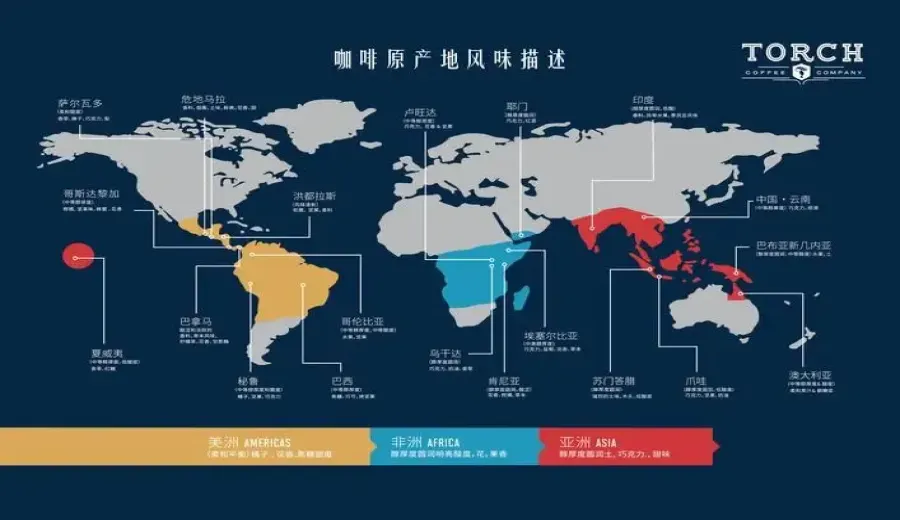
Introduction:Although Tanzania and Rwanda may not be as well-known as Ethiopia and Kenya in the international coffee market, each boasts a profound history of coffee cultivation and unique regional characteristics. This article takes you on a journey through eastern Tanzania and central Rwanda to explore how these two regions have cultivated distinctly flavored Arabica coffee beans from their histories and geographical environments. We’ll also analyze their main varieties, regional distributions, and market trends, giving you a deeper understanding of these two pearls of the African coffee belt.
The African continent is not only the birthplace of coffee but remains an indispensable part of the global specialty coffee supply chain to this day. Beyond the world-renowned Ethiopia and Kenya, Tanzania and Rwanda also hold their own place on the coffee map. These two countries located in East-Central Africa, with their unique geography and planting traditions, produce representative coffee flavors and reflect the rise, decline, and rebirth of the coffee industry across different eras.
Tanzania: The Typica Legend at the Foot of Mount Kilimanjaro
Tanzania, situated on the eastern coast of Africa south of the equator, is known for its magnificent natural landscapes and high-altitude mountainous regions. Mount Kilimanjaro, the highest peak in Africa, is not only the country’s most iconic landmark but also home to one of its most representative coffee-growing regions. Coffee cultivation in Tanzania dates back to the 16th century, but it didn’t become a major economic crop until the 19th century. Colonial governments—first German and later British—attempts to promote coffee farming were limited due to cultural and technological disparities.
It wasn’t until Tanzania gained independence from colonial rule in 1961 that the government prioritized coffee as a key development focus and actively pushed for industry reforms. However, the good times didn’t last. In the late 1990s, an outbreak of coffee leaf rust severely damaged production, forcing farmers to shift cultivation southward, especially to the high-altitude areas around Mount Kilimanjaro. Today, about90% of the country’s coffee is produced by 450,000 smallholder farmers, with the rest coming from slightly larger estates. The industry mainly operates through cooperatives, maintaining a stable annual output of approximately1.5 million bags (each bag weighing 60 kilograms).
Tanzania is divided into nine major coffee-growing regions, among which theKilimanjaro region is the most renowned, primarily cultivating the Arabica variety Typica, with only small amounts of Robusta grown. Thanks to the region’s high altitude and mild climate, its coffee is known for bright acidity, citrus and berry aromas, with honey and nutty undertones. The cup profile is smooth and tea-like, with excellent overall balance.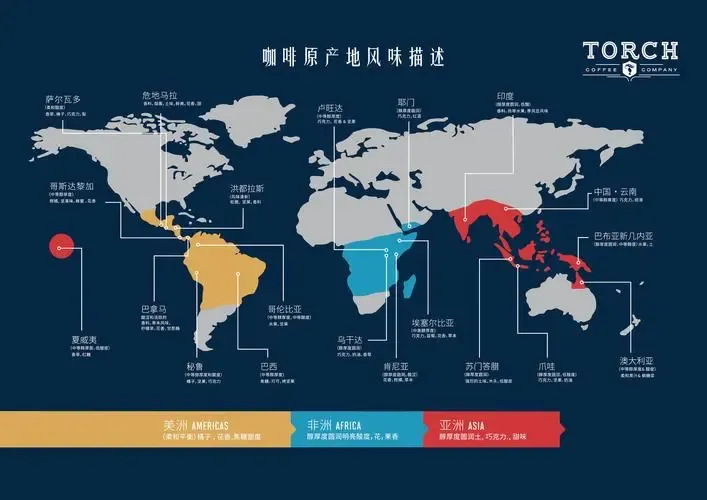
Rwanda: The Bourbon Renaissance of the Land of a Thousand Hills
Rwanda, often called the “Land of a Thousand Hills,” is a mountainous country with stunning natural scenery. It is home to numerous lakes, volcanoes, and tropical rainforests, and its climate is highly conducive to agriculture, particularly coffee cultivation. Coffee has a relatively short history in Rwanda—it was introduced in the early 20th century by German missionaries in the Cyangugu Province. Due to the favorable natural environment, coffee cultivation quickly spread across the country, becoming a key export cash crop.
However, the civil war and genocide in 1994 dealt a devastating blow to the country, resulting in nearly a million deaths and paralyzing the economy. After the war, with the help of international non-governmental organizations, Rwanda gradually rebuilt itself, and the coffee industry restarted, gradually shifting toward quality-oriented production and alignment with international markets. Currently, the country exports approximately17,000 metric tonsof coffee annually, with major markets including the EU and the US, while also beginning to tap into emerging markets such as China.
Rwanda’s main coffee-growing regions are concentrated in the southern, western, and eastern parts of the country, such as the Huye Mountains and Nyamagabe region in the south, and Nyamasheke by Lake Kivu in the west. The primary coffee varieties are Arabica, particularlyBourbon and its variant Mibirizi, with only small amounts of Robusta grown. Rwandan coffee typically exhibits delicate fruit acidity, floral notes, and caramel sweetness. In recent years, it has consistently received high praise in international evaluations and is regarded as an emerging force in Africa’s specialty coffee scene.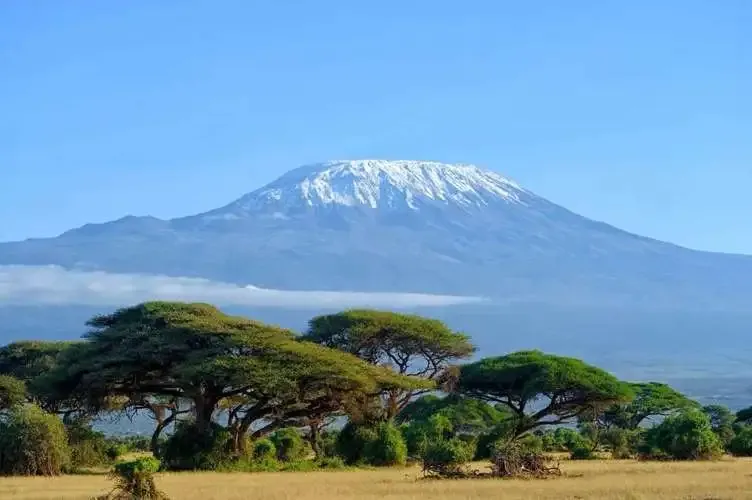
In summary, although Tanzania and Rwanda may not match the coffee output of other major African nations, they each leverage their unique geographical environments, rich coffee-growing histories, and continuously innovating industry models to produce distinctive specialty coffees. Whether you’re seeking the bright acidity of Typica or the nuanced fruitiness of Bourbon, the coffees from these two countries are worth adding to your tasting list and serve as an excellent starting point for exploring the diverse world of African coffee.
The above content is compiled by CoffeeHunters, a coffee news website.


