







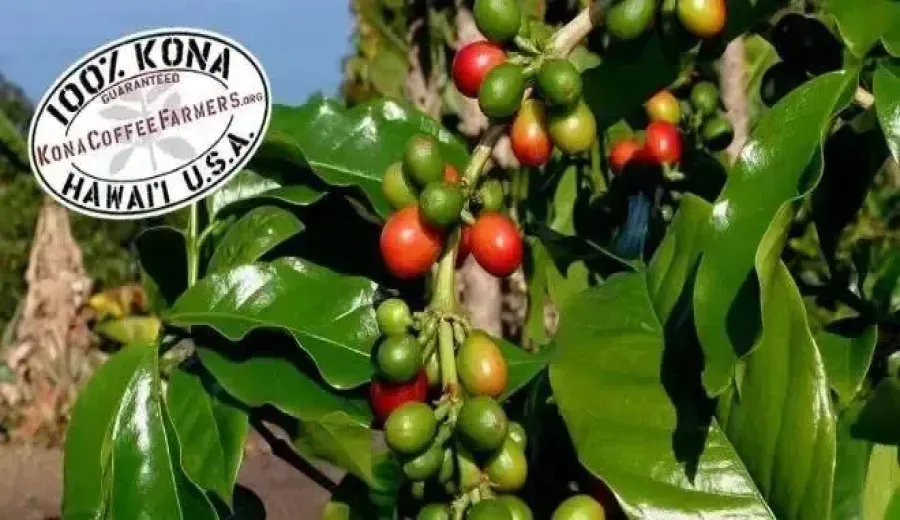
Introduction:Hawaiian Kona coffee is hailed as the "Queen of Coffee," on par with Jamaica's Blue Mountain, yet its price has always remained exceptionally high. What exactly contributes to its prestigious status? This article delves into the unique terroir conditions of Kona coffee, the development history of the growing region, and the key factors influencing its price—helping you grasp the core value of this top-tier coffee from cultivation background to brewing experience.
In the global specialty coffee landscape, Hawaiian Kona coffee has long held a unique position and enjoys the title of the "Queen of Coffee," standing alongside Jamaica's Blue Mountain, which is dubbed the "King." However, compared to other well-known producing regions, Kona coffee’s price has remained consistently high—not only due to its exceptional natural environment, but also closely tied to a complex and winding history of industry evolution. This article will explore the geographic context of coffee cultivation in North America, tracing Kona coffee’s development from its introduction in the 19th century, through pestilence and economic turmoil, to its eventual establishment of prestige in the Kona region. It will also provide an in-depth analysis of its varietal characteristics, regional distribution, and reasons behind its high price, offering coffee enthusiasts a comprehensive understanding of the unique charm of this legendary coffee bean.
As the third-largest continent in the world, North America features a terrain dominated by plateaus and mountains, with numerous active volcanoes and abundant rivers and waterfalls. Spanning tropical, temperate, and polar climates, it provides a diverse range of environments suitable for coffee cultivation. Countries such as El Salvador, Honduras, and Mexico have become major coffee producers due to their appropriate altitudes and temperatures. However, most parts of the contiguous United States are limited by climatic conditions and are not conducive to coffee growth. Only a few areas have successfully cultivated coffee under special circumstances, among which Hawaii and California are the most representative.
Among the many coffee-growing regions in Hawaii, Kona coffee is the most well-known. Even during the time when Jamaica's Blue Mountain was celebrated as the "King of Coffee," Hawaiian Kona, also grown from the Typica variety, earned the title of the "Queen of Coffee" thanks to its delicate flavor and unique regional origin. This honor is inseparable from Hawaii’s exceptional geographical and climatic conditions. As the only island state in the U.S., Hawaii consists of eight major islands and 124 smaller ones located in the central Pacific Ocean, about 3,700 kilometers away from the U.S. mainland.
The formation of the Hawaiian archipelago is closely related to volcanic activity. The island of Hawaii is the largest, home to two active volcanoes, and has a forest coverage rate of nearly 50%. The region has a tropical maritime climate with stable temperatures and moderate humidity throughout the year. Although its overall altitude is not as high as other renowned producing regions, it is capable of producing coffee with rich flavor layers and bright profiles even at relatively low elevations—a key factor that makes Kona coffee stand out globally.
However, the development of Hawaii’s coffee industry has not been smooth sailing. Historical records indicate that local coffee cultivation dates back to the early 19th century, when Hawaii was still an independent kingdom. The first coffee trees were introduced to Oahu (miswritten as Ouhu), but failed to take root. It wasn’t until the 1820s that the chieftain of Oahu introduced the Bourbon variety from Brazil, marking the official beginning of coffee cultivation in Hawaii.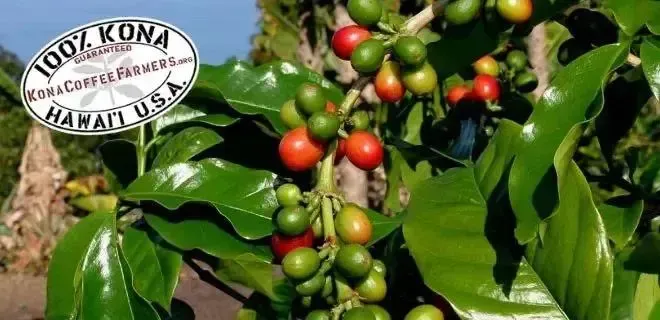
Subsequently, coffee cultivation gradually expanded to other islands and large-scale planting took place on Kauai. Unfortunately, the good times didn’t last long, as severe pests and diseases destroyed most of the coffee trees, with only those in the Kona region surviving. It wasn’t until the 1870s, when the Typica variety from Guatemala was introduced and quickly adapted to the local environment, attracting more farmers to engage in cultivation, that Hawaii’s coffee industry began to recover.
By the end of the 19th century, the Hawaiian Kingdom was annexed by the United States, becoming its 50th state. Entering the 1930s, the global Great Depression affected Hawaii, forcing many coffee plantations to sell their land due to operational difficulties. Given the poor economic environment and challenges in maintaining large farming areas, these lands were divided into many small plots, eventually giving rise to around 600 small coffee farms in the Kona region.
After World War II, Japan’s coffee market rapidly grew. Even after monopolizing the supply of Blue Mountain coffee, demand still could not be met. Since Kona shares similar geographical and climatic conditions with Blue Mountain, and grows the same coffee varieties, it naturally became the top choice for Japanese buyers. However, strict U.S. labor and wage regulations, along with the limited area of suitable farmland for coffee cultivation, meant that Kona coffee production has always remained at a low level.
Currently, Hawaii’s specialty coffee is mainly concentrated in areas such as Ka‘u, Kona, and Maui, with Kona having the highest output. Moreover, only coffee produced in this specific area is eligible to bear the name “Kona.”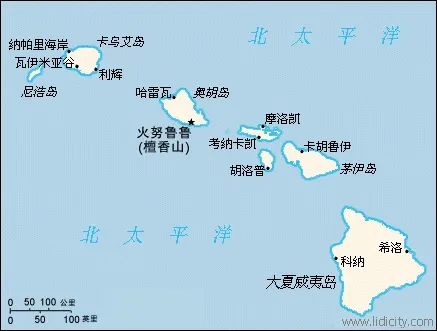
The Kona region is located on the western side of the Big Island of Hawaii, primarily distributed along the slopes of Mauna Loa volcano, at elevations between 600 and 1,100 meters. On the island of Hawaii, this elevation range is already considered high, so some farmers have attempted to transplant Kona’s Typica to other islands. However, due to higher temperatures and insufficient altitude, the coffee trees did not grow well and could not replicate the unique mild acidity and aromatic complexity of Kona-grown beans. This rarity and uniqueness further enhance the value of Kona coffee, also explaining why its market price remains consistently high.
The above content is compiled by CoffeeHunters, a coffee news website.


